Resources

Hey there, tech enthusiasts and business moguls! Today, we’re diving deep into the realm of custom software development and uncovering why it’s the secret sauce for businesses in 2024. Picture this: you’re running a business in the ever-evolving landscape of the USA market, and you need a software solution that fits like a glove. Enter custom software development, the superhero of the digital era.
So, why should you care about custom software development? Buckle up as we explore the top benefits that make it a game-changer in 2024.

Tailored Solutions for Your Unique Needs

One size fits all? Not in the world of custom software development! Unlike off-the-shelf solutions, custom software is designed to cater specifically to your business requirements. Whether you’re a startup disrupting the market or a seasoned enterprise looking to streamline operations, custom software development ensures that every feature aligns perfectly with your goals, workflows, and user expectations.

Unmatched Scalability and Flexibility

In the dynamic landscape of 2024, adaptability is key to survival. Custom software development offers the flexibility to scale your solution as your business grows and evolves. Need to add new features or integrate with third-party tools? No problem! With custom software, you’re in the driver’s seat, empowered to adapt to changing market demands with ease.

Enhanced Efficiency and Productivity

Time is money, and custom software development understands the value of both. By automating repetitive tasks, streamlining workflows, and eliminating bottlenecks, custom software boosts efficiency and productivity across your organization. Say goodbye to manual processes and hello to streamlined operations that drive your business forward.

Seamless Integration with Existing Systems

Got a legacy system that’s holding you back? Custom software development bridges the gap by seamlessly integrating with your existing infrastructure. Whether it’s ERP, CRM, or legacy databases, custom-built solutions ensure compatibility and interoperability, minimizing disruption and maximizing ROI.

Unrivaled Security and Compliance

In a time dominated by cyber threats and frequent data breaches, prioritizing security is imperative and indisputable. Custom software development prioritizes security from the ground up, implementing robust measures to protect your sensitive data and intellectual property. Moreover, with compliance regulations becoming increasingly stringent, custom-built solutions ensure that you stay on the right side of the law, avoiding costly penalties and reputational damage.

Cost-Effectiveness in the Long Run

Investing in custom software development may seem like a hefty upfront cost, but it pays dividends in the long run. Unlike off-the-shelf solutions that come with recurring licensing fees and limited functionality, custom software offers a cost-effective alternative with lower total cost of ownership (TCO) over time. By aligning closely with your business needs and scaling efficiently, custom-built solutions deliver maximum bang for your buck.

Competitive Advantage in the Digital Arena

In the cutthroat world of business, gaining a competitive edge is paramount. Custom software development empowers you to differentiate your brand, delight your customers, and outmaneuver your competitors. By leveraging technology tailored to your unique strengths and value proposition, you’re not just keeping up with the competition – you’re setting the pace.

Future-Proofing Your Business

With technology evolving at breakneck speed, future-proofing your business is essential for long-term success. Custom software development future-proofs your operations by providing a scalable, adaptable foundation that can evolve alongside your business. Whether it’s harnessing the power of AI, embracing IoT, or embracing emerging trends, custom-built solutions position you for success in the digital age.

Conclusion: Harnessing the Potential of Tailored Software Development

As we bid adieu to the old and embrace the new in 2024, custom software development emerges as a beacon of innovation and efficiency for businesses across the USA market. From tailored solutions and scalability to enhanced security and competitive advantage, the benefits are clear: custom software development is not just a trend – it’s a strategic imperative for businesses looking to thrive in the digital arena.


So, if you’re ready to unlock the full potential of technology and propel your business to new heights, it’s time to partner with a leading custom software development company in USA. Your journey to digital transformation starts here – let’s build something extraordinary together!
Hey there, fellow tech enthusiasts! Are you ready to dive into the dynamic world of PHP development? In the vast landscape of web development, PHP has been a cornerstone for building robust, scalable, and feature-rich web applications. And in 2024, it’s more vibrant and exciting than ever before! In this blog post, we’re going to take a deep dive into the best PHP development frameworks and the latest trends that are shaping the industry landscape. So, let’s buckle up and embark on this thrilling journey together!

Why PHP Development Matters in 2024

Before we jump into the specifics, let’s quickly touch base on why PHP development remains relevant in 2024. Despite the emergence of new technologies, PHP continues to power a significant portion of the web. Its versatility, ease of use, and vast community support make it a go-to choice for developers worldwide. Moreover, with the advent of PHP 8, the language has become more powerful and efficient, offering improved performance and enhanced features.

The Rise of PHP Development Companies

In the ever-evolving tech industry, the demand for PHP development services is soaring. As businesses strive to establish a robust online presence, they are turning to PHP development companies to create customized web solutions tailored to their needs. A PHP development company acts as a partner, leveraging its expertise to build scalable, secure, and high-performance web applications. Whether it’s crafting e-commerce platforms, content management systems, or enterprise solutions, these companies play a crucial role in driving digital innovation.

Exploring the Best PHP Development Frameworks

Now, let’s shift our focus to the heart of PHP development: frameworks. Frameworks provide developers with a solid foundation and a set of tools to streamline the development process, enhance productivity, and maintain code consistency. In 2024, several PHP frameworks have emerged as frontrunners in the industry. Let’s take a closer look at some of the best ones:


  • Laravel: Widely regarded as the king of PHP frameworks, Laravel continues to dominate the landscape with its elegant syntax, expressive codebase, and comprehensive ecosystem. In 2024, Laravel has evolved to become even more powerful, with features like real-time communication, job batching, and improved performance optimizations.
  • Symfony: As one of the most mature PHP frameworks, Symfony offers stability, flexibility, and scalability, making it an ideal choice for large-scale enterprise applications. With the release of Symfony 6, developers can benefit from enhanced performance, streamlined workflows, and improved compatibility with PHP 8.
  • CodeIgniter: Known for its simplicity and lightweight footprint, CodeIgniter remains a favorite among developers for building fast and efficient web applications. Despite facing competition from newer frameworks, CodeIgniter continues to thrive in 2024, thanks to its ease of use and excellent documentation.
  • Yii: Yii (Yes, it is!) stands out for its high performance, security features, and code reusability. With Yii 3 on the horizon, developers can expect even greater efficiency, improved error handling, and enhanced support for modern PHP features.
  • CakePHP: Renowned for its convention over configuration approach, CakePHP simplifies the development process by reducing repetitive tasks and promoting code consistency. In 2024, CakePHP remains a solid choice for building robust web applications with minimal effort.

Trends Shaping PHP Development in 2024

Now that we’ve covered the top PHP frameworks, let’s turn our attention to the latest trends that are shaping the PHP development landscape in 2024:


  • Microservices Architecture: With the growing complexity of web applications, developers are increasingly adopting microservices architecture to build modular, scalable, and maintainable systems. PHP frameworks like Laravel and Symfony provide excellent support for microservices development, enabling developers to break down monolithic applications into smaller, interconnected services.
  • API-First Development: As the demand for seamless integration between applications rises, API-first development has gained traction among PHP developers. By designing APIs as the primary interface for communication between services, developers can ensure interoperability, flexibility, and scalability across different platforms and devices.
  • Serverless Computing: The serverless paradigm continues to revolutionize the way applications are built and deployed. With platforms like AWS Lambda and Google Cloud Functions, developers can focus on writing code without worrying about server management. PHP frameworks like Laravel offer seamless integration with serverless architectures, enabling developers to build and deploy serverless applications with ease.
  • Progressive Web Apps (PWAs): In the era of mobile-first development, Progressive Web Apps have emerged as a game-changer, offering a seamless user experience across devices. PHP frameworks like Laravel provide the tools and libraries necessary to develop PWAs, including service workers, offline caching, and push notifications, enabling developers to deliver fast, reliable, and engaging web experiences.
  • Artificial Intelligence and Machine Learning: With the rise of AI and ML technologies, developers are incorporating intelligent features into web applications to deliver personalized experiences and automate repetitive tasks. PHP frameworks like Symfony offer robust libraries and tools for integrating AI and ML algorithms, enabling developers to build smarter, more efficient applications.

In Conclusion

As we wrap up our exploration of the best PHP development frameworks and trends in 2024, one thing is clear: PHP continues to be a powerhouse in the world of web development. With a diverse array of frameworks, tools, and technologies at their disposal, PHP developers have everything they need to build cutting-edge web applications that push the boundaries of innovation. So whether you’re a seasoned PHP pro or just starting your journey, there’s never been a better time to dive into the exciting world of PHP development!


And if you’re on the lookout for a reliable PHP development company to bring your vision to life, look no further! A trusted PHP development company can serve as your guiding light, helping you navigate the complexities of web development and achieve your business goals. So why wait? Get in touch with a PHP development company today and embark on your journey to digital success!

Welcome, fellow tech enthusiasts and developers, to the ever-evolving world of software development! As we sail through the digital seas of 2024, it’s crucial to keep our eyes peeled for the latest trends shaping our craft. Whether you’re a seasoned coder or just dipping your toes into the realm of programming, understanding these trends can steer you towards success. So, grab your compass and let’s navigate through the exciting currents of software development together.

The Rise of AI and Machine Learning

Ah, artificial intelligence (AI) and machine learning (ML) – the stars of the show! These technologies continue to revolutionize the software development landscape, offering unparalleled opportunities for innovation. From predictive analytics to natural language processing, AI and ML are powering applications across various industries.


In 2024, we’re witnessing a surge in AI-driven solutions tailored to specific business needs. Whether it’s automating mundane tasks or personalizing user experiences, companies are leveraging AI to gain a competitive edge. And with the increasing availability of AI frameworks and libraries, even small-scale projects can harness the power of machine intelligence.

Embracing DevOps and Agile Practices

Gone are the days of siloed development processes! In today’s fast-paced environment, collaboration and agility are paramount. Enter DevOps and Agile methodologies, reshaping how teams approach software development and deployment.


DevOps promotes seamless integration between development and operations teams, fostering a culture of continuous delivery and automation. Similarly, Agile methodologies emphasize iterative development, allowing teams to adapt to changing requirements and deliver value incrementally.


As we sail further into 2024, expect to see greater synergy between DevOps and Agile practices. The marriage of these methodologies enables teams to deliver high-quality software at lightning speed while maintaining flexibility and reliability.

The Era of Low-Code and No-Code Platforms

Ahoy, landlubbers! Prepare to be amazed by the rise of low-code and no-code development platforms. These tools empower individuals with varying levels of technical expertise to build software applications without writing extensive lines of code.


In the bustling ports of 2024, low-code platforms are gaining traction for their ability to accelerate development cycles and reduce dependency on traditional coding skills. From drag-and-drop interfaces to visual workflows, these platforms enable rapid prototyping and deployment, democratizing software development like never before.


No-code platforms take it a step further, allowing non-technical users to create functional applications with minimal coding knowledge. While they may not replace traditional development entirely, they serve as invaluable tools for streamlining processes and empowering innovation across organizations.

Securing the Digital Fortress: Cybersecurity Trends

Avast, me hearties! As we navigate the digital seas, we must remain vigilant against the lurking threats of cybersecurity breaches and data breaches. In 2024, cybersecurity continues to be a top priority for organizations worldwide, driving demand for robust defense mechanisms and proactive strategies.


From ransomware attacks to phishing scams, the threat landscape is ever-evolving, prompting developers to adopt a proactive approach to security. This includes implementing secure coding practices, conducting regular vulnerability assessments, and staying abreast of emerging threats.


In addition, technologies like blockchain and zero-trust architecture are gaining prominence for their ability to enhance data integrity and bolster defenses against cyber attacks. As we chart our course through 2024 and beyond, cybersecurity will remain a cornerstone of software development, safeguarding digital assets and protecting user privacy.

Conclusion: Charting the Course Forward

As our voyage through the trends of software development comes to a close, it’s clear that the winds of change are ever-present. From the shores of AI and machine learning to the bustling ports of DevOps and low-code platforms, the landscape is ripe with opportunities for innovation and growth.


For software development company in USA and beyond, embracing these trends is not just advisable – it’s essential for staying ahead of the curve. By harnessing the power of AI, embracing collaborative methodologies, and prioritizing cybersecurity, organizations can navigate the turbulent waters of the digital age with confidence.


So, fellow sailors, let’s set our sails high and chart a course towards a future where technology knows no bounds. The journey may be challenging, but with the right tools and mindset, we can conquer the seas of software development and emerge victorious in our quest for innovation.

Fair winds and following seas, mates!

Hey there, fellow internet wanderers! Today, let’s chat about something that might not be as flashy as the latest design trends or cutting-edge development techniques, but it’s the unsung hero of the digital realm: Maintenance and Support in Website Design and Development.


Picture this: You’ve got a shiny new website, beautifully crafted by a top-notch website design company in the USA. It’s sleek, it’s functional, and it’s everything you dreamed of. But wait, what happens next? Many folks think that once a website is live, the work is done. Well, not quite.


Here’s the deal: Your website is like a living, breathing entity on the vast landscape of the internet. It needs care, attention, and, most importantly, maintenance to keep it running smoothly and securely. Let’s dive into why maintenance and support are the unsung heroes of website design and development.

Keeping the Lights On

Imagine your website as a house. Without regular maintenance, things start to wear out, break down, or become outdated. The same goes for websites. Regular maintenance ensures that everything is up to date, from software updates to security patches. This not only keeps your website running smoothly but also protects it from potential security threats.

Bug Squashing and Performance Boosting

Even the most meticulously designed websites can encounter bugs or performance issues. That’s where ongoing support comes into play. A reliable website development company in the USA will offer support services to address any glitches, bugs, or performance issues that may arise post-launch. This ensures that your website continues to deliver a seamless user experience, keeping visitors happy and engaged.

Adaptation and Evolution

The digital landscape is constantly evolving, with new technologies, trends, and user behaviors emerging all the time. Your website needs to adapt and evolve along with it. Maintenance and support services enable you to incorporate new features, functionalities, and design elements to keep your website relevant and competitive in the ever-changing online world.

Search Engine Love

Ah, search engines—the gatekeepers of the internet. A well-maintained website is more likely to rank higher in search engine results pages (SERPs) than one that’s neglected. Regular updates, fresh content, and optimized performance signals to search engines that your website is active, relevant, and trustworthy, ultimately improving its visibility and driving organic traffic.

Protecting Your Digital Investment

Your website is more than just a digital storefront—it’s an investment in your brand, your business, and your online presence. Regular maintenance and support help protect that investment by ensuring that your website remains secure, functional, and aligned with your business goals. Think of it as an insurance policy for your digital assets.

Customer Satisfaction and Retention

In today’s hyper-competitive digital landscape, user experience is everything. A poorly maintained website can frustrate visitors, drive them away, and damage your brand reputation. On the flip side, a well-maintained website delights users with fast load times, intuitive navigation, and up-to-date content, fostering trust, loyalty, and repeat business.

Conclusion: Why It Matters

So, there you have it—maintenance and support are the unsung heroes of website design and development. They ensure that your website remains secure, functional, and competitive in the ever-evolving digital landscape. Whether you’re a small business owner, a large corporation, or somewhere in between, investing in ongoing maintenance and support is essential to maximizing the ROI of your website and staying ahead of the curve.


Remember, your website is the digital face of your brand—it deserves the same level of care and attention as any other aspect of your business. So, don’t overlook the importance of maintenance and support. Your website—and your bottom line—will thank you for it!


And if you’re on the lookout for a top-notch website development company in the USA that offers comprehensive maintenance and support services, look no further. Reach out to YES IT Labs, and let’s take your digital presence to the next level together!

Are you a small business owner in the USA looking to take your operations to the next level? In today’s fast-paced digital landscape, having the right software can make all the difference. Off-the-shelf solutions might seem convenient, but they often lack the flexibility and scalability that small businesses need to thrive. That’s where custom software development comes in. In this blog, we’ll explore why custom software development is crucial for small businesses and provide strategies for finding the right custom software development company in the USA.

Understanding the Power of Custom Software Development

When it comes to software solutions, one size does not fit all. Every business has its own unique processes, workflows, and challenges. Off-the-shelf software might offer basic functionality, but it can’t adapt to the specific needs of your business. Custom software, on the other hand, is built from the ground up to align perfectly with your business requirements.


Custom software development allows small businesses to:

  • Increase Efficiency: By automating repetitive tasks and streamlining workflows, custom software can help small businesses save time and resources.
  • Improve Productivity: Tailored software solutions enable employees to work more efficiently, leading to increased productivity and better business outcomes.
  • Enhance Customer Experience: Custom software can be designed with the customer in mind, providing a seamless and personalized experience that sets your business apart from the competition.
  • Drive Growth: Scalable custom software can grow and evolve with your business, supporting your expansion goals every step of the way.

Finding the Right Custom Software Development Company in the USA

Now that we understand the benefits of custom software development, the next step is finding the right partner to bring your vision to life. Here are some strategies for selecting a custom software development company in the USA:


  • Evaluate Experience and Expertise: Look for a company with a proven track record of delivering high-quality custom software solutions. To determine their experience and level of skill in your area, review their portfolio and client testimonials.
  • Assess Technology Stack: Make sure the company is proficient in the latest technologies and frameworks relevant to your project. A strong technical foundation is essential for building scalable and future-proof software solutions.
  • Communication and Collaboration: Effective communication is key to a successful custom software development project. Choose a company that values transparency, actively involves you in the development process, and provides regular updates on project progress.
  • Scalability and Flexibility: Your business needs may evolve over time, so it’s important to choose a custom software development company that can scale and adapt to your changing requirements.
  • Cost and ROI: While cost is an important factor, it shouldn’t be the sole determining factor. Instead, focus on the long-term return on investment (ROI) of custom software development. A well-designed and tailored solution can deliver significant value to your business over time.

Case Study: YES IT Labs. – Leveraging Custom Software for Growth

To illustrate the power of custom software development for small businesses, let’s take a look at a hypothetical case study:


YES IT Labs is a small e-commerce retailer based in the USA. As their business grew, they encountered challenges with their existing off-the-shelf e-commerce platform. It lacked the flexibility and scalability to support their expanding product catalog and customer base. YES IT Labs . decided to partner with a custom software development company to build a bespoke e-commerce solution tailored to their specific needs.


The custom e-commerce platform enabled YES IT Labs to:


  • Streamline Inventory Management: The new platform integrated seamlessly with YES IT Labs .’s inventory management system, allowing them to track stock levels in real-time and avoid stockouts.
  • Personalize Customer Experience: By leveraging customer data and analytics, YES IT Labs was able to deliver personalized product recommendations and promotions, leading to increased customer satisfaction and repeat purchases.
  • Scale for Growth: The scalable architecture of the custom e-commerce platform allowed YES IT Labs to easily add new features and functionality as their business grew, future-proofing their investment.


As a result of their custom software solution, YES IT Labs saw a significant increase in sales and revenue, solidifying their position in the market and paving the way for future growth.

Conclusion

Custom software development is a game-changer for small businesses looking to scale smarter in today’s digital economy. By investing in tailored software solutions that align with their unique needs and objectives, small businesses can unlock new levels of efficiency, productivity, and growth. When choosing a custom software development company in the USA, prioritize experience, expertise, communication, scalability, and ROI to ensure the success of your project. With the right partner by your side, the possibilities are endless.


Ready to take your small business to the next level with custom software? Get in touch with YES IT Labs, the leading custom software development company in USA, and unlock your business’s full potential today!

Hey there, curious minds! Today, let’s dive into the fascinating realm of proof of concept (POC) evaluations. If you’re wondering what makes or breaks a successful POC, you’ve landed on the right page. Whether you’re a seasoned professional or a newbie in the tech world, understanding these essential keys can significantly enhance your POC journey.

What’s the Buzz About Proof of Concept Services?

Before we delve into the nitty-gritty details, let’s set the stage. In the ever-evolving landscape of technology, proof of concept services have emerged as invaluable tools. They allow businesses to validate the feasibility of their innovative ideas before committing significant resources. Essentially, a POC serves as a litmus test, providing insights into whether a concept is worth pursuing further.

Key #1: Clearly Defined Objectives

Picture this: you embark on a journey without a destination in mind. Sounds aimless, right? Similarly, a POC without clearly defined objectives is like a ship lost at sea. Before initiating the evaluation process, it’s crucial to outline specific goals and expectations. What do you aim to achieve through this POC? Whether it’s testing a new technology, validating market demand, or assessing feasibility, clarity is paramount.

Key #2: Strategic Planning

Now that you have your objectives in place, it’s time to chart the course. Strategic planning lays the foundation for a successful POC evaluation. Identify the scope of the project, allocate resources efficiently, and establish timelines. A well-thought-out plan not only streamlines the process but also mitigates potential roadblocks along the way.

Key #3: Stakeholder Alignment

In the world of POC evaluations, collaboration is key. Engage stakeholders from diverse departments – from IT and finance to marketing and operations. By fostering cross-functional alignment, you ensure that the POC addresses the needs and concerns of all relevant parties. Effective communication and consensus-building pave the way for smoother execution and buy-in across the organization.

Key #4: Selection of the Right Vendor

Choosing the right vendor can make or break your POC journey. Whether you opt for in-house expertise or external partners, due diligence is crucial. Evaluate vendors based on their track record, expertise, and alignment with your project goals. Look for proof of concept services providers who not only possess technical prowess but also demonstrate a deep understanding of your industry landscape.

Key #5: Data-Driven Evaluation

Ah, the heart of every POC – data! As you navigate through the evaluation process, prioritize data collection and analysis. Gather relevant metrics and insights to assess the performance and impact of the concept under scrutiny. From user feedback and market trends to technical benchmarks, leverage data to make informed decisions. Remember, anecdotes may be compelling, but data speaks volumes.

Key #6: Flexibility and Adaptability

In the dynamic realm of innovation, flexibility is non-negotiable. Be prepared to pivot if the initial results deviate from your expectations. Embrace agility and iterate based on real-time feedback. A rigid approach can stifle creativity and impede progress. Stay open-minded and willing to course-correct as needed to maximize the value derived from the POC.

Key #7: Post-Evaluation Reflection

Congratulations! You’ve completed the POC evaluation journey. But wait, there’s more. Don’t overlook the importance of post-evaluation reflection. Take a step back and analyze the outcomes – both successes and failures. What lessons can be learned? How can these insights inform future initiatives? Document key takeaways and share them across the organization to foster a culture of continuous learning and improvement.

Wrapping It Up

And there you have it – the essential keys for a successful proof of concept evaluation. From setting clear objectives to fostering stakeholder alignment and embracing data-driven decision-making, each key plays a pivotal role in unlocking the full potential of your POC journey. So, the next time you embark on a POC adventure, remember to keep these keys handy. Happy exploring!

Ready to embark on your proof of concept journey? Explore our comprehensive proof of concept services to turn your innovative ideas into reality. Let’s bring your vision to life – one concept at a time.

Do you ever wish you could tailor-make your own software, specifically designed to cater to your unique requirements? Well, buckle up, because today we’re diving headfirst into the realm of custom AI software development! In a world where off-the-shelf solutions abound, there’s immense power in crafting software that aligns perfectly with your vision. Let’s explore how partnering with a software development company can turn your dreams into reality.

Unveiling the Potential of Custom Software Development

First things first, what exactly is custom software development? Think of it as bespoke tailoring for your digital needs. Off-the-shelf software might offer convenience, but it often falls short when it comes to meeting specialized requirements. Enter custom software development – a process where every line of code is crafted to fit your precise specifications like a glove.

Why Go Custom?

So, why should you consider investing in custom AI software? For starters, it’s all about flexibility. Off-the-shelf solutions come with predefined features, leaving you stuck with functionalities you may not need or lacking ones crucial to your operations. Custom software, on the other hand, empowers you to cherry-pick features tailored to your workflow.

Then there’s scalability. As your enterprise expands, its requirements inevitably evolve in tandem. Custom software can adapt and evolve alongside your organization, ensuring you’re always equipped to tackle new challenges head-on. Moreover, it enhances efficiency by streamlining processes, reducing manual labor, and minimizing errors.

The AI Advantage

Now, let’s sprinkle a bit of magic dust – AI – into the mix. Artificial Intelligence has revolutionized the way we interact with technology, unlocking a world of possibilities. From predictive analytics to natural language processing, AI empowers software to learn, adapt, and make intelligent decisions autonomously.

Imagine having a virtual assistant capable of understanding and responding to customer inquiries, analyzing data to uncover insights, or even predicting future trends. That’s the power of AI, and integrating it into custom software can supercharge your operations like never before.

Partnering with a Software Development Company

Now that we’ve established the importance of custom AI software, the next question is, how do you bring your vision to life? This is where partnering with a reputable software development company becomes paramount. But with so many options out there, how do you choose the right one?

Look for a company with a proven track record in custom software development and AI integration. Experience matters – you want a team that not only understands the latest technologies but also has the expertise to leverage them effectively.

Communication is key. A good software development company will take the time to understand your unique requirements, translating your vision into a concrete development plan. They’ll keep you involved throughout the process, soliciting feedback and making adjustments as needed.

The Development Process Demystified

Now, let’s peel back the curtain and take a peek behind the scenes of custom AI software development. While the specifics may vary depending on the project, the overall process typically follows a few key stages:

  • Discovery and Planning: The enchantment commences here.. You’ll work closely with the development team to define your objectives, outline requirements, and establish project timelines.
  • Design and Prototyping: Once the groundwork is laid, it’s time to get creative. Designers will craft wireframes and prototypes, giving you a sneak peek into the future look and feel of your software.
  • Development and Testing: Here’s where the developers roll up their sleeves and start coding. Throughout this phase, rigorous testing ensures that every feature functions as intended, ironing out any kinks along the way.
  • Deployment and Maintenance: Congratulations, your custom AI software is ready to take center stage! But the journey doesn’t end here. Ongoing maintenance and support are crucial to keep your software running smoothly and adapting to changing needs.

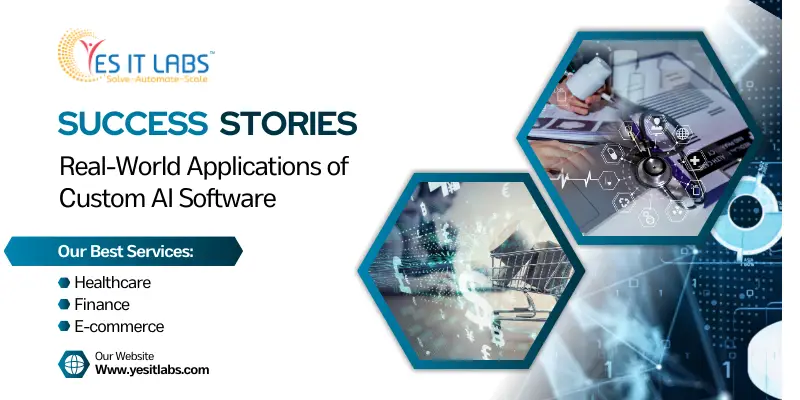
Success Stories: Real-World Applications of Custom AI Software

Still not convinced? Let’s take a look at some real-world examples of custom AI software in action:

  • Healthcare: Custom AI software is revolutionizing healthcare by enabling early disease detection, personalized treatment plans, and predictive analytics to improve patient outcomes.
  • Finance: From fraud detection to algorithmic trading, AI-powered software is reshaping the financial landscape, driving efficiency and mitigating risks.
  • E-commerce: Recommendation engines powered by AI analyze user behavior to deliver personalized product recommendations, enhancing the shopping experience and boosting sales.

The Bottom Line

In today’s fast-paced digital landscape, off-the-shelf solutions can only take you so far. To truly empower your vision and stay ahead of the curve, custom AI software development is the way to go. By partnering with a reputable software development company, you can harness the full potential of AI to craft software that’s tailor-made for your needs.

So, what are you waiting for? It’s time to take the leap and embrace the future of software development. Your vision awaits – let’s make it a reality together!

Are you prepared to take your Shopify store to the next level? Buckle up because we’re about to embark on an exciting journey of revolutionizing your online presence with the magic of Node.js development services. If you’ve been searching for ways to enhance your Shopify store’s performance, user experience, and scalability, then you’re in the right place. Today, we’re diving deep into how Node.js can breathe new life into your e-commerce venture.

Why Node.js?

Before we dive into the nitty-gritty details, let’s address the burning question: why Node.js? Simply put, Node.js is a game-changer when it comes to web development. Its non-blocking, event-driven architecture makes it perfect for building fast and scalable applications. And when it comes to e-commerce platforms like Shopify, speed and scalability are paramount.

Enhancing Your Shopify Store

Now that we understand the power of Node.js, let’s explore how it can revolutionize your Shopify store.

1. Speed Optimization

In the world of e-commerce, every second counts. Slow loading times can drive potential customers away faster than you can say “add to cart.” With Node.js, you can optimize your Shopify store for speed like never before. Its asynchronous nature allows for lightning-fast processing of requests, resulting in significantly reduced load times. Say goodbye to sluggish performance and hello to happy customers who can browse your store with ease.

2. Real-Time Updates

One of the most exciting features of Node.js is its ability to facilitate real-time communication. Imagine being able to provide your customers with instant updates on product availability, price changes, or order statuses, all without them having to refresh the page. With Node.js, this becomes a reality. By implementing real-time features into your Shopify store, you can create a dynamic and engaging shopping experience that keeps customers coming back for more.

3. Scalability

As your Shopify store grows, so do the demands on your infrastructure. Traditional web servers can struggle to keep up with the increasing traffic and data processing requirements. However, Node.js is built for scalability. Its lightweight, event-driven architecture allows it to handle thousands of concurrent connections with ease. Whether you’re experiencing a sudden surge in traffic due to a flash sale or steadily increasing growth over time, Node.js can scale with your Shopify store every step of the way.

Implementing Node.js in Your Shopify Store

Now that you’re sold on the benefits of Node.js, you might be wondering how to integrate it into your Shopify store. Thankfully, you have a variety of options at your disposal:

1. Custom App Development

If you’re looking for a tailor-made solution that perfectly fits your unique business needs, custom app development is the way to go. By partnering with a Shopify development services provider that specializes in Node.js, you can build custom applications and integrations that take your store to new heights. Whether you need a real-time inventory management system, a personalized recommendation engine, or anything in between, the possibilities are endless with custom Node.js development.

2. Third-Party Integrations

Alternatively, you can leverage existing Node.js libraries and frameworks to integrate third-party services and tools into your Shopify store. From payment gateways and shipping providers to analytics platforms and marketing automation tools, there’s a wide range of integrations available that can help streamline your e-commerce operations and enhance the customer experience.

3. Shopify App Store

Finally, don’t forget to explore the Shopify App Store for pre-built Node.js apps and plugins that can add new functionality to your store with minimal effort. Whether you’re looking to optimize SEO, improve email marketing, or enhance product customization options, there’s a wealth of options available that can help you achieve your goals without having to start from scratch.

Getting Started with Node.js Development for Shopify

Now that you’re sold on the idea of leveraging Node.js for your Shopify store, you might be wondering how to get started. Consider these steps as your roadmap to success:

  • Define Your Requirements: Before diving into development, clearly outline your objectives, target audience, and desired features for the Node.js app. This will serve as a roadmap for the development process.
  • Find a Reliable Development Partner: Look for a reputable development agency or freelancer with expertise in both Shopify and Node.js development services. Check their portfolio, client testimonials, and industry experience to ensure they’re the right fit for your project.
  • Collaborate on Design and Development: Work closely with your chosen development partner to brainstorm ideas, create wireframes, and develop prototypes. Be sure to communicate your vision and expectations clearly to ensure the final product aligns with your goals.
  • Test and Iterate: Once the Node.js app is developed, conduct thorough testing to identify any bugs or usability issues. Gather feedback from stakeholders and end-users, and iterate on the design and functionality as needed to ensure a seamless user experience.
  • Launch and Monitor: Finally, launch your Node.js app on the Shopify App Store or integrate it directly into your store. Monitor its performance, gather analytics data, and solicit feedback from users to continuously improve and optimize the app over time.

Conclusion

Node.js has the power to revolutionize your Shopify store in ways you never thought possible. From speeding up performance and enabling real-time updates to ensuring scalability and flexibility, the benefits of Node.js development  are clear. Whether you choose to build custom applications, integrate third-party tools, or leverage existing solutions from the Shopify App Store, now is the time to unlock the full potential of your e-commerce venture with Node.js. So what are you waiting for? It’s time to take your Shopify store to the next level.

In the bustling world of mobile app development, where innovation is the key to staying ahead, Xamarin emerges as a beacon of possibility. With its unique approach to cross-platform app development, Xamarin has been empowering developers to create stunning, high-performance applications for a wide range of devices. Let’s delve into the realm of Xamarin app development and explore how Xamarin developers are shaping the future of mobile apps.

Unveiling Xamarin: The Cross-Platform Marvel

Xamarin, acquired by Microsoft in 2016, has revolutionized the way developers build mobile applications. Unlike traditional approaches that require separate codebases for different platforms (iOS, Android, etc.), Xamarin allows developers to write a single codebase in C# and deploy it across various platforms, saving time and effort without compromising on performance or user experience.

The Rise of Xamarin Developers

Xamarin developers, often referred to as trailblazers in the mobile app development landscape, possess a unique set of skills that enable them to harness the full potential of this platform. They are proficient in C#, .NET, and the Xamarin framework, allowing them to seamlessly translate their ideas into fully functional, visually appealing apps that run smoothly on both iOS and Android devices.

Breaking Down the Benefits

1. Code Reusability: With Xamarin, developers can write code once and deploy it across multiple platforms, significantly reducing development time and effort.

2. Native Performance: Xamarin apps leverage native APIs and UI components, ensuring optimal performance and a native look and feel on each platform.

3. Time-to-Market: By streamlining the development process, Xamarin accelerates time-to-market, allowing businesses to reach their target audience faster and gain a competitive edge.

4. Cost Efficiency: With a single codebase for multiple platforms, Xamarin helps businesses save on development costs without compromising on quality.

The Journey of a Xamarin Developer

Becoming a proficient Xamarin developer requires dedication, continuous learning, and a passion for innovation. Let’s take a closer look at the journey of a Xamarin developer:

1. Learning the Basics: Xamarin developers start by mastering the fundamentals of C# and .NET development, familiarizing themselves with the Xamarin framework, and understanding its architecture.

2. Hands-on Experience: Through practice and experimentation, developers gain hands-on experience in building Xamarin applications, learning to navigate the intricacies of cross-platform development.

3. Community Engagement: Active participation in the Xamarin community, attending conferences, webinars, and workshops, and collaborating with fellow developers are crucial steps in the journey of a Xamarin developer.

4. Staying Updated: In the rapidly evolving world of technology, staying updated with the latest trends, tools, and best practices is essential for Xamarin developers to stay ahead of the curve.

Xamarin in Action: Real-world Applications

From enterprise solutions to consumer-facing apps, Xamarin is powering a diverse range of applications across industries. Let’s explore some real-world examples of Xamarin in action:

1. The World Bank Group’s Survey Solutions: Xamarin was instrumental in developing Survey Solutions, a mobile data collection platform used by the World Bank Group to gather vital socio-economic data from around the world.

2. UPS Mobile: The UPS Mobile app, built with Xamarin, provides users with real-time package tracking, shipping services, and delivery notifications, enhancing the customer experience.

3. Alaska Airlines: Alaska Airlines utilized Xamarin to create a feature-rich mobile app that allows users to book flights, check-in, access boarding passes, and receive flight alerts seamlessly.

Challenges and Solutions

While Xamarin offers numerous benefits, it’s not without its challenges. Compatibility issues, platform-specific requirements, and performance optimization are some of the hurdles developers may face. However, with a robust community support system, extensive documentation, and powerful debugging tools, Xamarin developers can overcome these challenges effectively.

Conclusion: Embracing the Future

As technology continues to evolve, Xamarin remains at the forefront of mobile app development, empowering developers to push the boundaries of innovation. With its unmatched versatility, performance, and cost-effectiveness, Xamarin is poised to shape the future of mobile apps and redefine the way we interact with technology. So, whether you’re a seasoned developer or an aspiring enthusiast, now is the time to join the ranks of Xamarin trailblazers and pave the way for the next generation of mobile applications.


In the ever-expanding universe of mobile app development, Xamarin stands as a guiding light, illuminating the path towards a future where possibilities are limitless, and innovation knows no bounds. So, what are you waiting for? Take the plunge into the exciting world of Xamarin app development and become a part of the revolution today!


Independence Day with Tech Trends

As the United States prepares to commemorate its Independence Day, it’s a poignant moment to reflect on the extraordinary technological strides that have propelled the nation forward. From the majestic launches of rockets to the intricacies of robotics, let’s delve into the realms of innovation that define our journey.

Rockets: Reaching for the Stars

Recent Developments and Key Milestones:

Recent advancements in rocket technology have revolutionized space exploration. Elon Musk’s SpaceX, among other companies, pioneered the development of reusable rockets, significantly reducing the cost of access to space. This innovation has opened up opportunities for more frequent and cost-effective space missions, including satellite launches and crewed missions to the International Space Station (ISS). These advancements in rocket technology also have implications beyond space exploration, with applications in satellite deployment for telecommunications and Earth observation. For instance, a web development company could leverage satellite technology to expand internet access to remote regions, fostering connectivity and economic growth.

Robotics: Where Science Meets Imagination

Cutting-Edge Applications and Advancements in AI:

Robots are increasingly being deployed in diverse industries and applications. For example, in healthcare, robotic surgical systems enable minimally invasive procedures with enhanced precision and control, leading to faster recovery times and improved patient outcomes. In agriculture, autonomous drones equipped with sensors and AI algorithms monitor crop health, optimize irrigation, and enhance yield efficiency, contributing to sustainable food production. Advancements in artificial intelligence have empowered robots with advanced capabilities, such as learning from experience, recognizing patterns, and making decisions in real-time. Machine learning algorithms enable robots to adapt to dynamic environments and perform complex tasks with human-like dexterity. This convergence of robotics and AI is driving innovation across various sectors, from manufacturing and logistics to entertainment and hospitality. An IT consulting company could assist businesses in implementing robotic process automation (RPA) solutions to streamline workflows and enhance operational efficiency.

Cybersecurity: Safeguarding Our Digital Independence

Emerging Challenges and Government Initiatives:

The digital landscape is constantly evolving, presenting new challenges and threats to cybersecurity. Ransomware attacks, where cybercriminals encrypt sensitive data and demand payment for its release, have become increasingly prevalent and sophisticated. Similarly, data breaches pose significant risks to individuals, organizations, and critical infrastructure, highlighting the importance of proactive cybersecurity measures and incident response protocols. Governments around the world are prioritizing cybersecurity as a national security imperative. Initiatives such as the National Cyber Strategy in the United States aim to strengthen cybersecurity capabilities, enhance information sharing, and foster collaboration between government agencies, industry partners, and international allies. By investing in cybersecurity research, workforce development, and threat intelligence sharing, governments can mitigate cyber risks and safeguard digital sovereignty. An IT consulting company could provide expertise in cybersecurity risk management, helping organizations assess their security posture and implement robust defenses against cyber threats.

Green Tech: Independence from Fossil Fuels

Energy Storage Technologies and Policy Frameworks:

The integration of renewable energy sources like solar and wind into the grid requires efficient energy storage solutions to mitigate intermittency and ensure reliability. Battery storage systems, such as lithium-ion batteries, store excess energy generated during periods of high production and discharge it during times of high demand. Similarly, emerging technologies like pumped hydroelectric storage and grid-scale energy storage contribute to grid stability and resilience, enabling greater integration of renewable energy resources. Policy initiatives and investment frameworks play a crucial role in accelerating the transition to a low-carbon economy. Incentives such as tax credits, grants, and subsidies incentivize investments in renewable energy infrastructure and the adoption of clean energy technologies. Additionally, carbon pricing mechanisms and emissions trading schemes provide economic incentives for reducing greenhouse gas emissions and transitioning to renewable energy sources, driving innovation and market competitiveness in the green tech sector.

Biotechnology: Healing and Enhancing Lives

Gene Editing Technologies and Ethical Considerations:

Gene editing technologies like CRISPR-Cas9 have revolutionized the field of biomedicine, offering unprecedented precision and efficiency in modifying genetic material. Researchers are exploring applications of CRISPR in treating genetic disorders, such as sickle cell anemia and cystic fibrosis, by correcting disease-causing mutations at the DNA level. Moreover, CRISPR-based diagnostic tools enable rapid and accurate detection of pathogens, facilitating early intervention and disease management. As biotechnological advancements continue to accelerate, it is imperative to address ethical considerations and societal implications. Issues such as genetic privacy, equitable access to healthcare, and the potential misuse of biotechnologies raise complex ethical dilemmas that require careful deliberation and regulatory oversight. Ethical frameworks and guidelines can help ensure responsible innovation and equitable distribution of the benefits of biotechnology while minimizing potential risks and unintended consequences. An IT consulting company in USA specializing in healthcare technology could provide guidance on the ethical and regulatory aspects of implementing gene editing technologies in clinical settings, ensuring compliance with industry standards and patient privacy laws.

Conclusion: A Technological Symphony of Freedom

As we come together in celebration, let’s not only reminisce about the triumphs of the past but also embrace the promise of the future. Our independence finds resonance in the tapestry of technological marvels—the rockets that traverse celestial frontiers, the robots that augment our capabilities, and the sustainable innovations that nurture our planet. This Independence Day, let’s herald a future where technology serves as a beacon of freedom, guiding us towards a destiny defined by progress and prosperity. Together, let us continue to harness the power of innovation to build a brighter, more resilient future for generations to come.