
Resources

A Guide to Music App Development

Music App Development has become a transformative force in today’s digital landscape, where the fusion of mobile technology and music opens up endless possibilities for innovation and creativity. As mobile devices continue to dominate how we consume and interact with content, music apps are leading the charge—offering users personalized, on-demand audio experiences that go far beyond traditional listening. From discovering new artists to creating beats, collaborating with others, or simply enjoying seamless streaming, music apps are reshaping the way we engage with sound.

This comprehensive guide is tailored for a diverse audience: passionate musicians eager to share their craft, aspiring developers exploring the technical aspects of app creation, and entrepreneurs seeking to break into the fast-growing digital music industry.

Understanding the Music App Ecosystem

What Are Music Apps and Why They Matter

Music apps have reshaped how we engage with sound. They range from streaming services and digital instruments to social platforms that offer a space for budding artists and creative communities. These applications provide immersive experiences by merging robust technology with the art of music creation and curation.

Through extensive market research, it’s clear that today’s consumers not only expect high-quality sound but also seamless interactions, intuitive design, and personalized experiences. This transformation is powered by advancements in AI, cloud computing, and mobile technology, making it an exciting time for developers and musicians alike.

A Look at Current Trends

Streaming and Personalization: With the rise of personalized playlists and AI-generated recommendations, consumers demand music apps that not only play songs but understand their moods and tastes.

  • Social Integration: Platforms that enable collaboration and community interaction are gaining traction, as users seek spaces to share playlists, attend virtual concerts, or collaborate on original tracks.
  • Cross-Platform Innovation: Leading-edge apps often integrate functionalities across devices and operating systems, ensuring that whether you’re using an Android or Apple device, your music experience remains consistent.


This section sets the stage by providing a clear picture of where the industry stands today and why innovative app design matters. In understanding the competitive landscape, every decision—from feature selection to UI/UX design—must be informed by current market trends and user behaviors.

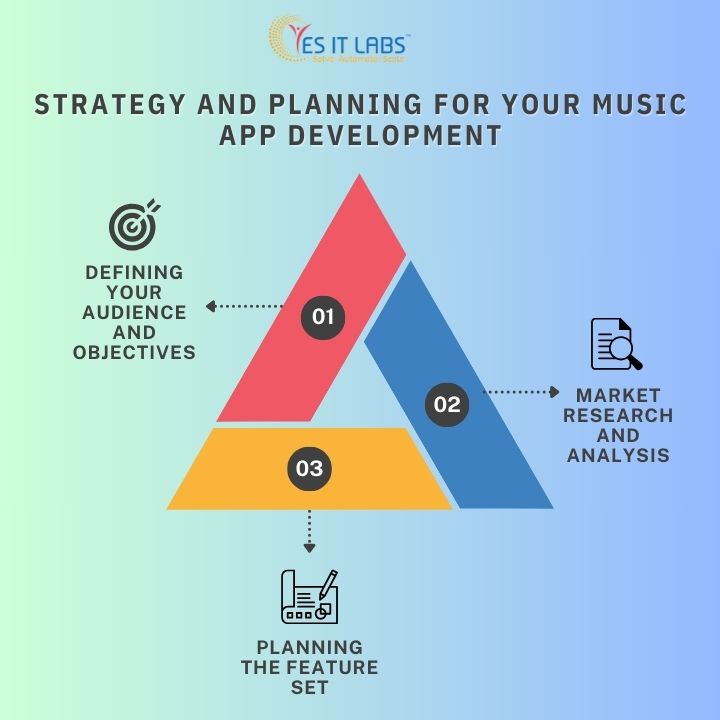
Setting the Vision: Strategy and Planning for Your Music App Development

1) Defining Your Audience and Objectives

Successful music platforms begin with a clear vision. Identify the needs of your target audience:

  • Who: Are you catering to professional musicians, casual listeners, or creative communities?
  • What: What unique value are you providing? Whether it’s a cutting-edge streaming experience or a collaborative platform for artists, your purpose will define your app’s core functionality.


Establish your primary objectives early on. A focused vision aligned with well-researched market demands builds a strong foundation for future success.

2) Market Research and Analysis

Diving deep into competitor analysis is essential. Study popular platforms—examine their strengths, weaknesses, and user feedback:

  • Competitive Analysis: Learn from giants in the industry by understanding what makes apps like Spotify, SoundCloud, or emerging indie platforms successful.
  • User Insights: Delve into consumer reviews, forums, and surveys. What do users love, and where are they underserved.
  • Case Studies: Analyze real-world examples to uncover the common pitfalls and innovative breakthroughs in the industry


In doing so, you create a data-driven roadmap that not only informs your feature set but also positions you ahead of the curve.

3) Planning the Feature Set

Organize your feature planning into “must-haves” versus “nice-to-haves.” Consider including:
Core Streaming and Playback Capabilities: Seamless integration of audio streaming with an emphasis on high-fidelity sound.

  • AI-Driven Personalization: Recommendation engines to tailor playlists based on user preferences.
  • User Community Features: Options for playlist sharing, collaborative projects, and interactive social elements.
  • Robust Search Functions and Metadata Management: Ensure users can quickly find songs, artists, and genres with ease.


To further enhance reach and platform reliability, consider partnering with a reputable android apps development service when targeting the Android market. This ensures that the technical aspects of your app are robust and future-proof.
Strategy and Planning for Your Music App Development

Designing the User Experience: Crafting an Engaging Interface

1) User-Centered Design Principles

An app’s success is directly correlated to its user experience (UX) and user interface (UI). Your design should be:

  • Intuitive and Accessible: Users should be able to navigate the app effortlessly, regardless of their technical skills.
  • Aesthetically Pleasing: A clean design paired with engaging visuals not only attracts users but also enhances usability.
  • Responsive Across Devices: Design with adaptability in mind, ensuring consistency whether the user is on a smartphone, tablet, or desktop.

2) Tools and Methodologies

Utilize design tools like Figma, Adobe XD, or Sketch to create detailed wireframes and prototypes. User testing sessions and iterative design reviews are crucial to refine interactions and layouts before moving into development.


The Technical Backbone: Development and Integration

1) Choosing the Right Technology Stack

When planning the architecture of your music platform, the choice between native and cross-platform development is critical. Depending on your audience and budget considerations, you might choose:

  • Cross-Platform Solutions: Frameworks such as Flutter or React Native can expedite development by allowing code reuse across both Android and iOS.
  • Native Approaches: For the best performance and integration, consider IOS App Development for Apple devices, ensuring seamless compatibility with system-level features.


Your backend infrastructure should focus on scalability and reliability. Cloud services like AWS, Google Cloud, or Firebase can power your app’s data storage, authentication systems, and content delivery networks.

2) Backend and Frontend Development

  • Backend Development: Ensure secure user authentication, efficient data storage, and robust content management. Building a scalable backend is essential to support the simultaneous streaming needs of thousands of users.
  • Frontend Development: Develop a clean, interactive interface with rapid response times. Consider modern web technologies that allow for fluid animations and a dynamic user experience without compromising performance.


Integrating Music Streaming APIs The heart of any music platform lies in its streaming capabilities. Integrate APIs from established providers to access vast music libraries, metadata, and streaming protocols. Leveraging these APIs not only enhances the functionality of your app but also complies with legal standards related to music licensing.


Launching and Beyond: Testing, Marketing, and Growth Strategies

1) Comprehensive Testing and Quality Assurance

Before a full-scale launch, rigorous testing is non-negotiable:

  • QA Across Devices: Test your app on a wide array of devices and operating systems to ensure compatibility.
  • Beta Testing: Launch a beta version to collect real-time user feedback, which helps in identifying issues that may not surface in controlled environments.
  • Automated Testing Tools: Use services like BrowserStack, Appium, or Firebase Test Lab to automate regression tests and monitor performance metrics.

2) Marketing and Launch Tactics

A successful launch requires a multi-faceted strategy:

  • App Store Optimization (ASO): Enhance your app’s title, keywords, and descriptions to boost visibility.
  • Targeted Marketing Campaigns: Utilize social media platforms, influencer partnerships, and press releases to create buzz and anticipation around your launch.
  • Strategic Pricing Models: Experiment with freemium models, subscriptions, and in-app purchase options to generate revenue while maintaining user engagement.


For businesses aiming to expand reach, consider implementing app development for companies strategies to scale up and enhance cross-platform functionality with professional support.

3) Post-Launch Engagement and Iterative Improvements

The journey doesn’t end at launch. Continuous monitoring of performance, user behavior, and market trends is vital:

  • User Analytics: Collect and analyze data to inform periodic updates and feature enhancements.
  • Feedback Loops: Engage with your community through surveys, social media, and in-app feedback tools to stay informed about user experiences.
  • Iterative Development: Regularly update your app to fix bugs, improve performance, and add new features that meet evolving customer needs.


Legal, Ethical, and Future Considerations

1) Navigating Legalities in Music Licensing and Data Privacy

When building a music app, adhere strictly to legal standards:

  • Music Licensing: Ensure that all integrated music content is legally sourced and that licensing agreements are in place. This not only protects your app from legal ramifications but also builds trust with users and rights holders.
  • Data Privacy: Implement robust security measures and comply with global standards like the GDPR and CCPA to safeguard user data.
  • Terms of Service: Clearly communicate user rights, responsibilities, and disclaimers to foster a transparent relationship with your audience.

2) The Future of Music Technology

The music industry continues to evolve with groundbreaking technologies:

  • AI and Machine Learning: Enhance personalized recommendations and content curation.
  • Blockchain: Explore secure, decentralized models for royalty distribution and copyright management.
  • Augmented Reality (AR) and Virtual Reality (VR): Transform the concert experience and interactive learning for musicians.


Future-proofing your platform by staying ahead of these technological trends can set your app apart in an increasingly competitive market.


Conclusion

Building a successful music platform requires a harmonious blend of creative design, technical expertise, and strategic marketing. This guide has walked you through every step—from conceptualization and market research to design, development, testing, and growth strategies—with a commitment to quality, credibility, and actionable insights. With careful planning and a focus on user experience, your innovative ideas can truly revolutionize the way people interact with music.
Whether you’re coding from scratch or collaborating with a professional partner, the roadmap to success lies in understanding your audience, leveraging proven technologies, and continuously evolving with market trends. Now is the time to seize the digital stage and create an app that not only entertains but transforms the music experience.

Hey there, tech enthusiasts and aspiring app developers! Today, we’re diving into the exciting world of iOS app development, particularly focusing on the journey of creating apps for Apple Vision Pro. So, if you’ve ever wondered how to turn your brilliant idea into a reality on the App Store, buckle up because we’re about to embark on a fascinating journey!

Understanding iOS App Development

First things first, let’s talk about iOS app development. With the rise of smartphones, particularly the iconic iPhone, iOS app development has become a hot topic among tech enthusiasts and entrepreneurs alike. Apple’s ecosystem offers a lucrative platform for developers to showcase their creativity and innovation, reaching millions of users worldwide through the App Store.

The iOS platform is known for its sleek design, seamless user experience, and robust security features, making it an attractive choice for developers aiming to deliver high-quality apps. Moreover, Apple’s stringent app review process ensures that only well-designed and functional apps make it to the App Store, enhancing user trust and satisfaction.

Introducing Apple Vision Pro

Now, you might be wondering, what exactly is Apple Vision Pro? Simply put, it’s a powerful toolset provided by Apple for developers to create immersive and engaging experiences leveraging augmented reality (AR) and computer vision technologies. Augmented reality, in particular, has gained significant traction in recent years, offering new possibilities for entertainment, education, and business applications. With Apple Vision Pro, developers can harness the full potential of AR to deliver captivating experiences that blur the lines between the digital and physical worlds.

Whether you’re looking to build immersive gaming experiences, interactive shopping apps, or innovative educational tools, Apple Vision Pro provides the building blocks to bring your ideas to life. From advanced computer vision algorithms to seamless integration with Apple’s hardware and software ecosystem, Apple Vision Pro empowers developers to push the boundaries of what’s possible in iOS app development.

From Idea to Reality: The Development Process

So, how do you go from having a brilliant idea to actually launching your app on the App Store? Let’s break it down step by step:

1. Ideation and Conceptualization

Every great app starts with a spark of inspiration. Whether it’s solving a common problem, catering to a niche market, or simply offering a unique experience, your app idea is the cornerstone of your development journey. Take the time to flesh out your concept, understand your target audience, and envision how your app will stand out in the crowded marketplace.

2. Design and Prototyping

Once you have a clear idea of what you want to build, it’s time to bring your vision to life through design and prototyping. Apple’s Human Interface Guidelines provide invaluable insights into creating intuitive and visually appealing interfaces that resonate with users. Tools like Sketch, Adobe XD, or Figma can help you create wireframes and prototypes to iterate on your design before diving into development.

3. Development with Apple Vision Pro

Now comes the exciting part – development! With Apple Vision Pro at your disposal, you have access to a wide range of tools and frameworks to incorporate augmented reality and computer vision features into your app. Whether you’re leveraging ARKit for immersive experiences or Core ML for machine learning capabilities, Apple’s ecosystem empowers developers to push the boundaries of what’s possible.

4. Testing and Refinement

Once your app is taking shape, it’s crucial to test it rigorously to ensure a smooth and seamless user experience. Utilize tools like TestFlight for beta testing, gather feedback from real users, and iterate on your design and functionality based on their input. Remember, the key to success is continuous refinement and improvement.

5. Submission to the App Store

Congratulations, you’ve built an amazing app! Now it’s time to share it with the world by submitting it to the App Store. Apple’s App Store Review Guidelines outline the criteria for approval, so make sure your app meets all the requirements before hitting the submit button. Once approved, your app will be available to millions of users, ready to download and enjoy.

FAQs About Apple Vision Pro

Now, let’s address some common questions about Apple Vision Pro:

1. Can I make apps for Apple Vision Pro?

Absolutely! Apple Vision Pro provides developers with a robust set of tools and frameworks to create immersive and engaging experiences using augmented reality and computer vision technologies. Whether you’re an experienced developer or just starting out, Apple’s ecosystem offers endless possibilities for bringing your ideas to life.

2. What can you do with Apple Vision Pro?

The possibilities are virtually limitless! With Apple Vision Pro, you can create everything from immersive gaming experiences and interactive shopping apps to innovative educational tools and productivity solutions. Whether you’re looking to entertain, educate, or empower users, Apple Vision Pro provides the building blocks to unleash your creativity.

3. Do you need an iPhone for Apple Vision Pro?

While having an iPhone can certainly enhance your development experience, it’s not strictly necessary. Apple Vision Pro supports development on a variety of Apple devices, including iPad and Mac, allowing you to build and test your apps across different platforms. So, whether you’re using the latest iPhone or an older model, you can still harness the power of Apple Vision Pro to create amazing apps.

Wrapping Up

And there you have it – a comprehensive guide to navigating the world of iOS app development with Apple Vision Pro. From ideation to launch, building an app for the App Store is an exhilarating journey filled with creativity, innovation, and endless possibilities. So, roll up your sleeves, unleash your imagination, and get ready to bring your ideas to life on the world’s most iconic platform for mobile apps. Happy coding!

So, what are you waiting for? Dive into the world of iOS app development with Apple Vision Pro and turn your dreams into reality!

Hey there, tech enthusiasts! Have you ever pondered about the trajectory of software development in the future? Well, let me tell you—it’s all about Artificial Intelligence (AI). In today’s blog, we’ll dive into the exciting realm of AI in software development. From its promising benefits to the challenges it brings, we’re here to unpack it all.

The Future of AI in Software Development

Picture this: a world where software development isn’t just about lines of code but harnessing the power of intelligent algorithms. That’s precisely the direction we’re headed in. AI is transforming the landscape of software development, making processes smarter, faster, and more efficient.


Imagine having an AI-powered assistant that can analyze complex code patterns, predict bugs before they occur, and even suggest optimized solutions. That’s not science fiction—it’s the future of software development. AI algorithms are becoming increasingly adept at understanding code semantics, allowing developers to focus more on creativity and problem-solving rather than mundane tasks.

Challenges of Using AI in Software Development

Of course, with great power comes great responsibility, and AI in software development is no exception. While the potential is immense, there are challenges that need to be addressed along the way.


A major hurdle lies in the requirement for top-tier data quality. AI algorithms thrive on data, and without sufficient and relevant information, their effectiveness can be compromised. Additionally, there’s the issue of bias. AI models are only as good as the data they’re trained on, and if that data is biased, it can lead to skewed results and unfair outcomes.


Moreover, there’s the ever-present concern of job displacement. As AI becomes more proficient in automating certain aspects of software development, there’s fear that it may replace human developers altogether. However, the reality is far more nuanced. While AI may automate repetitive tasks, it can also augment human capabilities, enabling developers to tackle more complex challenges.

The Benefits of Artificial Intelligence for Developers

Now, let’s shift our focus to the exciting part—the benefits of AI for developers. Trust me, there’s a lot to be excited about!


First and foremost, AI brings unparalleled efficiency to the development process. Tasks that would typically take hours or even days for human developers to complete can be done in minutes with AI assistance. From code generation to bug detection, AI accelerates the entire development lifecycle.


But it’s not just about speed—AI also enhances the quality of software. By analyzing vast amounts of data and identifying patterns, AI algorithms can detect bugs and vulnerabilities with pinpoint accuracy. This not only saves time and resources but also improves the overall reliability and security of the software.

Furthermore, AI empowers developers to innovate like never before. With AI-generated insights and recommendations, developers can explore new possibilities and experiment with advanced techniques. Whether it’s optimizing performance or enhancing user experience, AI opens up a world of opportunities for innovation.

Embracing AI: A Win-Win for Software Development Companies

So, what does all of this mean for software development companies, especially those in the USA? In a word: opportunity.


For software development companies, embracing AI isn’t just about staying ahead of the curve—it’s about staying relevant. In today’s fast-paced digital landscape, companies that fail to leverage AI risk falling behind their competitors. By integrating AI into their development processes, companies can streamline workflows, deliver higher-quality software, and ultimately, satisfy their clients’ needs more effectively.

software

But it’s not just about internal benefits. AI also offers software development companies a competitive edge in the market. Clients are increasingly looking for innovative solutions that not only meet their requirements but also exceed their expectations. By harnessing the power of AI, software development companies can differentiate themselves from the competition and position themselves as industry leaders.

Closing Thoughts

In conclusion, the future of software development is undeniably intertwined with Artificial Intelligence. From revolutionizing traditional workflows to empowering developers with advanced tools, AI is reshaping the way we build software.


Yes, there are challenges to overcome, but the opportunities far outweigh the obstacles. By embracing AI, software development companies can unlock new levels of efficiency, quality, and innovation, propelling them to success in the ever-evolving digital landscape.


So, to all the software development companies out there, the future is yours to shape. Embrace AI, and together, let’s build a brighter tomorrow—one line of code at a time.
And remember, the future is not just coming—it’s already here. Let’s make the most of it!


If you’re a software development company in USA, now is the time to embrace the transformative power of AI. Don’t get left behind—embrace AI and unlock a world of possibilities for your business.

Welcome to the digital marketplace, where the click of a button can whisk you away to a world of endless products and services. In today’s bustling online economy, having a robust eCommerce website isn’t just a luxury – it’s a necessity. Whether you’re a seasoned entrepreneur or just dipping your toes into the world of online retail, understanding the essential features that every e-store should have is crucial for success.

In this blog, we’ll take a deep dive into the must-have features that can elevate your eCommerce website from good to great. From user experience enhancements to security measures, we’ll cover it all. So, grab a cup of coffee, sit back, and let’s explore the key components of a winning eCommerce platform.


Seamless User Experience (UX)

First impressions matter, especially in the digital realm. Your eCommerce website should be intuitive and easy to navigate, ensuring that visitors can find what they’re looking for without frustration. Here are some features to consider:

  • Mobile Responsiveness: With more users accessing the internet via smartphones and tablets, your website must adapt seamlessly to different screen sizes.
  • Intuitive Navigation: Implement clear categories, filters, and search functionality to help users find products quickly.
  • Smooth Checkout Process: Minimize the number of steps required to complete a purchase and offer guest checkout options to streamline the buying process.


High-Quality Product Imagery and Descriptions

In the absence of physical interaction, compelling product imagery and detailed descriptions are your best allies in persuading customers to make a purchase. How to make your stuff stand out on the internet:

  • High-Resolution Images: Provide multiple high-quality images that showcase the product from different angles.
  • Detailed Descriptions: Include accurate product specifications, dimensions, and other relevant information to help customers make informed decisions.
  • User-Generated Content: Encourage customers to leave reviews and upload photos of the products they’ve purchased to build trust and authenticity.


Secure Payment Gateway

In an era of increasing cyber threats, ensuring the security of customer data is paramount. Partner with trusted payment gateways and implement robust security measures to safeguard sensitive information:

  • SSL Encryption: Secure all data transmissions with SSL encryption to protect customer information from unauthorized access.
  • PCI Compliance: Adhere to Payment Card Industry Data Security Standard (PCI DSS) requirements to maintain the integrity of cardholder data.
  • Fraud Prevention Tools: Implement fraud detection algorithms and address verification systems to mitigate the risk of fraudulent transactions.


Personalization and Customer Engagement

Make your customers feel valued by delivering personalized shopping experiences and fostering meaningful interactions. Here’s how to tailor your eCommerce website to meet individual needs:

  • Recommendation Engines: Leverage machine learning algorithms to suggest relevant products based on past purchase history and browsing behavior.
  • Dynamic Content: Display targeted promotions, discounts, and product recommendations based on user preferences and demographics.
  • Interactive Elements: Incorporate live chat support, product configurators, and interactive tools to engage customers and provide real-time assistance.


Robust Backend Functionality

While the frontend of your eCommerce website is what customers interact with, the backend infrastructure is equally important for smooth operations. Invest in a scalable and reliable eCommerce platform that offers:

  • Inventory Management: Keep track of stock levels, automate replenishment orders, and synchronize inventory across multiple sales channels.
  • Order Processing: Streamline order fulfillment processes, generate shipping labels, and provide order tracking capabilities to keep customers informed.
  • Analytics and Reporting: Gain insights into sales performance, customer behavior, and website traffic patterns to make data-driven decisions and optimize marketing strategies.


Search Engine Optimization (SEO) and Marketing Tools

In the crowded digital landscape, standing out from the competition requires strategic marketing efforts and visibility on search engine results pages (SERPs). Maximize your eCommerce website’s online presence with:

  • SEO-Friendly URLs and Metadata: Optimize product pages with descriptive URLs, meta titles, and meta descriptions to improve search engine rankings.
  • Content Marketing: Publish blog posts, product guides, and tutorials to attract organic traffic and establish your brand as an industry authority.
  • Social Media Integration: Enable social sharing buttons, showcase user-generated content, and leverage social media advertising to expand your reach and drive conversions.


Conclusion: Elevate Your eCommerce Game

In the fast-paced world of online retail, staying ahead of the curve requires continuous innovation and adaptation. By incorporating these essential features into your eCommerce website, you can create a compelling shopping experience that delights customers and drives business growth.


Remember, success in eCommerce isn’t just about selling products – it’s about building relationships, fostering trust, and delivering value at every touchpoint. So, whether you’re a startup seeking eCommerce website development services or an established retailer looking to revamp your online presence, prioritize these key features to unlock the full potential of your e-store.


Now, armed with this knowledge, go forth and conquer the digital marketplace with confidence!


Hey there, fellow fitness enthusiasts and tech aficionados! Today, we’re diving into the exciting world of sport app development and how it’s revolutionizing the way we stay active and engaged with our fitness routines. Whether you’re a seasoned athlete or just starting your journey towards a healthier lifestyle, there’s no denying the impact that technology has had on the way we approach sports and fitness. So, let’s lace up our virtual sneakers and explore how sport app development is shaping the future of active living.


The Rise of Sport Apps: Where Technology Meets Fitness

Gone are the days of bulky fitness trackers and cumbersome workout logs. Thanks to advancements in mobile technology, we now have access to a plethora of sport apps that make it easier than ever to track our progress, set goals, and stay motivated. Whether you’re into running, cycling, yoga, or weightlifting, there’s an app out there designed to cater to your specific needs and interests.


Tailored Training Programs: Personalized Fitness at Your Fingertips

One of the most significant benefits of sport apps is their ability to provide personalized training programs tailored to your fitness level and goals. Whether you’re aiming to improve your endurance, build muscle, or simply stay active, these apps leverage data analytics and machine learning algorithms to create customized workout routines that maximize results and minimize the risk of injury.


Connecting with Like-Minded Individuals: The Power of Community

It can be difficult to maintain motivation when working out by yourself. Fortunately, many sport apps come equipped with social features that allow users to connect with like-minded individuals, share their progress, and even compete in friendly challenges. Whether it’s cheering on a friend during a virtual race or joining a virtual fitness class with fellow enthusiasts, these community-driven features add an extra layer of motivation and accountability to your fitness journey.


Gamification: Turning Workouts into Playtime

Who says exercise has to be boring? With the rise of gamification in sport apps, working out has never been more fun or engaging. From virtual scavenger hunts to interactive challenges, these apps leverage gamified elements to transform mundane workouts into exciting adventures. By earning points, leveling up, and unlocking achievements, users are incentivized to push themselves harder and stay committed to their fitness goals.


Tracking Progress: Data-Driven Insights for Optimal Performance

One of the key advantages of sport apps is their ability to track and analyze various aspects of your fitness journey, from your heart rate and calorie burn to your pace and distance covered. By collecting and analyzing this data over time, these apps provide valuable insights into your performance, helping you identify areas for improvement and adjust your training accordingly. Whether you’re aiming to beat your personal best or prepare for an upcoming competition, having access to real-time feedback and actionable insights can make all the difference in achieving your goals.


The Future of Sport App Development: Innovations on the Horizon

As technology continues to evolve, so too will the world of sport app development. From AI-powered coaching assistants to immersive virtual reality experiences, the possibilities are endless when it comes to enhancing the way we engage with fitness and sports. Whether you’re a Mobile app developer looking to push the boundaries of what’s possible or a user eager to explore the latest advancements, the future of sport app development holds endless promise for those seeking to lead active and healthy lifestyles.


Conclusion: Embracing the Power of Sport Apps

In conclusion, sport apps have fundamentally changed the way we approach fitness and sports, making it easier and more enjoyable than ever to stay active and engaged with our health goals. From personalized training programs and community-driven features to gamified challenges and data-driven insights, these apps offer a wealth of tools and resources to help us reach our full potential as athletes and individuals.


App development has played a crucial role in bringing these innovative solutions to life, constantly pushing the boundaries of what’s possible in the realm of fitness and sports technology. So, whether you’re a seasoned pro or just getting started on your fitness journey, why not embrace the power of sport apps and see where they can take you? After all, the only limit is your imagination (and maybe your WiFi connection). So, let’s strap on our running shoes, fire up our favorite sport app, and embark on the adventure of a lifetime. The road to fitness awaits – are you ready to seize the day?


And remember, it’s not just about reaching the finish line – it’s about enjoying the journey along the way. So, here’s to chasing our dreams, breaking our personal records, and living our best lives, one workout at a time. Until next time, stay active, stay healthy, and keep pushing the boundaries of what’s possible. The world is yours for the taking – let’s make every step count!

Hey there, fellow tech enthusiasts! Are you prepared to immerse yourself in the dynamic realm of mobile app development? Whether you’re an experienced developer or just dipping your toes into the coding waters, choosing the right programming language for mobile app development is crucial. With technology evolving at a breakneck pace, it’s essential to stay up-to-date with the latest trends and tools in the industry.

In this blog post, we’ll take a closer look at the top six programming languages for mobile app development in 2024. From the ever-popular to the up-and-coming, we’ll explore the pros and cons of each language to help you make an informed decision for your next mobile project.

Swift

Let’s kick things off with Swift, Apple’s very own programming language for iOS, macOS, watchOS, and tvOS app development. Swift has rapidly garnered favor among developers due to its speed, security, and contemporary syntax. With Apple’s unwavering support and regular updates, Swift continues to be a top choice for building high-performance iOS apps.

One of the key advantages of Swift is its seamless integration with Apple’s development tools like Xcode and SwiftUI. This tight integration streamlines the app development process and allows developers to create stunning user interfaces with ease. Additionally, Swift’s strong type inference system helps catch errors at compile-time, reducing the likelihood of bugs and enhancing code reliability.

However, it’s worth noting that Swift is exclusive to the Apple ecosystem, limiting its use to iOS and macOS app development. If you’re targeting multiple platforms, you may need to consider alternative languages or frameworks.

Kotlin

Next up, we have Kotlin, a modern programming language for building Android apps. Developed by JetBrains, Kotlin offers a concise syntax, seamless interoperability with Java, and robust tooling support. Since Google announced Kotlin as an official language for Android development in 2017, its adoption has skyrocketed, with many developers praising its expressiveness and safety features.

One of Kotlin’s standout features is its null safety, which helps prevent null pointer exceptions—a common headache in Java development. With Kotlin’s nullable and non-nullable types, developers can write more reliable code and catch potential issues early in the development process. Moreover, Kotlin’s support for functional programming paradigms allows for cleaner, more concise code, boosting developer productivity.

Like Swift, Kotlin is platform-specific, focusing solely on Android app development. However, its seamless interoperability with Java makes it easy to integrate Kotlin code into existing Android projects, making the transition smooth for developers familiar with Java.

Flutter (Dart)

Let’s shift our focus to Flutter, Google’s UI toolkit designed for crafting natively compiled applications for mobile, web, and desktop all from a unified codebase. Fueled by the Dart programming language, Flutter has garnered notable attention within the mobile app development sphere for its rapid development cycles, intuitive UI, and hot reload capability.

One of the main selling points of Flutter is its ability to create visually stunning and highly customized user interfaces, thanks to its rich set of customizable widgets. With Flutter, developers can achieve pixel-perfect designs across multiple platforms, eliminating the need for separate UI codebases. Furthermore, Flutter’s hot reload functionality facilitates swift iteration and experimentation, thereby cutting down development time and enhancing productivity.

Despite its relative youth compared to established frameworks like Swift and Kotlin, Flutter has garnered a loyal following within the developer community. Its cross-platform capabilities make it an attractive option for businesses looking to reach a broader audience without compromising on user experience.

React Native (JavaScript)

If you’re a fan of JavaScript, React Native might be right up your alley. Developed by Facebook, React Native is a popular open-source framework for building native mobile apps using JavaScript and React. With React Native, developers can leverage their existing JavaScript skills to create dynamic, cross-platform mobile applications with a native look and feel.

One of the key advantages of React Native is its extensive ecosystem of third-party libraries and tools, allowing developers to add advanced features and functionality to their apps with ease. Additionally, React Native’s component-based architecture promotes code reusability and modularity, making it ideal for large-scale projects with complex UI requirements.

However, like any framework, React Native has its limitations. While it offers excellent performance for most applications, certain tasks may require native code integration for optimal performance. Additionally, React Native’s reliance on JavaScript can lead to performance bottlenecks in CPU-intensive applications, so it’s essential to weigh the trade-offs carefully before diving in.

Python (Kivy / BeeWare)

Python, known for its simplicity and readability, has also found its way into the realm of mobile app development. While not as prevalent as Swift or Kotlin, Python offers several frameworks and tools for building mobile applications, including Kivy and BeeWare.

Kivy, an open-source Python framework, allows developers to create cross-platform applications with a natural user interface. With Kivy, developers can write once and deploy across multiple platforms, including iOS, Android, Windows, macOS, and Linux. Despite its relatively small community compared to other frameworks, Kivy continues to evolve, with regular updates and improvements.

On the other hand, BeeWare takes a slightly different approach to mobile app development with Python. Instead of relying on cross-platform frameworks, BeeWare provides a set of tools for building native applications using Python. With projects like Toga for GUI applications and Briefcase for packaging and distribution, BeeWare aims to make Python a first-class citizen in the world of mobile development.

Java

Last but certainly not least, we have Java, the tried-and-true programming language for Android app development. Despite the rise of Kotlin, Java remains a popular choice among developers for its maturity, performance, and extensive ecosystem of libraries and tools.

While Kotlin offers many modern features and improvements over Java, Java’s long-standing presence in the Android ecosystem means there’s still a vast amount of legacy code written in Java. For developers working on existing projects or collaborating with teams familiar with Java, sticking with Java may be the most practical choice.

Is C++ used for mobile app development?

You might be surprised to learn that C++, a powerful and versatile programming language, does indeed have a role to play in mobile app development. While it’s not typically the primary language for building mobile apps from scratch, C++ often finds its way into mobile development projects for performance-critical tasks, such as game engines, audio processing, and graphics rendering. Many popular game development frameworks, like Unity and Unreal Engine, leverage C++ under the hood to deliver high-performance gaming experiences on mobile devices. So, while you may not write entire mobile apps in C++, it certainly has its place in the mobile development landscape.

Which is best for mobile app development?

Ah, the age-old question: which programming language reigns supreme for mobile app development? The truth is, there’s no one-size-fits-all answer. The best language for mobile app development depends on various factors, including the platform you’re targeting, your team’s expertise, project requirements, and personal preferences. Swift and Kotlin are excellent choices for native iOS and Android development, respectively, offering seamless integration with platform-specific tools and robust support from Apple and Google. Flutter and React Native are popular cross-platform frameworks that allow you to write code once and deploy it across multiple platforms, saving time and effort. Ultimately, the best language for mobile app development is the one that helps you achieve your project goals efficiently and effectively.

Is Python a good language for mobile apps?

Python, beloved for its simplicity and readability, has certainly made strides in the realm of mobile app development. While it may not be as prevalent as Swift or Kotlin, Python offers several frameworks and tools for building mobile applications, including Kivy and BeeWare. Kivy, an open-source Python framework, enables developers to create cross-platform applications with a natural user interface, while BeeWare provides a set of tools for building native applications using Python. While Python may not be the go-to choice for every mobile development project, its versatility and ease of use make it a compelling option for certain use cases.

Conclusion

The world of mobile app development is vast and ever-evolving, with a plethora of programming languages and frameworks to choose from. Whether you’re building for iOS, Android, or both, selecting the right language for your project depends on various factors, including your team’s expertise, project requirements, and target audience.


From the sleek and streamlined Swift to the versatile and dynamic Flutter, each programming language brings its unique strengths and capabilities to the table. By staying informed about the latest trends and tools in the industry, you can navigate the ever-changing landscape of mobile app development company with confidence and creativity. So, roll up your sleeves, sharpen your coding skills, and embark on your next mobile app adventure—your users are waiting!

Hey there, fellow digital explorers! It’s an exciting time to delve into the realm of website development, isn’t it? With technology evolving at breakneck speed, the landscape of web development is constantly shifting. As we embark on this journey into 2024, let’s take a deep dive into the top trends shaping the future of website development.

But first, let’s address the basics for those just stepping into this dynamic world.

Understanding the 5 Stages of Website Development

Before we embark on discussing the trends, let’s quickly glance at the quintessential stages of website development:

Planning: This is the foundation of any successful website development project. It involves defining the purpose, goals, target audience, and functionalities of the website.

Design: Once the planning is done, it’s time to bring your vision to life. Design encompasses creating wireframes, choosing the right color schemes, typography, and overall layout to ensure an aesthetically pleasing user experience.

Development: This is where the magic happens. Developers use various programming languages like HTML, CSS, JavaScript, and frameworks like React, Angular, or Vue.js to build the website’s front-end and back-end functionalities.

Testing: No website is complete without rigorous testing to ensure its functionality, usability, and compatibility across different devices and browsers. This stage helps identify and fix any bugs or issues before the site goes live.

Launch and Maintenance: Congratulations! Your website is ready to go live. But the journey doesn’t end here. Continuous monitoring, updates, and improvements are essential to keep your website running smoothly and adapt to changing trends and technologies.

Now that we have a clear roadmap, let’s embark on our exploration of the future of web development.

Embracing the Future: Top Trends in Website Development for 2024

1. Progressive Web Apps (PWAs)

PWAs have been gaining traction for a while now, and 2024 is no exception. These web applications combine the best of both worlds – the reach of the web and the capabilities of native apps. With features like offline access, push notifications, and fast loading times, PWAs offer an immersive user experience, making them a preferred choice for businesses looking to engage their audience effectively.

2. Voice Search Optimization

With the rise of virtual assistants like Siri, Alexa, and Google Assistant, voice search has become increasingly prevalent. In 2024, website developers will need to optimize their sites for voice search to ensure they remain visible in search engine results. This involves understanding natural language queries and integrating long-tail keywords and conversational content into website copy.

3. Artificial Intelligence (AI) and Machine Learning (ML)

AI and ML are poised to revolutionize website development in 2024. From chatbots and virtual assistants to personalized recommendations and predictive analytics, AI-powered solutions can enhance user engagement, streamline processes, and provide valuable insights for businesses. Integrating AI and ML into websites will be crucial for staying competitive in the digital landscape.

4. Responsive Design and Mobile-First Approach

With mobile devices accounting for a significant portion of web traffic, responsive design and a mobile-first approach are non-negotiable in 2024. Websites must adapt seamlessly to various screen sizes and resolutions to provide a consistent user experience across devices. This not only improves user satisfaction but also boosts search engine rankings, as Google prioritizes mobile-friendly websites in its search results.

5. Cybersecurity and Privacy

As cyber threats continue to evolve, cybersecurity and privacy will remain top priorities for website developers in 2024. From implementing robust encryption protocols and secure authentication mechanisms to complying with data protection regulations like GDPR and CCPA, ensuring the security and privacy of user data is paramount. Failure to do so can not only damage a brand’s reputation but also result in severe legal and financial consequences.

The Future is Now: Conclusion

In conclusion, the future of website development in 2024 is bright and full of exciting possibilities. From embracing emerging technologies like PWAs and AI to prioritizing user experience, accessibility, and security, website developers have a plethora of opportunities to innovate and create compelling digital experiences.

So, whether you’re a seasoned developer or just starting your journey in web development, now is the perfect time to dive in and explore the ever-evolving landscape of website development. Remember, the only limit is your imagination!

And if you’re looking for a reliable website development company in USA to bring your vision to life, look no further! With expertise in the latest trends and technologies, we’re here to help you stay ahead of the curve in 2024 and beyond.

Welcome, fellow real estate enthusiasts! If you’re in the game of real estate, you probably know the importance of having a reliable and user-friendly mobile app to connect with your clients. Whether you’re a real estate agent, a broker, or a property manager, having a top-notch app is crucial for staying competitive in today’s digital landscape. But just like any other technology, your real estate app requires regular maintenance to ensure it continues to meet the needs of your users and remains ahead of the curve.

In this extensive manual, we’ll guide you through the intricacies of maintaining real estate apps. From understanding the importance of maintenance to finding the right development company to handle the job, we’ve got you covered. So, let’s dive in!


Why Real Estate App Maintenance Matters

Imagine this: You’ve invested time, money, and resources into developing the perfect real estate app. It’s sleek, it’s user-friendly, and it’s packed with features that make property hunting a breeze for your clients. But without proper maintenance, even the best apps can quickly become outdated and riddled with issues.

Here’s why maintenance matters:

  1. Bug Fixes: Just like any software, real estate apps are susceptible to bugs and glitches. Regular maintenance allows developers to identify and fix these issues promptly, ensuring a seamless user experience.
  2. Security Updates: With the increasing threat of cyber attacks, security should be a top priority for any app owner. Maintenance services include implementing security patches and updates to protect user data from potential breaches.
  3. Performance Optimization: As your app grows and attracts more users, it may experience performance issues such as slow loading times or crashes. Maintenance services include optimizing performance to keep your app running smoothly, even during peak usage times.
  4. Compatibility: With new devices and operating systems constantly hitting the market, ensuring your app remains compatible with the latest technology is essential. Maintenance services include testing and updating your app to ensure compatibility across various devices and platforms.


Finding the Right Development Company

Now that you understand the importance of maintenance, the next step is finding the right development company to handle the job. Here are a few key factors to consider:

  1. Experience: Look for a company with a proven track record in real estate app development and maintenance. Experience matters when it comes to navigating the complexities of app maintenance and ensuring your app remains up to date with the latest trends and technologies.
  2. Expertise: Real estate apps come with their own set of unique challenges and requirements. Make sure the development company you choose has expertise in developing and maintaining real estate apps specifically, rather than just general app development.
  3. Client Satisfaction: Take the time to research the company’s reputation and read reviews from past clients. A company with a history of satisfied clients is more likely to deliver quality maintenance services for your app.
  4. Communication: Effective communication is key to a successful maintenance partnership. Choose a development company that values transparency and keeps you informed every step of the way.


Real Estate App Maintenance Services

So, what exactly does real estate app maintenance entail? Below is an overview of the essential services provided:

  1. Regular Updates: This includes updating the app with new features, fixing bugs, and addressing any performance issues. Regular updates ensure your app remains relevant and competitive in the ever-changing real estate market.
  2. Security Audits: Regular security audits help identify and mitigate potential vulnerabilities in your app, protecting sensitive user data from cyber threats.
  3. Performance Monitoring: Monitoring the performance of your app allows developers to identify any bottlenecks or areas for improvement. This includes analyzing user feedback, app analytics, and performance metrics to optimize the user experience.
  4. Compatibility Testing: With the multitude of devices and operating systems available, ensuring your app remains compatible across all platforms is essential. Compatibility testing involves testing your app on various devices and platforms to identify and resolve any compatibility issues.
  5. Backup and Recovery: Data loss can be catastrophic for any app owner. Regular backups and recovery procedures ensure that your app’s data remains safe and accessible, even in the event of a system failure or data breach.


Conclusion

In conclusion, investing in regular maintenance services for your real estate app is essential for ensuring its long-term success and relevance in the market. By partnering with the right mobile app development company and staying proactive about maintenance, you can keep your app running smoothly and provide an exceptional experience for your users.

Remember, the world of real estate is constantly evolving, and your app needs to evolve with it. So, don’t wait until issues arise—take proactive steps to maintain your app and stay ahead of the competition. Your clients—and your bottom line—will thank you for it!

If you’re ready to take your real estate app to the next level with expert maintenance services, reach out to us today! Our team of experienced developers is here to help you keep your app running smoothly and delighting users for years to come.


Hey there, fellow web enthusiasts! Are you ready to embark on a journey to discover the holy grail of website structuring? Great! Because today, we’re delving deep into the art and science of organizing your website for optimal user experience and search engine friendliness. Whether you’re a seasoned developer or a business owner diving into the digital realm, this guide is your roadmap to success.


Now, picture this: You stumble upon a website, intrigued by its offerings, only to find yourself lost in a labyrinth of confusing menus and broken links. Frustrating, right? That’s why getting your website structure right is crucial. It’s like laying the foundation of a sturdy building – everything else depends on it.


So, what exactly is the best way to structure a website? Let’s break it down step by step.


Understanding the Basics

Before we dive into the nitty-gritty details, let’s cover some fundamental concepts.

1. Define Your Goals:- Every great website starts with a clear purpose in mind. Are you selling products? Sharing knowledge? Generating leads? Define your goals upfront, and let them guide your website structure.

2. Know Your Audience:- Understanding your target audience is key to crafting a structure that resonates with them. Consider their demographics, preferences, and browsing behavior to tailor the user experience accordingly.

3. Keep It Simple:- Simplicity is the ultimate sophistication, as the saying goes. Don’t overwhelm your visitors with unnecessary clutter. Keep your website structure clean, intuitive, and easy to navigate.


The Blueprint: Website Structure 101

Now, let’s get into the meat of it. Here’s a tried-and-true blueprint for structuring your website like a pro.

1. Homepage: The Grand Entrance:- Your homepage is the virtual front door to your website. Make it count! Provide a compelling overview of what your website offers and guide visitors deeper into your content.

2. Navigation Menu: The Roadmap:- Think of your navigation menu as a roadmap for your website. Keep it simple, organized, and prominently displayed for easy access. Consider using dropdown menus for hierarchical navigation.

3. Clear Hierarchy: The Backbone:- Organize your content into a clear hierarchy of categories and subcategories. This not only helps visitors find what they’re looking for but also boosts your SEO by creating a logical structure for search engines to crawl.

4. Internal Linking: The Connectors;- Internal linking is like building bridges between different parts of your website. It not only enhances navigation but also distributes link equity throughout your site, boosting SEO and encouraging deeper exploration.

5. Responsive Design: The Universal Language:- In today’s mobile-centric world, responsive design is non-negotiable. Ensure your website looks and functions seamlessly across all devices, from smartphones to desktops.

6. SEO Optimization: The Visibility Boost:- Optimize your website structure for search engines by incorporating relevant keywords into your URLs, headings, and content. Pay attention to metadata, sitemaps, and schema markup to improve your chances of ranking higher in search results.


Advanced Strategies for Website Perfection

Ready to take your website structure to the next level? Here are some advanced strategies to consider.

1. User Testing: The Reality Check:- Don’t rely solely on guesswork – conduct user testing to gather valuable feedback on your website structure. Identify pain points, navigation issues, and areas for improvement, then iterate accordingly.

2. Analytics Monitoring: The Data Goldmine:- Harness the power of analytics to gain insights into user behavior on your website. Track metrics like bounce rate, time on page, and conversion funnels to fine-tune your structure for maximum effectiveness.

3. A/B Testing: The Optimization Engine:- Experiment with different variations of your website structure using A/B testing. Test different layouts, navigation menus, and content structures to identify what resonates best with your audience.


Conclusion: Your Website, Your Masterpiece

Congratulations! You’ve now mastered the art of website structuring like a pro. Remember, crafting the perfect website structure is an ongoing process of refinement and optimization. Stay attuned to user feedback, keep an eye on emerging trends, and never stop striving for excellence.


At YES IT Labs is Web Development Company, we’re passionate about helping businesses like yours unlock the full potential of their online presence. If you’re ready to take your website to the next level, we’re here to turn your vision into reality. Let’s build something extraordinary together!.


So, what are you waiting for? Get out there and start structuring your website like a boss!

Hey there, SharePoint enthusiasts and future site managers! If you’re diving into the world of SharePoint migration or contemplating a transition, you’ve landed in the right spot. In this ever-evolving digital landscape, it’s crucial to stay ahead of the curve, and that means leveraging the top SharePoint migration tools available in 2024. So, buckle up as we embark on this journey to explore the tools that streamline your SharePoint migration process while keeping your data safe and sound.

Understanding SharePoint Migration Tools

First things first, let’s clarify what SharePoint migration tools are all about. In simple terms, these tools are your trusty sidekicks when it comes to transferring content, data, and configurations from your old SharePoint environment to the new one. Whether you’re transitioning to a newer version or moving from an on-premises infrastructure to the cloud, these tools streamline the entire procedure, sparing you time, energy, and stress.


The Tool to Migrate Data to SharePoint

Now, onto the million-dollar question: which tool should you use to migrate data to SharePoint? In 2024, you’re spoilt for choice with a plethora of options catering to various migration needs. Let’s shine a spotlight on a few standout contenders:


  1. ShareGate: A veteran in the SharePoint migration arena, ShareGate offers a user-friendly interface coupled with robust migration capabilities. Whether you’re migrating documents, lists, libraries, or even entire sites, ShareGate has got you covered.
  2. Metalogix: Another heavyweight champion, Metalogix boasts a suite of migration tools designed to tackle even the most complex SharePoint environments. From pre-migration assessment to post-migration monitoring, Metalogix ensures a seamless transition from start to finish.
  3. Microsoft SharePoint Migration Tool: Who better to trust with your SharePoint migration than the folks behind SharePoint itself? Microsoft’s Migration Tool is a free, no-frills solution ideal for smaller-scale migrations or organizations on a budget. While it may lack some advanced features, it gets the job done efficiently.


Types of Migration in SharePoint

Before diving headfirst into the migration process, it’s essential to understand the different types of migration scenarios you might encounter:


  1. On-Premises to SharePoint Online: As more organizations embrace the cloud, migrating from on-premises SharePoint servers to SharePoint Online (part of Office 365) has become increasingly common. This type of migration offers scalability, accessibility, and enhanced collaboration features.
  2. SharePoint Version Upgrade: If you’re running an older version of SharePoint (e.g., SharePoint 2010 or 2013), it might be time for an upgrade. Moving to a newer version, such as SharePoint 2019 or SharePoint Online, ensures access to the latest features, security patches, and support from Microsoft.
  3. Tenant to Tenant Migration: In scenarios involving mergers, acquisitions, or organizational restructuring, you may find yourself needing to migrate SharePoint content from one Office 365 tenant to another. This type of migration requires careful planning and execution to avoid data loss or disruptions.


Now that we’ve covered the basics, let’s delve deeper into each tool’s features, pros, and cons to help you make an informed decision based on your specific requirements.


ShareGate: Your Reliable Companion

ShareGate has been a staple in the SharePoint community for years, and for a good reason. With its user-friendly interface, strong migration features, and thorough reporting, it stands out as the preferred option for organizations of any scale. Whether you’re a seasoned SharePoint pro or a newcomer to the platform, ShareGate’s user-friendly design ensures a smooth migration experience from start to finish.


Pros:

  • User-friendly interface: ShareGate’s clean and intuitive interface makes it easy to navigate, even for beginners.
  • Comprehensive migration options: From documents and lists to permissions and metadata, ShareGate migrates it all, ensuring nothing gets left behind.
  • Pre-migration assessment: ShareGate’s built-in assessment tools help you identify potential issues and optimize your migration plan accordingly.
  • Extensive reporting: Keep tabs on your migration progress with ShareGate’s detailed reports, allowing you to track success metrics and address any issues promptly.


Cons:

  • Pricing: While ShareGate offers a free trial, its premium plans can be pricey for smaller organizations or one-time migrations.
  • Advanced features: While ShareGate covers the essentials, some advanced features found in other migration tools may be lacking.


Metalogix: Power and Performance Combined

If you’re dealing with a large-scale SharePoint migration or a particularly complex environment, Metalogix is your go-to solution. With its robust set of features, scalability, and enterprise-grade performance, Metalogix empowers organizations to tackle even the most challenging migration projects with confidence.


Pros:

  • Scalability: Metalogix is designed to handle migrations of any size, from small businesses to large enterprises, without breaking a sweat.
  • Advanced customization options: Tailor your migration plan to suit your organization’s unique needs with Metalogix’s extensive customization features.
  • High-performance migration engine: Metalogix’s migration engine ensures lightning-fast transfer speeds, minimizing downtime and maximizing productivity.
  • Seamless coexistence: Metalogix facilitates seamless coexistence between old and new SharePoint environments, allowing users to access content without disruptions during the migration process.


Cons:

  • Complexity: Metalogix’s extensive feature set can be overwhelming for inexperienced users, requiring time and resources to master fully.
  • Cost: As an enterprise-grade solution, Metalogix’s pricing may be prohibitive for smaller organizations or those with limited budgets.

Microsoft SharePoint Migration Tool: The Budget-Friendly Option

For organizations on a tight budget or embarking on smaller-scale migrations, Microsoft’s Migration Tool provides a cost-effective solution without compromising on performance. While it may lack some of the bells and whistles of its third-party counterparts, this no-frills tool gets the job done efficiently, making it an attractive option for budget-conscious businesses.


Pros:

  • Cost-effective: As a free tool provided by Microsoft, the Migration Tool offers significant cost savings compared to third-party alternatives.
  • Seamless integration: Since it’s developed by Microsoft, the Migration Tool seamlessly integrates with SharePoint and Office 365, ensuring compatibility and reliability.
  • Simplified user experience: Microsoft’s Migration Tool prioritizes ease of use, making it accessible to users of all skill levels without the need for extensive training or technical expertise.


Cons:

  • Limited features: While the Migration Tool covers the essentials, it may lack some advanced features found in third-party migration tools, such as comprehensive reporting or customization options.
  • Scalability: While suitable for smaller-scale migrations, the Migration Tool may not be ideal for larger or more complex migration projects due to its limited scalability and performance.


Conclusion

In the ever-evolving landscape of SharePoint migration, choosing the right tool can make all the difference between a seamless transition and a headache-inducing ordeal. Whether you opt for the user-friendly simplicity of ShareGate, the power and performance of Metalogix, or the budget-friendly appeal of Microsoft’s Migration Tool, rest assured that you’re in good hands with these top SharePoint migration tools in 2024. So, take the plunge, SharePoint developers if needed, and embark on your migration journey with confidence!


Remember, while these tools can automate many aspects of migration, it’s essential to plan carefully, test thoroughly, and involve stakeholders throughout the process to ensure a smooth transition. With the right tools and strategies in place, you can navigate the complexities of SharePoint migration with confidence and ease.


So, what are you waiting for? Dive in, explore these tools, and make your SharePoint migration journey a breeze!


And hey, if you ever need a hand with SharePoint development or migration, don’t hesitate to reach out and hire SharePoint developers who can lend their expertise to your project. Happy migrating!