

Resources

mobile software development company USA

Businesses today need a mobile app to succeed in the digital era. With more people using smartphones and tablets, businesses are turning to a mobile software development company to create apps that work on multiple platforms. These apps help your product or service reach more people, no matter their device. But why should your business partner with a mobile software development company? Let’s explore the reasons and benefits, especially for businesses in the USA.

What Is Cross-Platform App Development?

Understanding Cross-Platform Apps

Cross-platform apps are designed to work on different operating systems like iOS, Android, and Windows, all from a single codebase. Unlike native apps, which are built specifically for one platform, cross-platform apps let businesses reach users across various devices without needing to create separate apps for each platform. This approach saves both time and money, making it a smart choice for businesses of all sizes.

Why Mobile Apps Matter in the USA

In the USA, the use of mobile apps has grown rapidly. People spend more time on mobile apps than on desktops or mobile browsers. Whether it’s shopping, banking, or social media, Americans rely heavily on mobile application development for their daily needs. For businesses, this trend offers a great opportunity to connect with customers in a more direct and personalized way.

Why Cross-Platform Development Is a Smart Choice

Save Money

One of the main reasons businesses choose cross-platform development is to save money. Developing a separate app for each platform can be expensive and take a lot of time. Cross-platform development allows businesses to create a single app that works on multiple platforms, which cuts down on development costs. This makes mobile app development for companies more affordable and accessible, especially for startups and small businesses.

Launch Your App Faster

In the competitive US market, speed matters. Cross-platform development helps businesses launch their apps more quickly than if they were to develop separate native apps for each platform. With one codebase, developers can work faster, and businesses can get their apps to market sooner, giving them a competitive edge in mobile application development.

Consistent User Experience

Providing a consistent user experience across different devices is key to maintaining your brand’s reputation. Cross-platform apps ensure that users have the same experience, whether they’re on an iPhone, an Android device, or a tablet. This consistency helps build trust and loyalty among customers, which is essential for long-term success in the US market.

Reach a Wider Audience

By developing a cross-platform app, your business can reach more people. In the US, where consumers use a variety of devices, your app must work on all major platforms. Cross-platform apps eliminate the need to choose between iOS and Android, allowing you to target both groups of users at the same time, enhancing your mobile app development for company strategy.

How a Mobile Software Development Company Can Help

Expertise in Cross-Platform Development

A mobile software development company has the expertise to use cross-platform frameworks like Flutter, React Native, and Xamarin. These tools make the development process easier and ensure that your app works well across different platforms. By working with a mobile software development company, your business can be sure that your app is built using the best tools and technologies.

Custom Solutions for Your Business

Every business has unique needs, and so do their apps. A mobile software development company can provide custom solutions that match your business goals and target audience. Whether you need a feature-rich e-commerce app or a simple utility app, a development company can tailor the app to meet your specific needs in mobile application development.

Ongoing Support and Maintenance

Building an app is just the first step; keeping it up-to-date is just as important. A mobile software development company offers ongoing support and maintenance to make sure your app stays current with the latest updates, security measures, and user expectations. This approach helps minimize issues and ensures a smooth user experience.

Scalability for Future Growth

As your business grows, so will the number of people using your app. A mobile software development company can design your app to handle more traffic and additional features as your business expands. This forward-thinking approach is crucial for long-term success, especially in a competitive market like the US.

Benefits of Partnering with a Mobile Software Development Company

Access to a Global Team of Experts

When you partner with a mobile software development company, you get access to a global team of developers, designers, and strategists. These professionals bring different perspectives and skills, which can lead to creative and high-quality apps. This international approach is particularly beneficial for US businesses looking to create apps that appeal to a wide audience.

Lower Development Risk

Developing an app comes with risks, from technical challenges to market uncertainties. A mobile software development company can help reduce these risks by following a structured development process, conducting thorough testing, and providing expert advice. This reduces the chances of costly mistakes and ensures that your app is delivered on time and within budget.

Focus on What You Do Best

Outsourcing mobile software development to a specialized company allows you to focus on your core business activities. Instead of diverting resources and attention to app development, you can concentrate on what you do best—whether it’s serving customers, creating products, or expanding your market reach. This strategic focus can lead to better business outcomes and higher profits.

Enhanced Security and Compliance

Security is a top concern for businesses, especially in the US, where data privacy laws are strict. A mobile software development company can ensure that your app complies with regulations like GDPR and CCPA and implements strong security measures to protect user data. This level of expertise is crucial for maintaining user trust and avoiding legal problems.

How to Choose the Right Mobile Software Development Company

Look at Their Portfolio

When choosing a mobile software development company, start by looking at their portfolio. Check out examples of cross-platform apps they’ve developed, especially those that are similar to what you need. A strong portfolio is a good sign that the company has the skills to deliver quality work in mobile application development.

Read Client Reviews

Client reviews and testimonials can give you valuable insights into a company’s reliability and communication skills. Look for feedback from previous clients, especially those based in the US, to see if the company can meet your expectations.

Evaluate Their Technical Skills

Cross-platform development requires a deep understanding of various tools and technologies. Make sure the mobile software development company you choose has a team of developers with expertise in the frameworks you’re interested in, such as React Native or Flutter. Also, ask about their experience with integrating third-party services, APIs, and cloud-based solutions.

Consider Their Communication Skills

Good communication is key to a successful partnership. Choose a mobile software development company that values transparency, keeps you updated throughout the development process, and is open to feedback. Strong collaboration between your team and the development company will lead to a better final product.

Choose a Company with US Market Experience

Since your target audience is in the US, it’s beneficial to work with a mobile software development company that has experience in the US market. This ensures that they understand the unique preferences, trends, and regulations that apply to US businesses and consumers.

The Role of Offshore Software Development in Cross-Platform Apps


Outsourcing Mobile Software Development
to offshore companies can be a cost-effective solution, especially for small and medium-sized businesses in the US. Offshore software development offers access to a broader talent pool, often at a lower cost. Companies specializing in offshore software development can handle everything from design to deployment, allowing your business to benefit from global expertise while keeping costs down.

Collaboration Across Time Zones

One of the advantages of offshore software development is the ability to work across different time zones. This means that your project can move forward even when your in-house team is off the clock. By outsourcing mobile software development, you can ensure a continuous workflow, leading to faster project completion and a quicker time-to-market.

Conclusion: The Future of Cross-Platform Apps in the US

The demand for mobile apps in the US will only increase, making it essential for businesses to stay ahead of the curve. By choosing cross-platform app development and partnering with a mobile software development company, your business can create high-quality apps that reach more people, offer a consistent user experience, and drive growth.

In an increasingly mobile-first world, building a cross-platform app is not just a technical choice—it’s a strategic one. With the right development partner, your business can use the power of mobile application development to engage customers, streamline operations, and achieve long-term success in the competitive US market. Whether you choose to work with a local team or leverage offshore software development, the key is to find a partner who understands your business goals and can deliver a solution that meets your needs.


reactjs web development services

React JS has revolutionized front-end development, making it easier to create dynamic, responsive user interfaces. One of the most powerful features in React’s toolkit is Hooks, which allows developers to manage state and side effects in functional components without the need for classes. In this guide, we’ll explore the fundamentals of React Hooks, their common uses, advanced techniques, and how they can enhance your application’s performance.

What Are React JS Hooks?

Introduced in React 16.8, Hooks allows developers to “hook into” React’s state and lifecycle features in functional components. Before Hooks, these features were only accessible in class components, which could lead to more complex and harder-to-maintain code. Hooks simplify the process, making it easier to write cleaner, more reusable code. When working with a React JS development company, understanding Hooks can greatly improve collaboration and efficiency.

Why Are Hooks Important?

Hooks are a game-changer because they bring the power of state management and side effects into functional components, which were traditionally stateless. This shift makes your codebase more consistent and reduces the reliance on classes, aligning with the functional programming paradigm that React encourages. For businesses seeking React JS development services, the use of Hooks ensures more maintainable and scalable applications.

Exploring the Basics of React JS Hooks

To get started with Hooks, it’s important to understand two of the most commonly used ones: useState and useEffect.

  • useState: This Hook allows you to add state to your functional components. The function returns a stateful value that can be updated. For example, if you’re building a counter, you can use use state to keep track of the count and update it as needed.
  • useEffect: Use effect lets you perform side effects in your components, such as fetching data from an API or interacting with the DOM. It’s similar to lifecycle methods like componentDidMount in class components but is used in functional components.

Understanding these fundamental Hooks will help you start building dynamic, interactive applications with React, whether you’re a solo developer or working with a React JS web development services team.

Common Hooks in React and Their Uses

React offers several built-in Hooks that cater to various needs. Here are some of the most commonly used Hooks and how they can be applied:

  • Use Context: Allows you to access the context within a functional component, which is perfect for managing the global state without having to pass props down multiple levels.
  • Use Reducer: Ideal for handling complex state logic in components. If your component’s state logic is complex and involves multiple sub-values, useReducer offers a predictable and maintainable way to manage it.
  • Use Memo: Helps optimize performance by memoizing expensive calculations. This means React will only recalculate the result when one of the dependencies changes, preventing unnecessary re-renders.
  • Use Callback: Similar to useMemo, use callback is used to memoize functions. This can be useful when passing callbacks to child components that depend on reference equality to avoid re-renders.
  • Use Ref: Provides a way to persist values between renders without triggering a re-render. This is particularly useful for accessing DOM elements or keeping a mutable value that doesn’t cause a re-render when changed.

These Hooks allow you to manage more complex states and behavior in your components, making them more efficient and easier to manage. Native React JS development is often enhanced by the effective use of these Hooks.

Advanced Techniques and Custom Hooks

As you become more comfortable with Hooks, you’ll likely encounter scenarios where creating custom Hooks makes sense. Custom Hooks lets you extract and reuse logic across multiple components, making your code more modular and easier to maintain.

Creating Custom Hooks

There are several types of JavaScript Hooks. They all begin with “use” and can be called by multiple Hooks. For instance, if you have several components that need to fetch data, you can create a custom Hook that handles the data fetching logic. This approach reduces code duplication and ensures consistency across your components.

When you hire React JS developers who are proficient in creating custom Hooks, your projects benefit from increased efficiency and reduced complexity.

Combining Multiple Hooks

In more complex applications, you may find yourself using multiple Hooks within a single component. For example, you might use useState for managing the local state, useEffect for side effects, and useContext for accessing the global state—all in one component. Combining Hooks in this way keeps your components focused and easy to maintain, which is a hallmark of high-quality React JS development services.

Optimizing Performance with Hooks

React Hooks not only makes your code more manageable but also offers ways to enhance your application’s performance.

  • Preventing Unnecessary Re-Renders: UseMemo and use callback to avoid unnecessary re-renders, which can improve the performance of your app, especially in larger projects.
  • Efficient State Management: When your component’s state logic becomes complex, using useReducer instead of multiple state calls can help. This not only simplifies your code but also makes it more predictable and easier to debug.
  • Lazy State Initialization: If your state requires complex calculations, you can initialize it lazily by passing a function to use state. This way, the calculation only occurs once when the component mounts, not on every render.

These performance optimizations are crucial for building fast, responsive React applications that deliver a great user experience, a key priority for any React JS web development services provider.

Real-World Examples of React Hooks in Action

To see how Hooks work in real-world scenarios, let’s explore a few examples:

  • Form Handling: With useState and useEffect, managing form inputs and validation becomes more straightforward. You can track input changes, validate data, and handle form submissions without needing a class component.
  • Fetching Data: UseEffect and useState together to fetch data from an API and manage the loading state. You can further simplify this process by creating a custom Hook for data fetching, which encapsulates the logic into a reusable function.
  • Authentication: Managing user authentication is easier with useContext and custom Hooks. For example, you can create a custom Hook to handle login, logout, and session management, making your authentication logic more consistent and reusable across components.
  • Responsive Design: UseEffect and useState to create responsive components that adapt to different screen sizes. This approach ensures a seamless user experience across all devices, a feature that is often prioritized by a React JS development company.

These examples highlight how Hooks can simplify and enhance your development process, making it easier to build robust, maintainable applications.

Conclusion: Embracing React JS Hooks

React JS Hooks have fundamentally transformed how developers build applications. By bringing state and side effects into functional components, Hooks allows for cleaner, more efficient code that’s easier to understand and maintain. Whether you’re just starting with React or you’re an experienced developer, mastering Hooks is essential for modern React development.

By understanding the basics, exploring common Hooks, and applying advanced techniques, you’ll be well-equipped to build powerful React applications. Remember, Hooks are not just a tool—they represent a new way of thinking about component design in React. So embrace them, experiment with custom Hooks, and see how they can simplify your code and optimize your app’s performance, especially if you’re collaborating with a React JS development company or offering React JS development services.

Native React JS development has become significantly more efficient with the adoption of Hooks, and when you hire React JS developers who are skilled in this area, you’re setting your projects up for success. Whether you’re part of a React JS web development services team or an independent developer, the power of Hooks can elevate your work, leading to better, faster, and more maintainable React applications.

hybrid app development company

Today e-commerce is booming like never before. With more people turning to online shopping, the demand for mobile apps that are fast, reliable, and easy to use is at an all-time high. For e-commerce businesses in the USA, creating an app that meets these expectations isn’t just a good idea—it’s a must. Hybrid app development offers a smart, cost-effective way to build apps that perform well across different devices and platforms.

In this blog, we’ll explore why hybrid app development is a great choice for e-commerce businesses, the benefits it offers, and what you should consider to create a high-performance shopping app that stands out.

The Growing Need for High-Performance E-Commerce Apps

The Shift Towards Mobile Shopping

In the USA, shopping on smartphones is becoming the norm. Mobile devices are becoming more and more popular for consumers when it comes to shopping online. This shift means that e-commerce businesses need native mobile apps that offer a smooth, engaging, and fast shopping experience. Whether it’s browsing products, making payments, or tracking orders, users expect their interactions to be seamless and hassle-free.

Challenges of E-Commerce App Development

Developing a top-notch e-commerce app comes with challenges. From ensuring the app works well on different platforms to maintaining speed and security, there’s a lot to think about. Hybrid app development is a solution that helps businesses overcome these challenges efficiently.

What is Hybrid App Development?

Understanding the Hybrid App Framework

Hybrid app development involves building apps using web technologies like HTML, CSS, and JavaScript, but they’re wrapped in a native shell that allows them to run on multiple platforms, such as iOS and Android. This means you can develop an app once and deploy it across various devices, saving time and money.

Hybrid vs. Native: A Comparative Overview

Native mobile apps are built specifically for one platform, offering excellent performance and access to device-specific features. Their development requires separate attention for each platform, requiring time and money. Hybrid app development, on the other hand, offers the advantage of cross-platform compatibility with a single codebase. While native mobile apps may offer slightly better performance, hybrid apps have improved significantly, making them a practical choice for many e-commerce businesses.

Why Choose Hybrid App Development for E-Commerce?

Cost-Effectiveness: Saving Without Sacrificing Quality

Developing hybrid apps is cost-effective, which is one of its biggest advantages. Since hybrid apps use a single codebase for both iOS and Android app development, businesses can save a lot on development costs. This is especially beneficial for startups or small to mid-sized businesses that need to get the most out of their investment.

Faster Time-to-Market: Speeding Up Development

In the competitive world of e-commerce, getting your app to market quickly is crucial. Hybrid app development significantly reduces the time required to develop and deploy an app, allowing businesses to launch their products faster and start generating revenue sooner.

Cross-Platform Compatibility: Reaching a Wider Audience

Hybrid app development allows businesses to reach a broader audience by making their app available on multiple platforms simultaneously. This cross-platform compatibility ensures that your e-commerce app can cater to both Android and iOS users, maximizing your market reach.

Consistent User Experience Across Platforms

A key goal for any e-commerce app is to provide a consistent user experience across all devices. Hybrid app development achieves this by offering a uniform interface and performance, whether the user is on an Android device, an iPhone, or a web browser. This consistency helps build brand loyalty and enhances user satisfaction.

Key Features of High-Performance Hybrid E-Commerce Apps

Seamless Integration with E-Commerce Platforms

A high-performance e-commerce app must integrate smoothly with existing e-commerce platforms like Shopify, Magento, or WooCommerce. This integration allows for real-time inventory management, order processing, and customer engagement, ensuring that the app functions smoothly and efficiently.

Efficient Performance and Speed Optimization

Performance is critical for any mobile app, especially in e-commerce, where slow load times can lead to abandoned shopping carts. When developed with the right tools and practices, hybrid app development can offer excellent performance, ensuring users can browse products, load pages, and make transactions without delays.

Advanced Security Features for Safe Transactions

E-commerce apps place a high priority on security. Implementing advanced security features, such as encryption, secure payment gateways, and two-factor authentication, helps protect user data and builds trust in your brand.

Offline Capabilities: Enhancing User Experience

Hybrid app development has the advantage of being able to function even when offline. By caching data and allowing users to browse products or view their order history without an internet connection, hybrid e-commerce apps can enhance the user experience and keep customers engaged even when they’re not connected.

Best Practices for Developing Hybrid E-Commerce Apps

Choosing the Right Development Framework

The success of a hybrid app depends largely on the framework used for its development. Popular frameworks like React Native, Flutter, and Ionic offer robust tools and features that make it easier to build high-performance hybrid apps. Choosing the right framework that aligns with your business needs is crucial for the success of your e-commerce app.

Prioritizing User-Centric Design and Usability

A user-friendly design is essential for keeping customers engaged with your app. Focus on creating an intuitive interface that makes it easy for users to navigate, search for products, and complete transactions. A user-centric design not only improves the user experience but also increases conversion rates.

Progress Web Apps (PWA): Leveraging their Power

Progressive Web Apps (PWAs) are a powerful tool in hybrid app development. PWAs combine the best features of web and mobile apps, offering offline functionality, push notifications, and fast load times. Incorporating PWA technology can enhance the performance and accessibility of your e-commerce app.

Ensuring Scalable and Future-Ready Architecture

As your e-commerce business grows, your app needs to scale to accommodate increased traffic and transactions. Building your hybrid app with a scalable architecture ensures that it can handle growth without compromising performance. Additionally, keeping the app’s architecture future-ready allows for easier updates and integration of new features as your business evolves.

Case Studies: Successful Hybrid E-Commerce Apps in the USA

How XYZ E-Commerce Company Boosted Sales with a Hybrid App

XYZ, a popular e-commerce company, decided to switch from native mobile apps to a hybrid model to reduce development costs and improve time-to-market. The result was a seamless, high-performance app that not only reduced operational costs but also increased customer engagement and sales by 30%.

The Success Story of ABC Retailer’s Hybrid Mobile Strategy

ABC Retailer, a well-known brand in the USA, leveraged hybrid app development to create a cross-platform shopping app that delivered a consistent user experience across devices. This strategic move resulted in a significant increase in their mobile user base and improved customer retention rates.

Challenges and Considerations in Hybrid App Development

Balancing Performance with Cross-Platform Consistency

While hybrid app development offers the advantage of cross-platform compatibility, ensuring that the app performs equally well on all devices can be challenging. It’s essential to test the app thoroughly on various devices and platforms to ensure a smooth and consistent experience for all users.

Managing App Store Guidelines and Updates

Hybrid app development, like any other mobile app development company offering services, needs to adhere to the guidelines set by app stores like Google Play and Apple App Store. Keeping up with these guidelines and managing updates can be challenging, but it’s crucial to ensure that your app remains available and compliant with all platform requirements.

Overcoming Device Fragmentation Issues

Device fragmentation—where multiple versions of devices and operating systems exist—can pose a challenge in hybrid app development. Ensuring that your app functions smoothly across various devices with different screen sizes, resolutions, and capabilities requires meticulous testing and optimization.

Conclusion: The Future of Hybrid App Development in E-Commerce

The Growing Popularity of Hybrid Apps

As e-commerce continues to grow in the USA, hybrid app development is becoming an increasingly popular choice for businesses looking to build high-performance shopping apps. The cost savings, faster time-to-market, and cross-platform compatibility make hybrid apps a practical solution for reaching a wider audience and staying competitive in the digital marketplace.

Final Thoughts: Investing in Hybrid for Long-Term Success

For e-commerce businesses aiming to deliver a seamless, engaging, and efficient shopping experience, hybrid app development offers a balanced and future-ready approach. By investing in a hybrid app, you can ensure that your business remains agile, scalable, and prepared to meet the evolving demands of mobile-savvy consumers.

The Evolution of Custom Software Development

Custom software development in the USA has been evolving rapidly, driven by cutting-edge technology, shifting business needs, and higher customer expectations. As we enter 2024, several key trends are emerging that will shape the future of this industry. If your business aims to stay ahead, understanding these trends is crucial.

1. AI and Machine Learning: Transforming Software Development

AI-Powered Development: The New Normal

Artificial Intelligence (AI) and Machine Learning (ML) have moved beyond being just buzzwords—they’re now central to the custom software development service. In 2024, expect AI to be deeply embedded in how custom software is developed. AI is automating coding tasks, predicting project outcomes, and even helping create more intelligent, responsive, and personalized software solutions.

Personalizing User Experiences with AI

AI isn’t just making development easier—it’s also revolutionizing how users interact with software. By analyzing vast amounts of data, AI helps businesses offer more personalized experiences, which is becoming a critical differentiator in today’s competitive market.

2. Low-Code/No-Code Platforms: Making Development Accessible

Speeding Up Development

Low-code and no-code platforms are on the rise, allowing businesses to create applications faster with minimal coding. These platforms enable even non-developers to build custom software, cutting down on development time and costs. In 2024, expect these platforms to become more sophisticated, allowing for the creation of more complex and scalable applications.

Empowering Citizen Developers

The rise of “citizen developers”—employees who aren’t formally trained as developers but can create applications using low-code/no-code platforms—is a trend to watch. This democratization of software development enables businesses to be more agile and responsive to market demands.

3. Cloud-Native Development: The Future of Scalability

Adopting Cloud-Native Architecture

Cloud-native development, which involves building and deploying applications optimized for cloud environments, will dominate in 2024. Businesses are increasingly turning to cloud-native approaches for their scalability, flexibility, and cost-effectiveness. This trend is particularly relevant in the USA, where companies seek to innovate quickly and efficiently.

Microservices and Containers: The Building Blocks

Microservices and containerization are crucial components of cloud-native development. These technologies allow developers to break down applications into smaller, manageable services, making them easier to scale and update. As they continue to mature, microservices and containers will be instrumental in the future of custom software development.

4. Cybersecurity: A Top Priority

Building Security into the Process

With cyberattacks becoming more frequent, cybersecurity is now a top priority for businesses in the USA. In 2024, expect to see a shift towards integrating security measures from the very beginning of the custom software development service. Known as DevSecOps, this approach ensures that security is a core component, not an afterthought.

AI-Powered Security Solutions

Using artificial intelligence, cybersecurity can be enhanced by detecting and mitigating threats in real time. Custom software that incorporates AI-driven security measures will be in high demand as businesses work to protect sensitive data and maintain customer trust.

5. Edge Computing: Bringing Data Closer

Reducing Latency, Improving Performance

Edge computing, which involves processing data closer to where it’s generated rather than relying solely on centralized cloud servers, is gaining traction. In 2024, industries like healthcare, manufacturing, and retail will increasingly adopt edge computing for its ability to process real-time data with reduced latency.

Enhancing IoT Applications

Edge computing is particularly beneficial for Internet of Things (IoT) applications, where devices generate large amounts of data that need to be processed quickly. By bringing data processing closer to the edge, businesses can improve performance and enable more responsive applications.

6. Sustainability in Software Development

Green Coding: The New Standard

Sustainability is becoming a key factor in custom software development. In 2024, expect a growing emphasis on green coding practices that focus on creating energy-efficient software. Developers are adopting practices that minimize the environmental impact of their code, such as optimizing algorithms and reducing resource consumption.

Investing in Sustainable Infrastructure

Businesses are also focusing on sustainable infrastructure, like energy-efficient data centers and cloud services powered by renewable energy. As sustainability becomes a corporate priority, custom software development will play a crucial role in helping businesses achieve their environmental goals.

7. Blockchain: Enhancing Transparency and Security

Blockchain’s Role in Custom Software

Blockchain technology is increasingly being integrated into software development, offering enhanced transparency, security, and traceability. In 2024, more businesses will explore blockchain solutions for applications like supply chain management, financial services, and digital identity verification.

Smart Contracts and Decentralized Apps

Smart contracts and decentralized applications (DApps) are two areas where blockchain is making a significant impact. Developers are incorporating these technologies into custom software to create secure, automated, and decentralized solutions that operate without intermediaries.

8. Remote Work: The New Normal for Developers

Embracing Distributed Teams

With the pandemic accelerating the shift to remote work, it’s here to stay. In 2024, remote work will continue to shape the custom software development landscape in the USA. Distributed teams are becoming the norm, and businesses are investing in collaboration tools that facilitate seamless communication and project management.

Tapping into Global Talent

Remote work also allows businesses to access a global talent pool. Custom software development companies are no longer confined to hiring developers locally; they can now hire the best talent from around the world. This trend is particularly beneficial for custom software development, where specialized skills are often required.

9. User-Centric Design: A Must-Have

Prioritizing User Experience (UX)

As competition intensifies, businesses are placing greater emphasis on user-centric design. In 2024, expect a continued focus on creating intuitive, user-friendly interfaces that enhance the overall user experience. Custom software that prioritizes UX is more likely to succeed, as users demand seamless and enjoyable interactions with technology.

AI’s Role in UX Design

AI is playing an increasing role in UX design by providing insights into user behavior and preferences. By analyzing user data, AI helps developers design interfaces that align more closely with user needs, leading to higher satisfaction and engagement.

10. Custom Software for Emerging Industries

Meeting the Needs of Growing Sectors

Certain industries in the USA are experiencing rapid growth, driving demand for custom software development services. In 2024, healthcare and fintech are two sectors that will continue to see significant investment in custom software development services. These industries require specialized software to meet their unique needs, from patient management systems to secure financial transactions.

Driving Innovation with Custom Software

Custom software development services are also a key driver of innovation in emerging industries. Whether developing new applications for telemedicine or creating blockchain-based solutions for secure financial services, custom software development services enable businesses to stay competitive in a rapidly changing landscape.

Conclusion: Navigating the Future of Software Development

The future of custom software development in the USA is full of opportunities, with several trends set to shape the industry in 2024. From AI and machine learning to cloud-native development and sustainability, businesses need to stay informed and adapt to these changes to remain competitive.

By embracing these trends, companies can not only improve their custom software development processes but also create innovative, secure, and user-friendly solutions that meet the evolving needs of their customers. As we progress, the key to success will be staying agile, leveraging new technologies, and prioritizing user-centric design to deliver exceptional software experiences.

This blog provides a deep dive into the key trends influencing custom software development in the USA. By staying ahead of these trends, businesses can set themselves up for success in 2024 and beyond.

react js development services

1. Understanding CRUD Operations in ReactJS

In ReactJS applications, CRUD operations—Create, Read, Update, and Delete—are foundational skills that every developer must master. Typically, these operations are performed using APIs to interact with a backend database. However, for simpler projects, or prototyping, you can perform CRUD operations directly in your ReactJS application without relying on an API. This blog will guide you through implementing these operations in a way that’s both effective and engaging.

2. Setting Up Your ReactJS Environment

Before diving into CRUD operations, you must set up your environment. Start by creating a new ReactJS project. If you’re working with a team or a React JS development company, make sure everyone is on the same page regarding the tools and versions being used.

This will set up a basic ReactJS environment where you can start building your application.

3. Creating a Mock Database with Local State

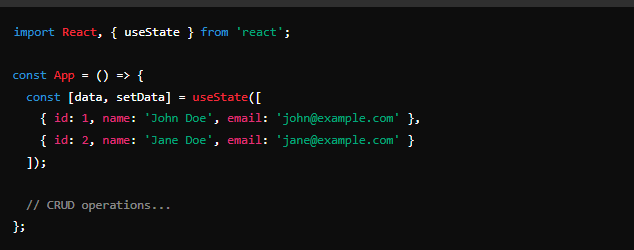
Without an API, you’ll need to simulate a database within your application. This can be done using the state hook to manage your data locally. For this example, let’s create a simple array of objects that will serve as our mock user database.

4. Implementing the Create Operation

The Create operation allows users to add new records to the database. In a real-world scenario, this would involve sending data to an API endpoint. However, for our ReactJS app development, we’ll simply update the local state.

5. Implementing the Read Operation

Reading data is the simplest of the CRUD operations. In this React JS development services example, reading is as simple as mapping over the data array and displaying each user’s information.

6. Implementing the Update Operation

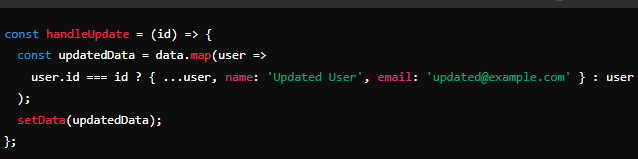
Updating records involves allowing users to edit existing data. In a ReactJS web development project, this could mean editing a user’s profile or updating a product’s details.

7. Implementing the Delete Operation

The Delete operation removes records from the database. For this, you’ll filter out the item that needs to be deleted from the data array.

8. Enhancing the User Interface

While the basic CRUD operations are functional, enhancing the user interface (UI) can significantly improve the user experience. A well-designed UI is critical for engaging users, especially when working with a ReactJS development company.

9. Managing Data Persistence with Local Storage

To persist data between sessions, you can use the browser’s local storage. This ensures that even after refreshing the page, your data remains intact.

10. Common Challenges and How to Overcome Them

As your application grows, managing state with useState might become cumbersome. This is where advanced state management tools like Redux come into play. If you’re working on a larger ReactJS app development project, these tools can be indispensable.

11. Conclusion: When to Use Local CRUD Operations Without an API

Implementing CRUD operations directly in a ReactJS application is perfect for small projects, prototyping, or educational purposes. However, for larger and more complex ReactJS applications, it’s advisable to connect with a proper backend API. If you’re considering building a robust application, it might be beneficial to hire ReactJS developers who have experience with both front-end and back-end integrations.

By mastering CRUD operations in ReactJS, you’ll be equipped to build a wide range of applications, from simple prototypes to complex, production-ready systems.

Android App Development

In the fast-paced world of mobile technology, staying ahead of the curve is key, especially in Android app development. One name that’s making headlines in this space is Kotlin. Since Google endorsed Kotlin as a preferred language for Android development services, its popularity has skyrocketed. Developers love it, businesses are adopting it, and it’s shaping up to be the future of Android app development. In this blog, we’ll dive into what makes Kotlin special, how it’s transforming the Android landscape, and why it’s likely here to stay.

What Is Kotlin Programming Language?

Kotlin is a modern programming language developed by JetBrains, the brains behind popular tools like IntelliJ IDEA. It was introduced in 2011, but it took off when Google officially backed it for Android app development in 2017. Kotlin was designed to work seamlessly with Java, offering a fresh alternative with fewer headaches and more perks.

Kotlin is versatile, supporting both object-oriented and functional programming. While it’s great for Android, it’s also used for mobile app development, desktop applications, and more. However, it’s in Android app development where Kotlin shines, giving developers the tools they need to create apps that are efficient, reliable, and user-friendly.

Kotlin’s Importance for Android App Development

When Google announced its support for Kotlin, it sent a clear message: this is the future of Android app development. Java had been the dominant language for years, but it wasn’t without its challenges. Developers often struggled with Java’s verbosity, and the infamous “null pointer exceptions” were a constant source of frustration.

Kotlin stepped in as the solution to these problems. It allows developers to write less code to achieve the same results, which means fewer bugs and faster development. Kotlin’s null safety features also help prevent those pesky runtime crashes, leading to more stable and dependable apps.

Another big plus? Kotlin’s interoperability with Java. In other words, developers don’t have to completely rewrite their existing projects to use Kotlin. It’s a win-win, making it easier to modernize apps while keeping what works.

How Developers Use Kotlin

Kotlin’s flexibility and powerful features have made it a favorite among Android developers. Whether they’re updating an existing app or building something brand new, Kotlin is often the language of choice.

For Android app development, most developers use Kotlin within Android Studio, which fully supports the language. Kotlin’s concise syntax, along with features like type inference, data classes, and extension functions, makes coding more straightforward and efficient.

One of the standout features of Kotlin is Coroutines, which makes writing asynchronous code a breeze. This is crucial in Android app development, where apps must handle tasks like network requests without freezing the user interface. Coroutines make it easier to manage these background tasks, leading to smoother, more responsive apps.

Kotlin is also making waves with its Multiplatform capabilities. Developers can now share code between Android and iOS, reducing the time and effort needed to build cross-platform apps. This is a big deal for businesses looking to reach a wider audience without doubling their workload.

The Key Benefits of Adopting Kotlin for Your Next Project

If you’re considering Kotlin for your next Android project, you’re in good company. Here’s why so many developers and businesses are making the switch:

  1. Concise Code: Kotlin cuts down on boilerplate code, meaning you can accomplish more with less. Fewer lines of code reduce the chance of bugs and make the development process faster. This can translate into cost savings and a quicker launch for your app.
  2. Better Readability: Kotlin’s clean, readable syntax makes it easier for teams to collaborate. When code is easier to understand, it’s easier to maintain, leading to fewer headaches down the road.
  3. Seamless Java Integration: Kotlin works perfectly with Java, so you can introduce it into your project gradually. This flexibility is ideal for ongoing projects where a complete overhaul would be too risky.
  4. Built-In Null Safety: Kotlin’s type system is designed to prevent null pointer exceptions, which are a common source of crashes in Java. This leads to more stable apps and happier users.
  5. Coroutines for Easier Asynchronous Programming: Kotlin’s Coroutines makes handling background tasks much simpler, improving your app’s performance and user experience.
  6. Growing Ecosystem and Community: Kotlin’s popularity means there’s a wealth of resources available, from libraries to community support. This makes it easier to find solutions and keeps the development process moving smoothly.

The Advantages of Kotlin for Businesses

Kotlin isn’t just great for developers—it’s a smart choice for businesses too. Here’s why:

  1. Faster Development: Kotlin’s efficiency means faster development times, which is crucial if you’re working with tight deadlines or trying to beat competitors to market.
  2. Cost Savings: Less code and fewer bugs mean lower development and maintenance costs. Over time, this can result in significant savings for your business.
  3. Future-Proofing: With Kotlin gaining momentum, using it ensures that your app is built with a modern, well-supported language. This makes it easier to update and maintain in the future.
  4. Better Performance and User Experience: The stability and efficiency of Kotlin lead to apps that perform better, offering users a smoother experience. This can translate into higher ratings and better user retention.
  5. Attracting Top Talent: Kotlin’s popularity means that many top developers are eager to work with it. Adopting Kotlin can help you attract and retain the best talent for your projects.

Is Kotlin the Future of Android Development?

All signs point to Kotlin being the future of Android development. Google’s backing and the enthusiastic adoption by the Android community are strong indicators. Many of the world’s leading apps—like Pinterest, Trello, and Netflix—are already using Kotlin, and more are following suit.

For businesses, this trend means that working with an Android app development company or choosing to hire Kotlin developers is a smart move. Kotlin’s modern features and compatibility with Java make it a great choice for both new and existing projects. As Android continues to evolve, Kotlin’s role is likely to become even more central, making it a must-have skill for developers and a smart investment for businesses.

Exploring the Impact of Kotlin on Android Development Efficiency

mobile app development Services

Kotlin isn’t just a new language—it’s a tool for making Android development more efficient. Its concise syntax means developers can write code faster, with fewer errors. This speeds up the entire development process, from initial coding to final debugging.

Kotlin’s seamless integration with Java also boosts efficiency. Developers can start using Kotlin in small parts of their projects without needing a full-scale migration, which minimizes disruption and makes the transition smoother.

Then there are Coroutines, which simplify asynchronous programming. Managing background tasks becomes much easier, leading to apps that are not only faster to develop but also more responsive for users.

For businesses, this increased efficiency means getting to market faster, cutting costs, and delivering higher-quality apps. It’s no wonder that Kotlin is becoming the language of choice for so many Android app development professionals.

Conclusion

Kotlin has already made a significant impact on Android app development, and its influence is only set to grow. With its modern features, seamless integration with Java, and strong backing from Google, Kotlin is well-positioned to become the dominant language for Android development.

For businesses looking to build high-quality, efficient, and future-proof apps, adopting Kotlin is a smart move. Whether you’re starting a new project or looking to improve an existing app, Kotlin offers the tools and features needed to succeed in today’s competitive mobile app market. By choosing to hire Android developer experts or working with an Android apps development company, you’ll be setting your project up for success. As more developers and companies embrace Kotlin, its role as the future of Android development becomes increasingly clear.

hire SQL developers

In today’s data-driven world, SQL developers are the unsung heroes behind the scenes, ensuring businesses can efficiently manage and utilize their data. With data playing a central role in decision-making and operations, having skilled SQL developers on your team isn’t just a luxury—it’s a necessity. In this blog, we’ll delve into the crucial role SQL developers play in modern data management, why they are indispensable, and how they can drive success for your business.

1. Understanding SQL: The Backbone of Data Management

What is SQL?

Data management and manipulation is done using Structured Query Language (SQL). It’s the tool that allows you to query databases, retrieve information, and perform various operations on your data. SQL is essential for creating, reading, updating, and deleting data—tasks commonly referred to as CRUD operations.

Why SQL Matters

In a world where data is king, SQL is the cornerstone of effective data management. It ensures data is stored efficiently, retrieved swiftly, and manipulated securely. Without SQL, managing vast amounts of data would be challenging, making SQL developers essential for smooth operations. They handle everything from designing database schemas to writing complex queries that drive business insights.

The Evolution of SQL

In its early years, SQL was a very different beast. What started as a simple tool for querying data has evolved to include advanced features like window functions, common table expressions (CTEs), and complex joins. These advancements allow SQL developers to handle more complex data manipulation and analysis tasks, making their role more critical than ever.

2. The Key Responsibilities of SQL Developers

Designing and Maintaining Databases

SQL developers are tasked with designing and maintaining databases that are both efficient and scalable. This involves creating database schemas, defining tables, and establishing relationships between different data sets. A well-designed database ensures data is organized logically, enhancing performance and reducing errors. For instance, managing MySQL applications requires a deep understanding of MySQL server reporting services to ensure the database runs efficiently.

Creating Efficient Indexes

Indexes are crucial for database performance. SQL developers create and manage indexes to speed up query processing. By understanding how data is accessed, they design indexes that minimize query execution time and improve overall system efficiency. This is especially important when working with SQL server database solutions, where performance can greatly impact business operations.

Writing and Optimizing SQL Queries

SQL developers write complex queries to retrieve and manipulate data. They also focus on optimizing these queries to run efficiently, which is vital for handling large data volumes. Optimized queries enhance performance, reduce server load, and ensure users get the information they need quickly. Whether you need SQL server development for new projects or optimizing existing queries, their skills are crucial.

Ensuring Data Security

SQL developers place a high priority on data security. They implement measures like user authentication and data encryption to protect sensitive information from unauthorized access. Ensuring data integrity and security is crucial for maintaining trust and complying with regulations such as GDPR and HIPAA.

Troubleshooting and Debugging

When issues arise in the database, SQL developers are the go-to experts for troubleshooting and debugging. They use their skills to identify the root cause of problems and implement effective solutions, minimizing downtime and keeping operations running smoothly.

Data Migration and Integration

As businesses evolve, data migration and integration become critical. SQL developers handle the transfer of data from old systems to new ones and integrate data from various sources. Their expertise ensures accurate data migration and seamless integration across systems. This includes managing the intricacies of MySQL server reporting services and ensuring compatibility with other data solutions.

3. Why Every Business Needs SQL Developers

Data-Driven Decision Making

The ability to make informed decisions is of utmost importance in today’s competitive business environment. SQL developers enable businesses to access and analyze data effectively, providing insights that drive strategic decisions. Whether it’s understanding customer behavior or optimizing operations, SQL developers transform raw data into actionable intelligence.

Improving Efficiency and Performance

Efficient data management leads to better performance across the organization. SQL developers optimize database structures and queries, which speeds up data retrieval and processing. This results in faster decision-making, improved customer experiences, and overall business performance. For companies relying on SQL server database solutions, this efficiency is crucial for maintaining operational excellence.

Supporting Business Growth

Businesses need to manage data more effectively as they grow. SQL developers ensure that databases scale with the business, handling increasing data volumes and more complex queries. They also help integrate new technologies and systems, ensuring data management evolves with business growth.

Facilitating Data Integration

Today’s businesses often use multiple systems and applications that need to share data seamlessly. SQL developers excel in integrating different data sources, ensuring smooth data flow between systems. This integration is vital for creating a unified view of information, which supports effective decision-making.

Enhancing Customer Experiences

A well-managed database can significantly improve customer experiences. SQL developers design systems that track customer interactions, preferences, and feedback. This data-driven approach allows for personalized marketing, better customer service, and enhanced overall satisfaction.

4. How to Find and Hire the Right SQL Developer

Assessing Skills and Experience

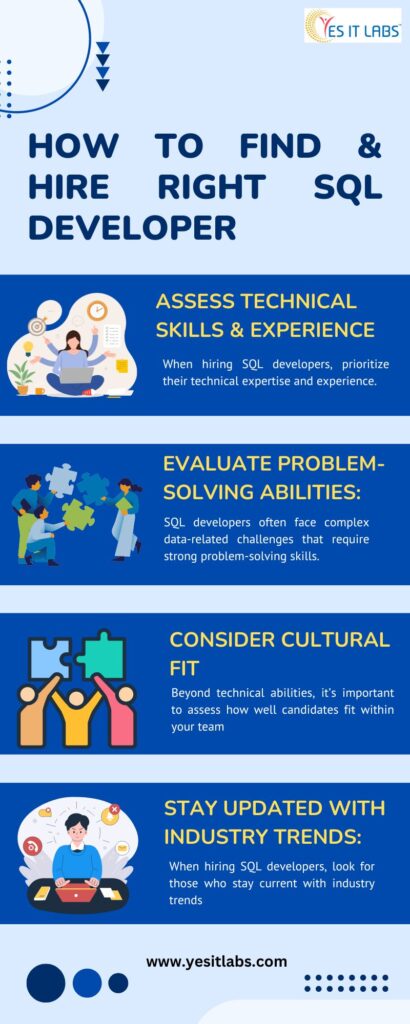
When looking to hire SQL developers, it’s crucial to evaluate their technical skills and experience. Look for candidates with a strong background in SQL and database management, along with experience using relevant tools and technologies. Certifications, such as those for certified MySQL developers, and a proven track record are also good indicators of expertise.

Evaluating Problem-Solving Abilities

SQL developers should have strong problem-solving skills, as they frequently face complex data-related challenges. Assess their ability to troubleshoot issues and optimize queries by reviewing their previous work or conducting technical assessments. Whether you’re looking to hire MySQL developers or SQL developers, problem-solving skills are essential.

Cultural Fit and Communication Skills

In addition to technical skills, consider the candidate’s cultural fit and communication abilities. SQL developers should work well within a team, effectively communicate with non-technical stakeholders, and understand the business context of their work. Strong interpersonal skills can enhance collaboration and ensure data solutions align with business objectives.

Keeping Up with Industry Trends

The field of data management is constantly evolving. When hiring SQL developers, look for candidates who stay current with industry trends and emerging technologies. This includes familiarity with cloud-based databases, big data technologies, and advancements in SQL standards.

5. The Future of SQL Development and Data Management

Emerging Trends and Technologies

The data management landscape is ever-changing, with new technologies and trends shaping the future of MySQL development. Artificial intelligence (AI) and machine learning (ML) are being integrated with SQL databases to enhance data analysis and predictive capabilities. Staying up-to-date with these trends is crucial for SQL developers to remain effective in their roles.

The Growing Importance of Data Literacy

As data becomes central to business success, data literacy across organizations is increasingly important. SQL developers will play a key role in promoting data literacy by designing intuitive data access solutions and providing training to team members. This ensures everyone in the organization can leverage data effectively.

Integration with Cloud Platforms

The shift to cloud-based data management is transforming how businesses store and access data. SQL developers must adapt to cloud platforms and technologies, ensuring data management practices align with the cloud environment’s requirements and capabilities. Cloud databases offer scalability and flexibility but come with unique challenges that SQL developers must navigate.

Focus on Real-Time Data Processing

The demand for real-time data processing is growing as businesses seek timely insights. SQL developers are working with technologies that support real-time data analytics, such as streaming data platforms and in-memory databases. This shift requires a deep understanding of SQL and emerging real-time data technologies.

Leveraging Data Analytics and Visualization

SQL developers are increasingly involved in data analytics and visualization. By collaborating with data analysts and business intelligence (BI) teams, they help create dashboards and reports that provide valuable insights into business performance. Their expertise ensures that these visualizations are accurate and informative, aiding strategic decision-making.

6. Practical Tips for Working with SQL Developers

Clear Communication

Effective communication is essential for a successful partnership with SQL developers. Clearly define your data requirements, objectives, and expectations from the beginning. Regularly update developers on any changes in business needs or data requirements to ensure alignment.

Collaborative Approach

Encourage a collaborative approach between SQL developers and other teams within your organization. SQL developers should work closely with data analysts, IT staff, and business stakeholders to understand their needs and deliver solutions that meet those needs effectively.

Ongoing Training and Development

Invest in ongoing training and development for your SQL developers. The field of data management is rapidly evolving, and continuous learning is vital for staying current with new technologies and best practices. Provide opportunities for professional growth through workshops, conferences, and certifications.

Conclusion

SQL developers are the driving force behind effective data management in today’s digital world. Their expertise in designing databases, writing and optimizing queries, ensuring data security and troubleshooting issues makes them indispensable to any data-driven organization. By understanding their critical role and investing in skilled SQL developers, businesses can unlock the full potential of their data, drive growth, improve efficiency, and make informed decisions. In a landscape where data management is increasingly complex, having top-notch SQL developers on your team is not just an advantage—it’s essential for success. As the field continues to evolve, SQL developers will remain at the forefront, enabling businesses to navigate data management complexities and harness the power of their data.

For those seeking to hire MySQL developers or integrate SQL server development into their projects, understanding the comprehensive role of SQL developers is the first step towards making an informed decision. Their contributions are crucial for leveraging data to its fullest potential and achieving business excellence in the modern era.

hybrid app development

Hybrid app development combines the flexibility of web technologies with the performance of native applications. As hybrid apps gain popularity, ensuring their security is crucial. This comprehensive guide will walk you through essential security best practices for hybrid app development, offering actionable insights to safeguard your app and its users.

Understanding Hybrid App Development Security Risks

Why Hybrid App Development Is Targeted

Hybrid app development uses web technologies wrapped in a native container, making them appealing targets for attackers. Their unique architecture introduces specific vulnerabilities, such as weaknesses in web views (which display web content within the app) and potential issues with third-party libraries. Recognizing these risks is the first step in addressing them.

Common Threats and Vulnerabilities

Hybrid app development faces several common threats, including:

  • Cross-Site Scripting (XSS): Malicious scripts injected into web views can compromise app functionality and user data.
  • Insecure Data Storage: Data stored on the device without proper encryption can be accessed by unauthorized users.
  • Insecure APIs: APIs lacking proper security measures can be exploited to access sensitive data.
  • Code Injection: Attackers may inject malicious code into the app if there are vulnerabilities.

Understanding these threats helps in developing effective security measures.

Implementing Secure Coding Practices

Use Secure APIs

APIs are a crucial part of hybrid app development, enabling communication between the web and native components. Ensure APIs are secure by:

  • Authenticating: Use robust authentication methods like OAuth to control access.
  • Encrypting: Protect data transmitted through APIs with strong encryption.
  • Rate Limiting: Implement rate limits to prevent abuse and denial-of-service attacks.

Validate and Sanitize Input

Protect against attacks by:

  • Validating Inputs: Always validate and sanitize user inputs to prevent malicious data from causing harm.
  • Escaping Characters: Properly escape special characters to avoid injection attacks.
  • Using Parameterized Queries: For database interactions, use parameterized queries to prevent SQL injection.

Avoid Hardcoding Sensitive Information

To protect sensitive data:

  • Use Environment Variables: Store sensitive information in environment variables instead of hardcoding them in your app.
  • Secure Storage Solutions: Utilize secure storage mechanisms provided by the platform to store sensitive data.

Enhancing Data Protection

Encrypt Data in Transit and at Rest

Encryption is vital for hybrid app development:

  • In Transit: Use HTTPS and TLS to encrypt data during transmission, ensuring it remains confidential and tamper-proof.
  • At Rest: Encrypt data stored on the device using strong algorithms to protect it from unauthorized access.

Implement Secure Storage Solutions

For secure data storage:

  • iOS Keychain: Use iOS Keychain to store sensitive data like passwords and tokens securely.
  • Android Keystore: Utilize Android Keystore for cryptographic operations and secure data storage.

Regularly Update and Patch Software

Stay secure by:

  • Updating Dependencies: Regularly update third-party libraries and frameworks to include the latest security patches.
  • Monitoring Vulnerabilities: Keep track of vulnerabilities in the libraries and tools you use and apply necessary patches.

Strengthening User Authentication

Implement Multi-Factor Authentication (MFA)

Add an extra layer of security with MFA:

  • Combine Factors: Use multiple factors such as passwords, smartphones, and biometrics to authenticate users.
  • Token-Based Authentication: Implement token-based methods like JWT for secure authentication.

Use Secure Password Practices

Ensure password security by:

  • Enforcing Strong Passwords: Require passwords with a mix of characters, numbers, and symbols.
  • Hashing Passwords: Use secure hashing algorithms like bcrypt or Argon2 for storing passwords.

Monitor Authentication Attempts

Detect suspicious activities by:

  • Tracking Login Attempts: Log login attempts to identify patterns that might indicate attacks.
  • Account Lockout: Implement lockout mechanisms after multiple failed attempts to prevent brute-force attacks.

Securing Data Exchange and Communication

Enforce Secure Communication Protocols

Protect data exchange with:

  • HTTPS: Ensure all communication between the app and server is encrypted using HTTPS.
  • TLS Configuration: Use the latest TLS protocols and ciphers to secure data in transit.

Protect Against Man-in-the-Middle Attacks

Mitigate MITM attacks with:

  • Certificate Pinning: Implement certificate pinning to prevent attackers from using fraudulent certificates.
  • Public Key Infrastructure (PKI): Use PKI to manage and verify digital certificates.

Validate SSL/TLS Certificates

Ensure certificate validity by:

  • Checking Expiration: Make sure SSL/TLS certificates are valid and not expired.
  • Verifying Chain: Confirm that the certificate chain is correctly validated.

Regular Security Audits and Penetration Testing

Conduct Regular Security Audits

Audits help uncover vulnerabilities:

  • Internal Audits: Perform regular internal audits to assess your app’s security.
  • External Audits: Engage third-party experts for unbiased evaluations and recommendations.

Perform Penetration Testing

Simulate attacks to find weaknesses:

  • Manual Testing: Conduct manual penetration tests to identify complex vulnerabilities.
  • Automated Testing: Use automated tools for routine scans and common vulnerability detection.

Review and Update Security Policies

Keep policies current by:

  • Regular Reviews: Update security policies to address new threats and technological changes.
  • Implementation: Ensure your team follows updated security policies and practices.

Educating Users and Developers

Train Developers on Security Best Practices

Educate your team by:

  • Security Training: Provide training on secure coding practices and emerging threats.
  • Awareness Programs: Promote understanding of common security issues and how to avoid them.

Educate Users on Security Awareness

Help users stay safe by:

  • Phishing Awareness: Teach users to recognize and avoid phishing scams.
  • Account Security: Encourage strong passwords and the use of MFA.

Encourage Regular Security Updates

Promote the importance of updates by:

  • Update Notifications: Inform users about the need to keep apps and devices updated.
  • Automatic Updates: Implement automatic updates to ensure users receive the latest security patches.

Leveraging Security Tools and Frameworks

Use Security Libraries and Frameworks

Enhance security with:

  • Libraries: Utilize libraries that offer built-in protections against common vulnerabilities, which is crucial for hybrid app development.
  • Frameworks: Leverage frameworks that provide comprehensive security features, enhancing the safety of your hybrid app development.

Integrate Threat Detection Solutions

Monitor and respond to threats by:

  • Real-Time Monitoring: Use tools that provide real-time alerts for suspicious activities.
  • Anomaly Detection: Implement solutions to detect unusual behavior indicative of security issues.

Implement Automated Security Testing

Streamline security assessments with:

  • Static Analysis: Use tools to examine code for vulnerabilities before deployment.
  • Dynamic Analysis: Employ tools to test app behavior and interactions in real time.

Conclusion

Securing hybrid app development requires a comprehensive approach that balances robust security practices with ongoing vigilance. By understanding the unique risks associated with hybrid app development and implementing effective security measures, you can protect your users and their data from potential threats. Prioritize security throughout the development lifecycle, stay informed about emerging threats, and regularly update your practices to ensure your app remains secure.

Hybrid app development companies should focus on integrating these best practices into their development process. By adopting these strategies, you can enhance the security of your hybrid app development services and build a resilient app that stands strong against the evolving landscape of cyber threats.

Whether you’re working with a mobile app development company or handling hybrid app development in-house, these practices are crucial for safeguarding your app. Stay proactive, prioritize security, and ensure that your hybrid app development is both effective and secure.

Guide to Mobile App Development

Today mobile application development for companies is more than just a trend, it’s necessary for businesses aiming to stay ahead. Whether running a startup or managing a well-established company, investing in app development for companies can dramatically enhance your business operations and customer engagement. Let’s dive into the essentials of business app development and discover how to make your app a success.

Why Your Business Needs a Mobile App

Boost Customer Engagement

Mobile apps provide a direct and constant line to your customers. By having your app on their phones, users can interact with your brand anytime, anywhere. This constant connection helps keep your business top-of-mind and encourages more frequent engagement through features like push notifications, special offers, and updates.

Improve Customer Experience

A well-designed app makes it easy for users to navigate your services or products. Features like personalized recommendations, quick access to customer support, and easy checkouts make for a smoother, more enjoyable user experience. This not only satisfies current customers but also attracts new ones by providing a user-friendly platform.

Streamline Operations

Apps aren’t just for customers, they can also enhance your internal processes. Custom apps can automate tasks such as inventory management, order processing, and staff scheduling. This automation reduces manual effort, minimizes errors, and boosts efficiency, ultimately saving time and reducing costs.

Gain Valuable Insights

Apps can gather valuable data on user behavior, preferences, and interactions. By analyzing this data, you can gain insights into customer habits and preferences, which helps in refining marketing strategies and improving your offerings. Data-driven decisions ensure that you’re meeting your customers’ needs effectively.

Stay Ahead of Competitors

Having a mobile app can set you apart from competitors who haven’t embraced mobile technology. It shows that your business is modern and innovative, appealing to tech-savvy customers. This edge can be crucial in attracting and retaining customers in a competitive marketplace.

Steps to Develop a Successful Business App

1. Set Clear Objectives

Before starting development, define what you want your app to achieve. Do you want to increase sales, improve customer service, or streamline operations? Having clear, measurable goals will guide the development process and help you evaluate the app’s success.

2. Know Your Audience

Understanding your target audience is key to designing an app that meets their needs. Identify their preferences, behaviors, and pain areas through market research. Create user personas to visualize your ideal users and tailor your app’s features and design accordingly.

3. Choose the Right Platform

Decide whether to develop a native app (for iOS or Android), a hybrid app (for both platforms), or a web app. Each option has its advantages:

  • Native Apps: Provide excellent performance and a seamless user experience but require separate development for iOS and Android.
  • Hybrid Apps: This allows you to maintain a single codebase for multiple platforms, balancing performance and development efficiency.
  • Web Apps: These are accessible via browsers, offering a cost-effective solution but may not match the performance of native apps.

4. Design for User Experience

A user-friendly design is crucial for your app’s success. Focus on creating an intuitive interface with easy navigation and a visually appealing layout. Gather feedback from potential users during the design phase to ensure the app meets their expectations.

5. Develop and Test

Select a reputable mobile app development company that follows best practices in coding and security. During development, include features and conduct thorough testing to identify and fix issues. Ensure smooth user experience by testing functionality, usability, and performance.

6. Launch and Promote

Promote your app on various platforms once it’s ready to go on app stores. Use social media, email marketing, and press releases to generate interest and drive downloads. Monitor user feedback and app performance to make necessary adjustments and improvements.

7. Maintain and Update

Post-launch, focus on maintaining and updating your app regularly. Address any bugs or issues promptly and keep the app compatible with the latest operating systems and devices. Regular updates help retain user interest and ensure the app remains functional and relevant.

Best Practices for Business App Development

1. Prioritize Security

Security is paramount in mobile application development for companies. Implement strong encryption, secure authentication methods, and regular updates to protect user data. Ensuring your app’s security builds trust with your users and helps prevent data breaches.

2. Focus on Performance

App performance affects user satisfaction. Optimize your app to ensure fast loading times, smooth transitions, and minimal crashes. A well-performing app keeps users engaged and reduces the likelihood of them abandoning the app due to frustration.

3. Incorporate Analytics

Integrate analytics tools to track user behavior, app usage, and performance metrics. Analyzing this data helps you understand how users interact with your app, identify areas for improvement, and make informed decisions to enhance its effectiveness.

4. Keep It Simple

Simplicity is key. Avoid overloading your app with unnecessary features or complex navigation. Focus on delivering a streamlined experience that aligns with your core objectives and meets user needs effectively.

5. Plan for Scalability

Design your app with growth in mind. As your business evolves, you may need to add new features or accommodate more users. Building a scalable app architecture ensures that you can expand and adapt without major overhauls.

6. Ensure Cross-Platform Compatibility

If developing a hybrid or web app, ensure it performs well across different devices and operating systems. A consistent experience across platforms enhances user satisfaction and broadens your app’s reach.

7. Emphasize Accessibility

Make your app accessible to all users by following accessibility guidelines. Features like voice commands, screen readers, and adjustable text sizes ensure that your app is inclusive and user-friendly for everyone.

Emerging Trends in Mobile App Development


1. Machine Learning (ML) and Artificial Intelligence (AI)

AI and ML are revolutionizing app development for companies by enabling more personalized and intelligent experiences. AI can power features like chatbots, personalized recommendations, and predictive analytics, providing users with relevant and engaging interactions.

2. Augmented Reality (AR)

AR technology enhances user experiences by overlaying digital content onto the real world. In sectors like retail and real estate, AR allows users to visualize products or properties in their environment, creating interactive and immersive experiences.

3. 5G Technology

5G networks promise faster speeds and more reliable connections. This advancement will enhance app performance, enable high-quality video streaming, and support real-time data processing, improving overall user experiences.

4. Internet of Things (IoT)

IoT connects everyday devices to the internet, enabling seamless interaction and data exchange. Mobile application development for businesses that integrate with IoT devices can offer innovative solutions, such as smart home controls and real-time asset tracking.

5. Blockchain Technology

Blockchain provides secure and transparent transactions, making it ideal for apps requiring high data security and integrity. Blockchain integration can enhance trust and reliability, particularly in sectors like finance and supply chain management.

Conclusion

Mobile application is a powerful tool for businesses looking to enhance customer engagement, streamline operations, and gain a competitive edge. By understanding the development process, following best practices, and staying abreast of emerging trends, you can create an app that not only meets but exceeds your business goals.

Investing in a well-designed mobile app strengthens your brand’s presence in the digital landscape and opens up new opportunities for innovation and customer interaction. Whether you’re launching a new app or improving an existing one, a strategic approach to business app development will ensure your app delivers value and resonates with your target audience. With the right plan and execution, your app can be a game-changer, driving growth and success in today’s mobile-first world.

If you’re considering app development for small businesses, partnering with a skilled mobile application development company can make all the difference. They will guide you through every step, from conceptualization to launch, ensuring your app aligns with business objectives and meets user needs effectively. For businesses targeting Apple users, choosing a trusted iOS application development service ensures seamless performance and user experience. Similarly, Android app development services help you reach a wider audience with scalable, feature-rich mobile applications.

power apps freelancer

Microsoft Power Apps can be a game-changer, helping you create custom applications with minimal coding. But to truly unlock its potential, you might need a bit of extra expertise. This is where hiring a Power Apps freelancer can be incredibly valuable. In this blog, we’ll dive into why bringing a freelancer on board can be a smart move for your business and how it can drive efficiency, innovation, and growth.

What is Power Apps? A Quick Introduction

Microsoft Power Apps is a versatile tool that lets businesses create custom applications quickly and easily. Whether you want to automate tasks, manage data, or integrate with other systems, Power Apps offers a flexible platform to meet your needs without requiring deep coding skills. It’s a powerful way to enhance your business processes and improve efficiency.

Why Choose a Freelancer? The Benefits of Going Independent

1. Expertise Without the Overhead:

Freelancers offer specialized skills without the costs associated with full-time employees. This means you get top-notch expertise without long-term financial commitments. By opting to hire a Power Apps freelancer, you gain access to professionals who excel in custom software development and can deliver tailored solutions for your business.

2. Immediate Availability:

Power Apps freelancers can often start working on your project right away. If you have tight deadlines or urgent needs, they can jump in and get things moving quickly. This speed is crucial, especially when you need custom mobile app development services to address pressing business needs.

3. No Long-Term Commitment:

You pay for the work done, not for a permanent position. This flexibility allows you to manage your budget more effectively and adjust your resources based on current needs. When you hire a Power Apps freelancer, you avoid the long-term costs and commitments associated with full-time employees.

Tailored Expertise: Custom Solutions Just for You

1. Specialized Knowledge:

When you hire a Power Apps freelancer, you bring on board someone with extensive experience in Power Apps. They understand the platform inside and out, ensuring you get solutions that are both effective and efficient. This specialized knowledge is a key advantage over general mobile app development companies.

2. Customized Solutions:

Unlike off-the-shelf software, freelancers can create apps that are tailored to your specific business needs. Whether you need to streamline a process or integrate with existing systems, they can build a solution that fits perfectly. Custom software development is a core benefit of working with Power Apps freelancers.

3. In-Depth Consultation:

Power Apps freelancers can provide valuable insights during the planning phase, helping you choose the best approach to achieve your goals and maximize the benefits of Power Apps. Their expertise in Microsoft development services ensures that your app is not only functional but also strategically aligned with your business objectives.

Cost-Effective Solutions: Get More for Your Money


1. No Long-Term Costs:

With freelancers, you only pay for the work completed. This can be especially beneficial for small to mid-sized businesses with limited budgets. By choosing to hire Microsoft 365 developer, you can achieve high-quality results without the overhead of a full-time employee.

2. Transparent Pricing:

Freelancers usually offer clear pricing models, so you know exactly what you’re paying for. This helps avoid unexpected costs and makes budgeting easier. For businesses considering custom mobile app development services, this clarity is crucial for financial planning.

3. Avoid Training Costs:

Freelancers come with the skills needed to get the job done. This means you don’t have to invest in training or development, saving both time and money. When you hire a Power Apps freelancer, you bypass the need for extensive training and can immediately benefit from their expertise.

4. Efficient Resource Allocation:

Hiring a freelancer allows your internal team to focus on their core responsibilities while the freelancer handles the Power Apps project. This is particularly advantageous if your team is already engaged with other important tasks, such as those managed by a mobile app development company.

Flexibility and Scalability: Adapting to Your Needs

1. Scalable Support:

Power Apps freelancers can scale their involvement based on your project needs. If your requirements change, you can easily adjust the level of support you receive. This flexibility is essential for adapting to evolving business needs and ensuring that your custom mobile app development services are aligned with your objectives.

2. Flexible Work Hours:

Many freelancers work on flexible schedules, which can be advantageous if you need to accommodate different time zones or shifting deadlines. This adaptability is a significant benefit when you’re working with a power apps freelancer who needs to coordinate with your team’s schedule.

3. Project-Based Engagements:

You can hire freelancers for specific projects or phases, allowing you to align their work with your business needs without long-term commitments. This approach is especially useful for custom software development, where project requirements can vary greatly.

Speed and Efficiency: Fast-Tracking Your Projects

1. Faster Turnaround:

Power Apps freelancers often complete projects more quickly than traditional teams due to their focused expertise. This means you can get your solutions up and running faster, which is crucial for maintaining a competitive edge in the market.

2. Reduced Development Time:

With a freelancer who is already experienced in Power Apps, you can skip the learning curve and start seeing results sooner. This rapid development is a key advantage when engaging in custom mobile app development services.

3. Prioritized Deliverables:

Freelancers focus on completing specific deliverables, which helps ensure that projects are executed efficiently and effectively. By choosing to hire power app developers, you ensure that your project milestones are met with precision.

Access to the Latest Skills and Tools


1. Staying Current:

Power Apps freelancers are often up-to-date with the latest trends and tools in their field. This means they bring cutting-edge techniques and solutions to your projects, leveraging the latest advancements in custom software development.

2. Specialized Tools:

Many freelancers have access to advanced tools and resources that can enhance the development process and deliver superior results. This expertise is particularly beneficial for projects requiring custom mobile app development services.

3. Innovative Solutions:

Freelancers’ diverse experiences across various projects and industries can provide fresh, innovative approaches to solving your challenges. This creativity is a major asset in developing custom solutions that meet your business needs.

Fresh Perspectives and Creativity

1. New Insights:

Freelancers bring an outside perspective that can lead to innovative solutions and creative problem-solving. Their diverse backgrounds can offer new ideas and approaches, especially in the context of custom software development.

2. Dedicated Attention:

Unlike internal teams juggling multiple responsibilities, freelancers focus solely on your project. This dedicated attention can result in higher-quality outcomes and more creative solutions.

3. Customization and Personalization:

Freelancers can work closely with you to tailor their approach, ensuring that the solutions they deliver are perfectly aligned with your business goals. This personalized service is a significant advantage when working with a mobile app development company.

How to Find and Hire the Perfect Power Apps Freelancer

1. Define Your Needs:

Clearly outline your project requirements and goals before starting your search. This will help you find a freelancer with the right skills and experience in custom mobile app development services.

2. Review Portfolios:

Examine potential freelancers’ portfolios to assess their previous work and ensure they have relevant experience. Look for examples that align with your needs in custom software development.

3. Check References:

Ask for and verify references to ensure the freelancer’s reliability and performance. This step is crucial for ensuring that the freelancer you hire power app developers from has a track record of successful projects.

4. Start with a Trial:

Consider starting with a smaller project or trial period to evaluate the freelancer’s capabilities before committing to larger engagements. This approach helps in assessing their fit for your custom mobile app development services.

5. Communication and Collaboration:

Ensure that the freelancer communicates effectively and is open to collaboration. Clear communication is essential for project success, especially when working with a mobile app development company.

6. Technical Compatibility:

Verify that the freelancer is familiar with the specific tools and technologies you plan to use, including any integrations with other systems.

Debunking Common Myths About Freelancers

1. Lack of Commitment:

Some worry that freelancers may not be as committed as full-time employees. However, many freelancers are highly dedicated to delivering quality work and building their reputation. This commitment is crucial when you hire a Power Apps freelancer.

2. Quality Concerns:

Freelancers are often judged by their portfolios and reviews. By selecting a reputable freelancer, you can ensure high-quality results that meet your standards. This is especially important for custom software development.

3. Security Risks:

Security concerns can be addressed with proper contracts, NDAs, and secure communication channels. Ensuring these measures are in place is vital when working with any freelancer, including those offering custom mobile app development services.

4. Long-Term Support:

Freelancers can provide ongoing support or maintenance if needed. Discuss these options at the outset to ensure they align with your requirements, particularly for projects requiring custom software development.

Success Stories: How Freelancers Have Made a Difference

1. Streamlining Operations:

A mid-sized manufacturing firm hired a Power Apps freelancer to create a custom inventory management app. The solution cut processing time by 40% and improved data accuracy.

2. Boosting Customer Engagement:

A retail business engaged a freelancer to develop a customer feedback app integrated with their CRM. This app led to a 30% increase in customer satisfaction by providing real-time feedback.

3. Automating Compliance:

A financial services company used a Power Apps freelancer to build an app that automated compliance reporting. The app reduced manual entry errors and cut reporting time by 50%.

Wrapping Up: The Strategic Advantages of Hiring a Power Apps Freelancer

Bringing a Power Apps freelancer into your team offers numerous benefits that can significantly impact your business. From specialized expertise and cost-effectiveness to flexibility and innovation, freelancers can provide the skills and solutions needed to propel your business forward. By choosing the right freelancer, you can enhance productivity, streamline operations, and achieve your business goals more efficiently.

In a world where technology and business needs are constantly evolving, a Power Apps freelancer can be the key to unlocking new levels of efficiency and innovation. Their expertise in custom software development can help you build custom solutions that meet your unique requirements, giving you a competitive edge and driving your business to new heights.

Embrace the advantages of working with a freelancer and watch your business thrive with tailored solutions and creative approaches that meet your specific needs. With the right Power Apps freelancer, you can turn your vision into reality and set your business up for success.