Resources

In the current scenario, you might find many companies providing custom software development services. But, it is essential to choose the right custom software development company. Before that, you must know the difference between generic software product development and custom software development. So, read on and know the difference between both of them.

Generic products are built by developers to be sold to a market of users, whereas individual users with specific needs commission custom products. This difference leads to a critical distinction from the user’s point of view. The user of a generic product has no input into the making of the software. The software’s specifications and production are controlled entirely by the development team.

Talking About Generic Software Product Development and Custom Software Development in a Nutshell

1. Generic Software Product Development

Generic software development is a process executed by the developers that develop the software product. Usually, this product is made for all types of business needs and has a real demand in the market over a duration of time. Software development companies develop generic software on their own and handle it with a group of customers having a similar need.

2. Custom Software Development

Customer software development is a mechanism by which a company develops a product for an individual client. The individual client may be a company or group of persons. This product mostly has a distinct need in the market only for a limited time and is for specialized business needs. A custom software development company develops custom software at the cost of particular customers.

Custom Software Development vs. Generic Software Development As customized software provides functionalities that meet your business requirements, it proved to be more useful as compared to generic software. One by one, let’s compare the requirements and features of generic vs custom software development.

1.  Exclusiveness:

Generic software is produced for the open market. Custom software may be a one-of-a-kind solution developed for a specific customer. You need to pick the right custom software development services for this.

2.  Needs and updates:

In generic software, updates are to be done consistent with a specific plan (defined by the market needs). A generic product is created as per future updates. The customer’s requirement is often fulfilled whenever the customer asks for it. Custom software is formed in keeping with the time, the budget, and therefore, the needs defined by the client.

 3.  Control:

The significant difference between a generic software product and a custom software product is the control over the development process. If we bring up generic software – its development is controlled by the event agency. Even though the client acquires a license to use the software, its owner (development agency) can always make some changes and remove some features useful for the client. The customer/client controls custom software development. Only the customer decides what to do with the product.

4.  Development cost:

Custom software development (tailor-made software) may cost a fortune because the customer gets a singular product. But a competitive advantage the customer acquires may overweight massive investments. So, it is essential to choose the right custom software development company. A generic software (off-the-shelf) is usually affordable. But there might be some hidden costs. For example, extra costs you’ll pay to implement this software and set it up.

5.  Several functions:

Off-the-shelf software typically includes as many functions as possible because of its extensive usage. For this reason, these functions are made quite simple. But, at the same time, you will hardly ever use even half of these functions. Custom software is targeted on the features the customer needs. It is less user-friendly than generic software. But for a selected sort of users (it is formed for) – it should be obvious the way to cope with this custom software.

6.  Functionality:

Generic software has functionality designed to resolve a specific problem for several entities in this vertical. Custom software has functionality made to resolve a problem for a particular entity.

7.  Architecture:

Generic software should be highly scalable. The product may need to pivot during the lifecycle as per the business needs of the development company. Custom software architecture has to be balanced between scalability and the current client’s requirements.

8.  Quality:

Generic software product quality isn’t the most parameter a development company follows. If the company delays the release to refine some features and set up better characteristics – these actions may lead to a loss of market share. That’s why quality isn’t the priority for generic software.

The custom software product, in contrast, should have the most effective quality to impact the client’s revenue and progress. The quality parameters for custom software are going to be proportional to what impact they ought to have on the customer’s company.

Summing Up

YES IT Labs provides various custom software development services. We can help you make the right choice. Contact us and we will help you figure out not only the correct mobile app developing approach but also thoroughly plan your product strategy to the very last development stage. You need to pick the right custom software development company according to your requirements.

Software engineers are often puzzled when it comes to choosing between Android or iOS development. Both systems, despite having architectural similarities, still have different development and maintenance approaches.

Two systems are different from one another not just on the development level but even in terms of design and marketing strategy.

The biggest dissimilarities between Android development vs iOS development are the technical ones. Platforms have different programming languages, testing approaches, and so on. The most common differences in iOS and Android app development on the technical side go as follows:


Development languages

iOS vs Android programming use different technology stacks. Java applies to Android-based apps when building. It requires a lot of code to be written. A new language Swift was designed to develop iOS-based apps. As compared to Java The coding on Swift is much faster. As Swift hasn’t been in the spotlight for that long, old-school iOS developers tend to rely on Objective-C as the main programming language.

Most mobile app developers find an iOS app easier to create than the Android one. Coding in Swift requires less time than getting around Java, the language has high readability.


Development environment

Another major difference between  iOS and Android development lies in the Integrated development environment availability (IDE)

Android developers used to rely on Eclipse – a third-party development utility originating from the IBM codebase as native tools for Android development were not out at that time. This integrated development environment has cross-platform support, high readability, and a wide range of development, and debugging features.

iOS developers, on the other hand, rely on the proprietary XCode tool. The Apple-backed solution provides a variety of bug fixing tools, supports the entire range of iOS devices, and is easy to get around.

The development environment has gaps in terms of documentation – you will have to search all over the web to know how to use some of its features.

To that end, Android studio is more stable, not as time-consuming, and has robust documentation.


Design Philosophy

Both designed for mobile app development, iOS and Android share the founding principles of software design. Due to the fact that both touch and a stylus don’t have 100% clicking precision, the smallest clickable areas are 44px for iOS and 48px for Android.

The main difference between iOS and Android design philosophies lies in architecture organization and navigation.


Development complexity

In reference to OS fragmentation, the difference between iOS and Android in coding languages is not so complex. Apple has a limited number of devices that run iOS, whereas Android-powered devices have a wide range of systems that operate on devices. When it comes to iOS vs Android app development complexity, iOS wins with big numbers. It has a lot to do with device fragmentation – while Apple releases a limited range of devices – thus, there’s a small range of screen dimensions to account for, but it’s not the case with Android. There are dozens of screen styles based on the screen size, density, and version of the OS.

Cost of development

To define how much it costs to make an app based on the business requirements and needs, firstly, you need to make a decision on the platform, choose the dev team and ask for a rough estimate. You should also keep in mind that app development cost depends on the time taken to build it. The truth is the more time the app needs, the higher it costs.

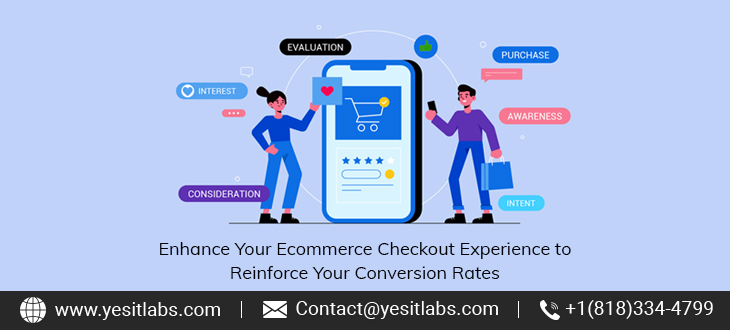
There has been a growing need for ‘Ecommerce checkout optimization’ ever since the prospective buyers have been observed leaving their transactions unprocessed on the checkout page. Wondering why?


Is your checkout page clumsy or it’s designed too poorly to convert a prospect into a customer? Irrespective of any reason, the wisest consideration would be ‘ecommerce checkout optimization.’


Having an optimized ecommerce checkout page is one of the key requirements. It has an immense effect over your existing as well as potential customers. YES IT Labs is an Ecommerce software development company that provides you with the complete solution.


Abandoned shopping carts can feel unavoidable for eCommerce retailers. Study after study shows that an abandoned cart doesn’t always translate to a lost sale, but with trillions of dollars being left in carts every year, addressing this problem is well worth your time. We’ve looked at all of the reasons why shoppers abandon their carts and have come up with 5 ways you can improve your eCommerce checkout and drive sales.


Design (and Test) The Optimal Experience

Over 1 / 4 of abandoned carts are left due to confusing checkout experiences. Design your advantage and make the optimal checkout environment for your audience. While there is no one-size-fits-all approach, here are suggestions to get you started.


Make it visually fluid: When laying out your checkout experience group relevant fields, remove repetitive steps, and reduce the number of clicks needed to complete the process. If your checkout is one page, use colors to differentiate each step; if it’s more than one page, keep the navigation flow consistent across all pages.


Visualize progress: Don’t create a race with no visible finish line! Give shoppers an easy way to see the steps involved and gauge their progress.


Mirror customer behavior: From adjusting items in their cart to redirecting them to new pages, confirm that your flow matches your customers’ behavior. Additionally, confirm that your checkout is optimized for the way your audience is shopping; an excellent desktop checkout won’t work for mobile or tablet users.


Refine your checkout experience: While it’s tempting to try and upsell shoppers that are ready to make a purchase, introducing alternative actions can lead to lower conversion rates.


Convey Your Trustworthiness

Nearly one fifth of shoppers abandon their carts because they don’t trust the site with sensitive information, like credit card information or a billing address. Use your checkout pages to demonstrate your trustworthiness.
Test your loading times: The longer it takes for a website to load, the more time a shopper has to leave. Ponemon Institute ran a study finding slow loading times make 78% of shoppers worry about the site’s security. While other studies show that 33% of shoppers will head to a competitor if your site makes them wait too long.


Display your certifications: Showing your security credentials allows you to reassure customers without overwhelming them. Most customers judge a website’s security by their visual perception. So while you might be tempted to display your most robust certifications, it’s better to include at least one well-known customer-facing brand to ensure your audience understands your credentials. Security is becoming a growing concern, make sure to show the right security seals for your audience.


Minimize the risk of shopping with you: Show that your brand takes security and customer satisfaction seriously. Make it easy to find your consumer protection policies and product guarantees. If your checkout requires that you collect additional information on your shoppers, reassure them by sharing why the information is needed.


Communicate Clearly

Consumer expectations are growing, and retailers must deliver an exceptional experience across the customer journey. Missteps in fulfillment, customer support, or delivery can increase customer churn for retailers; as customers are willing to take their business elsewhere. Take control by defining and sharing your customer journey expectations.


Specify why an order hasn’t processed: Don’t let a typo get in the way of a sale! Generic error messages can frustrate shoppers, especially if they’ve already verified their information is accurate. Be it an undeliverable address, invalid payment information, an unrecognized email format, an item that’s out of stock, or anything else that would prevent an order from being processed, communicate what the error is and how to move forward. Better yet, adopt technology solutions that can correct faulty information like email and address verifications.


Set expectations throughout the entire customer experience: Unexpected shipping costs are the number one reason why carts are abandoned. Display shipping rates before shoppers hit the checkout page to get rid of the sticker shock. Regardless of where the error stemmed, the bulk of consumers blame retailers for a poor shipping experience. Stay one step ahead by communicating your fulfillment process to shoppers. Balance your communication medium and cadence with your customer’s preferences and your engagement strategy.


Expedite the eCommerce Checkout Process

By reducing the time it takes to complete your checkout process, you’ll eliminate customer friction and increase sales.


Save Your Customers Time: Eliminate irrelevant and duplicate inputs, and use auto-complete to speed up the time it takes shoppers to go through checkout. Reducing data inputs can be as simple as asking if the shipping and billing address are the same, or using the ZIP Code to validate payments.


Some address verification solutions have an autocomplete functionality that suggests deliverable addresses as shoppers type in their data— a solution that eliminates bad address data while saving time. Let shoppers create an account on your site, which can expedite their next checkout. Make sure to be conscientious of how and when you introduce this and don’t make it mandatory. Incentivize guest shoppers to create an account after they’ve made a purchase by offering a discount on their next purchase.


Provide Flexibility

Consumers today are used to having options when they shop. Of the ten biggest reasons for abandoned carts, flexible policies could mitigate half of them. And the best part is that addressing these concerns comes at no additional cost.
Provide Different Ways to Pay: The way consumers spend money online is changing, 30% don’t have a credit card and 33% use an eWallet. Accepting multiple payment options increases your customer base and your conversion rates, as shoppers using an eWallet like PayPal are more likely to complete their transactions than credit card shoppers.


Have a Guest Checkout: Having shoppers register for an account can save time, but requiring it, can turn them away and prevent you from making a sale. 29% of online shoppers abandon their carts when they are required to create an account.


Make it Gifting Friendly: Online shopping can be more convenient, but it can present more problems than it’s worth if a shopper is looking for a gift. Increase the convenience of shopping with you by offering the ability to include a gift receipt, gift wrapping, or a personalized message.


Allow for Easy Returns: A flexible return policy can give shoppers the confidence to shop with you, while giving you the ability to sustain engagement with a shopper. Creating a flexible return policy isn’t just about increasing the time in which returns can happen, it’s about reducing the impact of making a return. Make returns easier by including return labels and packaging, and offering in store returns, when possible.


Communicate in the Right Channel: Your customer segments will resonate with different channels in different ways. Match your audience’s preferences by asking how they’d like for you to stay in touch.


Summary

YES IT Labs is an ecommerce software development company who are capable of providing a wide range of new and innovative products. YES IT Labs is an. Initially one may not feel the need of the customised eCommerce website but when the revenue and the sale increases, the need of the website with more and more customizations becomes necessary.

Magento is an eCommerce platform that is used to develop eCommerce websites. E-Commerce sites are becoming popular nowadays. If you can transport products to different parts of the earth and have services useful for people across the earth, you can expand your business online. Magento platform helps to create eCommerce websites that are complex to develop.


Since Magento is open-source, it is effortless to create or build an eCommerce website using the Magento platform. Any webmaster can create an eCommerce website without having to spend a fortune with this Magento software.
Normally, eCommerce sites are loaded with bunches of data, making it difficult for administrators to navigate. Magento development makes it simple for administrators to urge any page at any time. Users can also navigate through the web store comfortably and fill their online carts whenever. YES IT Labs is an ecommerce website development company that has you all covered.


Here is the reason why Magento is the best eCommerce platform

1. Flexible pricing: lately, fixed costs simply don’t cut it anymore. Be stubborn and clients will go elsewhere. Magento’s flexible cost rules enable stores to make and implement a variety of marketing promotions. Like coupons, discounts, and special sales. Packages and discounts off large-quantity purchases. Purchase this and get that for free. We all are aware of how much customers love this phrase. And the word ‘coupons’.


2. Expanded Average Order Value: Magento comes with capable tools that helps in maximizing the value of the order. That way, online stores are capable of many key customer touchpoints. Up-selling in the shopping cart or cross-selling on a product page are only some of the things that develop on both the quantity and quality of a store’s customer relationships.


3. Social shopping: the internet is moving social, as is eCommerce. Magento has a flexible merchandising engine, stores can enable customers to form their shopping experience a more social one. The stage’s product browsing options include customer rating, customer group-specific pricing wish lists, E-newsletters, and, of course, the effective ‘word-of-Web’ Send to a devotee with Email.


4. Free shipping: This is often one reason why eCommerce has exploded is that the online has enabled customers to buy at the comforts of their PC desks reception. No run around the city to look for a product. Magento endorses this world of expediency and economy by letting stores choose for themselves the ever-delectable Free Shipping option.


5. Mobile commerce: eCommerce isn’t all about customers shopping from the comforts of home. There are shoppers on the go who browse and purchase with their devices. Magento empowers the E-Commerce by offering mobile-optimized versions of online shops. It allow people to automatically detect information from the browser and provides mobile customers either the whole site catalog or a tailored selection of products, with Magento, eCommerce business will be a completely mobile, multi-channel experience.


6. SEO-friendliness: It’s simpler for businesses to build and grow a customer base and make it easier for customers to search for them. Magento’s SEO-friendly structure and SEO tools — like URL modifies — help stores become more visible on the online — and to those web search engines. Not just that; Magento also can automatically create a Site Map for immediate display on site.


7. International support: We sleep in a flat world, within the words of Thomas Friedman. Your potential customers aren’t only in your neighborhood or city but over the world. The information revolution ushered us into it. As a worldwide platform, Magento allows expansion of companies by providing multiple, multilingual, & multi-currency versions of web sites to satisfy the wants of consumers from everywhere the world.

Summary
Still, more things together form Magento because of the leader of Ecommerce Platforms. So it’s the best choice to create your eCommerce store with the Magento platform.


YES IT Labs is an ecommerce website development company that helps you to stay tuned to the newest technologies by keeping your innovative eCommerce website by making them able to respond to the efficiencies needed to keep it successful.

Android is the most adopted OS within the world. Android was developed by Google and is a Linux-based open-source OS. Android being open source, any company or individual can download and use it for his or her products. Originally, the Android OS was created by Android Inc. for digital cameras and mobiles. Android Inc. was acquired by Google in 2005. Today, there are 2.3 billion Android Smartphones within the world.


Not only does Android power a couple of billion smartphones, laptops, tablets, and PCs, but Android also is the heart and soul of billion-plus other devices that you use in your everyday life. Some of these devices include TVs, Home Security Systems, Refrigerators, TV boxes, Mini PCS, Karaoke Machines, Cameras, Cars, Navigation Systems, Amazon Fire TV, Smart Watches, Gaming Consoles, and Smart Home devices.
YES IT Labs provides the best android application development services and has got you all covered.What programming languages are often wont to develop Android mobile apps? Here may be a list of the foremost popular programming languages that want to develop Android apps.


Java
Java is known as the most popular programming language in the world. Java may be a static, type-safe, general-purpose open-source programming language. Java has been the first programming language of Android since the OS was launched. Java was created by James Gosling in 1995 at Sun Microsystems. Java is currently owned by Oracle Corporation.


Java was created based on C++ syntaxes so developers will find it familiar to learn. Java alongside C++ is the simplest programming language for college kids and beginner developers to find out the fundamentals of programming. Java language is adopted by many colleges and universities as a primary first programming language to teach programming syntaxes.


Unlike Swift, Kotlin, and C#, Java might not be a contemporary programming language and doesn’t upgrade frequently. Java, however, offers a start line for brand spanking new developers. Java is much easier to learn compared to Kotlin. If you’re a replacement developer who wants to find out Android development, Java could also be one of the simplest ways to start.


Kotlin
Kotlin is a modern, concise, safe, object-oriented, and cross-platform programming language that was created by a software product company, JetBrains, in 2011. Kotlin is employed to create JVM, Android, Browser, and Native apps. Currently, Kotlin is supported by Google under the Kotlin Foundation.


Since the discharge of Android Studio 3.0 in Oct 2017, Kotlin has been announced because of the official programming language of Android.


Kotlin is meant to create modern apps and provides the functionality modern app developers need. Kotlin’s development is seamless via Android Studio. Kotlin offers simplicity, flexibility, and productivity. Kotlin also writes cleaner and fewer code for an equivalent functionality in Java.


C#
The C# was invented by Anders Hejlsberg at Microsoft and launched in 2000. It may be a simple, modern, flexible, object-oriented, safe, and open source programing language. C# is one of the foremost versatile programming languages within the world.


C# allows developers to build all kinds of applications including Windows clients, consoles, Web apps, mobile apps, and backend systems.


C# developers can build native iOS and Android mobile apps with the assistance of Xamarin. Xamarin may be a tool as a neighborhood of Visual Studio which allows developers to write down C# code that’s compiled to native iOS and native Android binaries. These binaries work exactly as any native app is written using other iOS and Android languages like Swift or Kotlin works.


C# offers developers the power to create native iOS and Android mobile apps without learning a replacement programing language.


Python
Python is one of the foremost popular programming languages of recent times. Python, created by Guido van Rossum in 1991, is an open-source, high-level, general-purpose programming language. Python is a dynamic programming language that supports object-oriented, imperative, functional, and procedural development paradigms. Python is very popular in machine learning programming.


In android application development services, Python is used to create libraries, functions, and back end processing tasks.


Xamarin
Xamarin is supported by Microsoft. It uses C# language and based on .NET framework to develop mobile apps that can seamlessly run across prevalent OS like Android and iOS. What’s more, Xamarin app development enables you to leverage all native access to platform-specific capabilities like ARKit (iOS) or Multi-Window (Android).
Xamarin enables app developers to use common coding across various platforms. Code reuse feature gives Xamarin an edge over its peers. Xamarin development services offer reduced development time and better performance of feature-rich apps on Android OS because of its capability for developing native-like mobile apps.


C++
C++ is one of the oldest and most popular programming languages. C++ is not used to build user interfaces or app pages. C++ is also not used to build controls in apps. In Android development, C++ is employed to create APIs and backend tasks. App front end developers are not involved in C++ development but the back end functionality and APIs are often written in C++. There are several popular built-in C++ libraries available for Android developers to use in their apps.


PhoneGap
The PhoneGap framework typically facilitates building hybrid applications by using web development skills that are displayed via “WebView” but are packaged like apps.
PhoneGap, as the name suggests, bridges the gap, giving Android app developers access to the phone’s features, such as a camera or accelerometer.
The Adobe PhoneGap framework is adequate for easy tasks in the Android app development, and it doesn’t need a lot of programming other than for JavaScript.


Summary
YES IT Labs is an android app development company providing the complete solution.Android is the most used OS within the world. Java and Kotlin are two main programming languages that want to build Android apps. While Java is an older programming language, Kotlin may be a modern, fast, clear, and evolving programming language. YES IT Labs is an android app development company which can help you solve all your issues by providing services that fulfill your requirements.

When businesses start planning their digital presence, one of the most common questions that comes up is: should we build a website or invest in web application development? On the surface, the two might seem identical. Both live on the internet, both open in a browser, and both require a front end and a back end. But once you look a little closer, the differences become not just clear but critically important for making the right decision for your business.

This guide breaks down everything you need to know, in plain language, so you can make a confident, informed choice.


What Is a Website?

A website is a collection of interlinked web pages that share a single domain name and are accessible to anyone on the internet. Think of it as a digital brochure or storefront. It can be built and maintained by an individual, a small business, or a large organization, and its primary purpose is to inform.

Websites typically contain text, images, videos, and other multimedia content organized in a way that is easy for visitors to navigate. When you visit a company’s “About Us” page, read a blog post, or browse a product catalog without logging in or interacting with a system, you are using a website.

Websites are informational by nature. They present content to users but do not typically require those users to provide significant input or trigger complex processes in return.

Common Examples of Websites Include:

  • Business landing pages and portfolios
  • News and media publications
  • Blogs and informational resources
  • Company brochure sites

If your primary goal is to establish an online presence, build brand credibility, and share information about your products or services, a well-designed website is likely the right starting point. Partnering with a reliable custom web development company in USA can help ensure your site is built with the right architecture, speed, and SEO foundation from day one.


What Is a Web Application?

A web application is an interactive software program that runs inside a web browser. Unlike a traditional website, it is designed to do something, not just show something. Users can log in, submit forms, process transactions, generate reports, and interact with data in real time.

Web application development focuses on building these dynamic, function-driven platforms. The front end is typically built using HTML, CSS, and JavaScript, the same technologies used in websites. However, the back end is far more complex, often powered by stacks like LAMP (Linux, Apache, MySQL, PHP) or MEAN (MongoDB, Express, Angular, Node.js), and it handles significant server-side logic.

Web applications became mainstream alongside the rise of the Software as a Service (SaaS) model. If you have ever used an online project management tool, a cloud-based accounting platform, or a customer relationship management system in your browser, you have used a web application.


Common Examples of Web Applications Include:

  • Online banking portals
  • E-commerce platforms with user accounts and order tracking
  • Project management tools like Trello or Asana
  • Email clients like Gmail
  • Any SaaS platform you access through a browser

Businesses looking to build this kind of solution should consider working with an experienced SaaS development company in USA that understands the technical depth, security requirements, and scalability that web applications demand.


Web Application Development vs. Website Development: The Core Differences

Even though websites and web applications share some common ground, they differ in several fundamental ways that affect how they are planned, built, and maintained. Here is a quick side-by-side comparison to make those differences crystal clear:

Website vs. Web Application: At a Glance

Feature Website Web Application
Primary Purpose Share information and build presence Perform tasks and deliver interactive functionality
User Interaction Passive, users consume content Active, users input data and trigger processes
Authentication Rarely required Almost always required
Back-End Complexity Low to moderate High, requires robust server-side logic
Content Type Static or semi-static Dynamic, personalized, real-time
Development Time Shorter Longer due to complexity
Development Cost Generally lower Generally higher
Maintenance Simpler updates Centralized but more technical
Examples Blogs, portfolios, brochure sites Gmail, Trello, online banking, SaaS tools
Platform Dependency Runs in any browser Runs in any browser, but requires back-end infrastructure
Scalability Limited by content volume Designed to scale with user demand
User Personalization Minimal Extensive, dashboards, profiles, preferences

This table makes it easy to see that while the two share a common delivery mechanism (the browser), they serve very different purposes and require very different levels of technical investment.


Why Does Your Business Need a Website?

A website is often the first digital asset a business should have. Here is why it remains essential even in 2025:

  • It establishes your credibility instantly. When a potential customer searches for your business, a professional website signals legitimacy. Without one, many people will simply move on to a competitor.
  • It gives your brand a 24/7 presence. Your website works around the clock, answering questions, showcasing your services, and generating leads even while your team is offline.
  • It supports your marketing efforts. From SEO to social media campaigns, nearly every digital marketing channel drives traffic back to your website. A strong site makes those campaigns far more effective.
  • It helps you reach a wider audience. Whether you are a local business or a global brand, a website makes you discoverable to anyone with an internet connection.


It is also worth noting that a website is typically the lower-risk entry point for businesses that are still figuring out their digital strategy. You can launch, learn from real user behavior, and then make more informed decisions about whether a web application makes sense for your next phase of growth.


Why Does Your Business Need a Web Application?

Web applications open up an entirely different category of possibilities. Here is why businesses are increasingly investing in them:

  1. Cross-platform accessibility is one of the biggest advantages. Because web applications run in browsers, they work on any device, whether desktop, tablet, or smartphone, without needing separate native versions for each platform.
  2. No app store dependency means you can release updates and new features on your own schedule, without waiting for approval from Apple or Google.
  3. Easier maintenance is another practical benefit. Since the codebase is centralized on a server, updates are made once and reflected for every user immediately. There is no need for users to manually download patches or new versions.
  4. Scalability is built into the model. As your user base grows, a well-architected web application can scale to meet demand without requiring users to do anything on their end.
  5. Competitive advantage is perhaps the most compelling reason. An intelligent, well-designed web application can automate processes, reduce operational costs, and deliver experiences your competitors simply cannot match with a static website.


When you are ready to build, making sure you hire web developers with specific experience in web application architecture is critical. Not every developer who builds websites has the back-end expertise and systems thinking that web application development requires.

How to Decide: Website or Web Application?

Ask yourself these questions to point yourself in the right direction.

Are you primarily trying to share information, or do you need users to interact with a system? If it is the former, start with a website. If it is the latter, you need a web application.

Do you need user accounts, personalized dashboards, or real-time data? These are hallmarks of a web application, not a standard website.

What is your timeline and budget? Websites are faster and less expensive to build. Web applications require more planning, development, and testing cycles.

Is your business model based on delivering a service digitally? If yes, a web application is almost certainly part of your long-term roadmap.

Many businesses actually need both. A marketing website that brings in visitors, paired with a web application that serves those visitors once they become customers, is a very common and effective setup.


Frequently Asked Questions

1. Can a website become a web application over time?

Yes, absolutely. Many businesses start with a simple informational website and gradually add interactive features like user portals, booking systems, or dashboards. At that point, the line between website and web application begins to blur, and the back-end infrastructure needs to evolve accordingly.

2. Is web application development always more expensive than website development?

Generally, yes. The added complexity of server-side logic, databases, authentication systems, and real-time functionality means more development hours and more specialized expertise. However, the return on investment for a well-built web application can be substantial, particularly for businesses that rely on delivering services digitally.

3. Do web applications work on mobile devices?

Yes. Because web applications run in browsers, they are accessible on any device that has one. Many web applications are also built with responsive design principles, ensuring a smooth experience on smartphones and tablets without requiring a separate native app.

4. What technologies are commonly used in web application development?

Front-end technologies include HTML, CSS, and JavaScript frameworks like React, Angular, and Vue.js. Back-end technologies vary widely and may include Node.js, PHP, Python, Ruby on Rails, or Java, paired with databases like MySQL, PostgreSQL, or MongoDB.


Final Thoughts

Understanding the distinction between a website and web application development is not just a technical exercise. It is a strategic business decision that affects your budget, your team, your customers, and your long-term growth.

Websites build presence. Web applications build capability. The smartest businesses invest in both, at the right time and in the right order.

Whether you are just starting out or looking to take your digital infrastructure to the next level, working with a team that deeply understands both sides of this equation will save you significant time, money, and frustration down the road. The right development partner will not just write code. They will help you think through your goals, map out the right solution, and build something that genuinely moves your business forward.

Despite the popularity and the rising demand for mobile development, web development has been getting a tremendous amount of attention and the technologies are evolving quite rapidly. Javascript’s skyrocketing popularity brings a lot to the table, especially with the rise of new development concepts like Progressive Web Applications, Accelerated Mobile Pages, and Single Page Applications. However, things started to get more complicated, especially for young developers who are just getting started.
The sheer amount of available technologies to choose from, the different functionalities they provide, the differences in each one of them and the fact that there’s no holy grail in web development, nor a one solution fits all, all of this makes it quite scary to embark on a learning journey. A good web app development services USA is all you need to solve your problems.

Frameworks
Frameworks are software abstractions. Abstractions are core concepts devoid of complexities and details. We actually deal with abstractions in our everyday life, not just in software. For example, if you want to drive your car, you don’t need to understand the thermodynamics of the engine and the energy cycles inside or even the complex mechanics of the car, you simply need to steer the wheel.
The benefit of using such abstractions in software is the fact that it helps young developers get into the game quickly and use the generic tools created by professional developers to their own needs and hence they won’t have to reinvent the wheel on every single function that they might have.

Two famous software abstractions are Libraries and Frameworks. Libraries are a group of methods/objects that produce a certain functionality, and that you might use however you see fit, there’s no one way of using it. Frameworks, on the other hand, are stricter structures that function as the skeleton of your application.
Frameworks help you skip the hassle of developing the low-level infrastructure and get right to the business logic of your application which results in a neater and more professional application.

There are fundamentally two categories of frameworks in web development:

Front-end frameworks
front-end frameworks address the client-side development problems and mainly focus on JavaScript or CSS. Nowadays JavaScript frameworks like Vue.JS and Angular are the norm for developing web applications.

Back-end frameworks
Back-end frameworks are responsible for server-side logic implementation. The magic that takes place under the hood and brings your website together. By choosing a web development company to fulfill your requirements, you can better understand the frameworks. How to deal with data, store data, how to manage responses, and so on. There are a few core functionalities of back-end frameworks that we need to understand.

The Django framework was developed by Django Software Foundation and was initially released in 2005. Some of the well-known websites like Mozilla, Pinterest, Instagram, and many more have used Django. Django may be a good framework because it’s light and also has stand-alone features for development and testing. The main purpose of constructing Django was to ease the event of web applications which gets complex over time.

Laravel was developed by Taylor Otwell and was initially released in 2011. It has some of the most upscale features in terms of traffic. It is proficient in developing CMS wherein the development time can be drastically reduced. The developer’s life is easier in terms of superior framework features and other in-built features. So if you are looking at developing web applications the easier way, laravel sure is a safe bet.

CodeIgniter is an application development framework, which may be wont to develop websites using PHP. It is an Open Source framework having a very rich set of functionality, which will increase the speed of website development work.CodeIgniter is ideal for rapid development without the overhead of constantly building reusable components.

Django vs Laravel vs Codeigniter Comparison

Code
you can notice that Laravel’s code is sort of intuitive. Django’s code, on the other hand, seems rather complex, that’s because it uses regular expressions in its routing process, which are not the easiest thing to use, especially with beginners, whereas the entire source code for CodeIgniter framework is close to 2MB. This makes it easy to master CodeIgniter and how it works.

Community
All three communities are very active and responsive.

Security
The world of the web is quite a hostile environment, with attacks and vulnerabilities being exploited all the time, this is why frameworks need to take measures against different attacks, whether SQL injections or cross-site scripting. Django takes security quite seriously and helps developers avoid the common mistakes of web development and implement some security best measures. While Laravel does also cover the fundamentals of security it doesn’t live up to Django’s security level. That’s why, for example, NASA uses Django for their website.CodeIgniter is fairly restrictive regarding which characters it allows in your URI strings in order to help minimize the possibility that malicious data can be passed to your application.

API
You might not be interested in all the functionalities that a back-end framework has to offer and would rather build a client-rich application with a RESTful API. The beautiful thing about Laravel is that it comes with built-in support for API building, because the queries return JSON by default. Django doesn’t accompany this built-in feature and you’d need to use a library to figure around it and implement an equivalent feature.

Summary
Keep in mind that these frameworks support big websites, so there’s no wrong choice to make. It all depends on the software requirements you have and your design. Also, back-end frameworks are quite similar at their core, so it’s not so hard to transition from one framework to a different if you are feeling like working with another framework. However, your decision must still be based on the beneficial features of the programming language and framework that you will use for the website or application. The project requirements are still the overall factor to consider in choosing the web frameworks.
A Web app development Company USA can help you solve all your issues by providing services that fulfill your requirements.
YES IT Labs is a Web app development Company USA that provides web app development services USA and ensures that your software will be able to handle all your daily processes. Personalized software can be as complex or intuitive as you like, and this makes it the ideal choice for businesses of all sizes

Angular JS

AngularJS is a structural framework that can be of helpful in using single-page HTML for declaring dynamic views in web-apps. Put differently, this is a framework that stretches HTML’s syntax in order to let your app’s components be expressed clearly and precisely.There are a range of benefits of this structural framework that make it the tool of choice for modern-day web applications. Google designed it, which happens to be one of its prime advantages. There’s a large community to help new as well as honed developers get over challenging obstacles in their projects. This also means that clients get exactly what they are looking for. Developers also love its dependency injection as well as data binding, as this ensures that a large part of the code that a programmer will write is now eliminated / automated.

YES IT Labs is capable of providing the best AngularJS web development services.

What is AngularJS Used for?

The next question that you might ask is about where AngularJS is used. As mentioned earlier, it can come in handy with any dynamic application.

To clarify that further,

Let us take some of the live examples of popular apps that use AngularJS:

Video Streaming Apps

Who doesn’t know about YouTube? It is an incredible platform for uploading as well as streaming videos. Hence, it will be intriguing for you to note that YouTube’s app for Sony PS3 is developed with AngularJS. Another prime example of a video streaming app using AngularJS is that of Netflix

User-Review Applications

Customers are now extremely keen on reading reviews about a product or service before actually buying it. That helps them be sure about what they are investing their money in. AngularJS can proficiently support such applications. A case in point is the mobile site of GoodFilms, that offers movie reviews to its users.

Travel Apps

AngularJS’s dynamic features can be the perfect match for travel applications. As an example, JetBlue’s website makes use of AngularJS too.

Weather Apps

Weather.com is one of the most renowned weather forecasting applications in the world. You will be pleased to note that it has been built using AngularJS.

User-generated content portals

If you want to create apps that offer user-generated content, AngularJS can again come in handy. Take the example of Freelancer.com. It is a platform for employers to post their projects and interested candidates to present their profiles for those projects. That website is built using AngularJS.

Improved Design Architecture

Some of our applications contain over 60 components, & they are still easy to manage in spite of new developers joining the project. It gives an idea of the application & its functionality, & it become easy to locate the codes for the AngularJS developers in an easy manner too. So, its has an improved & enhanced design structure in the market!

Promotes Code reusability

Developers can now re-use the codes or the components of the codes written before in different applications, thus making Angular JS development a very unique framework.

Better Plug-and-Play Components

If you wish to add your existing components in a new application, you just need to copy & paste the same into a new one! You are done! It works magically! All assets can be available automatically! Its truly plug-and-play in Angular JS development.

Faster application development

The MVC architecture ensures that application development, testing, & maintenance are fast & easy! It helps in enhancing the productivity of the developers too!

Handles Dependencies

Dependency injection is something Angular JS is famous for, and it does it really well! It shines in two areas, namely testing & single-page application (SPA) design!

Allows Parallel Development

You already know that AngularJS can handle dependencies & coupled with MVC architecture, which allows faster application development, allows the developer to perform parallel application development as well! This is where AngularJS scores over other frameworks!

Allows Controls to Developers

Directives offer developers a free hand to experiment with HTML & attributes & give them complete independence to make their web development process responsive & dynamic! You can test, construct, inject, or do just about anything!

Helps Manage State

Whether illusioned or disillusioned, the application state! It helps you manage just everything really well! On top of that, it helps you manage properties, permissions, and other major concerns across your application awesomely well!

Reasons to Choose AngularJS

So, what are the reasons that you should learn Angular-JS?

Here are some, that might catch your interest:

Quick Started

Getting started with AngularJS is extremely simple. All you need to do is add some attributes to your HTML, and you can have your first, small Angular app in a matter of a few minutes. Isn’t that fascinating?

Time Saving

As mentioned above, all that AngularJS requires you to do is split your application into multiple MVC components. Once you have done that, AngularJS will take over and perform the rest of the functions for you. It saves you of the trouble of writing another code to bind the MVC components together again.

Fewer Codes

Point (2) was one of the examples of how AngularJS reduces the number of codes that you need to write. In addition to that, data models are simpler to write with AngularJS. Moreover, it offers Data Binding. This means that you don’t have to manually put your data in the view. Also, directives in AngularJS are separate from the app code. This means that another team can simultaneously work on that. There are various other avenues where AngularJS can save you coding time.

Data Binding is Easy

Do you remember having created a text property on a model that you needed bound into your UI? You would know that it is a major hassle. With AngularJS, though, this data binding happens sweat-free. Moreover, you will immediately see what you type in the span.

Declarative Expression of UI

Given that the UI with AngularJS is structured, it makes it simpler for you to understand as well as manipulate. It’s worth noting that designers are not programmers. Hence, it is important to make their life simpler. They can learn markup way more easily than programming. Hence, declarative expression of UI makes more sense for your team as well as results for your clients.

Summary

YES IT Labs is an AngularJS web development company that ensures that your software will be able to handle all your daily processes. Personalized software can be as complex or intuitive as you like, and this makes it the ideal choice for businesses of all sizes.

Woocommerce development company

The e-commerce landscape has been revolutionized by platforms that make online selling accessible and efficient. Among these, WooCommerce has emerged as one of the most popular choices for businesses of all sizes. Whether you’re a small business owner or an enterprise-level retailer, WooCommerce offers a flexible, scalable, and user-friendly solution. However, like any technology, it comes with its own set of advantages and disadvantages. Thus there are a multitude of pros and cons of WooCommerce that are not only important to consider but also analyzed thoroughly.

In this comprehensive guide, we will explore the pros and cons of WooCommerce, delving into the platform’s strengths and weaknesses to help you make an informed decision. 

What Is WooCommerce?

WooCommerce is an open-source e-commerce plugin for WordPress that enables businesses to build and manage online stores effortlessly. It is highly customizable, scalable, and seamlessly integrates with WordPress, making it an ideal solution for those already familiar with the CMS. The plugin offers a wide range of features and functionalities, from inventory management to secure payment gateways. 

Additionally, WooCommerce provides businesses with the ability to expand and scale their online presence efficiently. By partnering with a WooCommerce development company in the USA, businesses can leverage professional expertise to maximize the platform’s potential. These companies can tailor WooCommerce to meet unique business needs, such as integrating third-party applications, enhancing security measures, and optimizing performance for high-traffic volumes. 

The Pros of WooCommerce


1. Cost-Effective Solution

One of the most appealing aspects of WooCommerce is that it’s free to install and use. Unlike proprietary e-commerce solutions, WooCommerce does not charge a subscription fee. While there may be costs associated with premium plugins and hosting, the core platform remains cost-effective. 

Additionally, businesses can minimize expenses by carefully selecting only essential plugins and leveraging free community-supported tools where possible. This flexibility in managing costs makes WooCommerce an attractive option for startups and established enterprises alike, especially when compared to subscription-based e-commerce platforms.

2. Seamless Integration with WordPress

Since WooCommerce is built to work seamlessly with WordPress, it leverages the CMS’s robust features. Users can easily integrate content marketing strategies, SEO tools, and analytics, making it a comprehensive solution for businesses looking to optimize their online presence. 

Moreover, the integration with popular plugins like Yoast SEO and Google Analytics enhances store visibility and provides valuable insights into customer behavior, making marketing efforts more data-driven and effective.

3. High Customizability

WooCommerce’s open-source nature allows developers to modify and customize almost any aspect of their store. This flexibility makes it possible to build unique and tailored e-commerce solutions that meet specific business requirements. 

Custom themes, personalized checkout processes, and tailor-made functionalities can be developed to align with brand identity and business objectives. The ability to customize not only enhances user experience but also sets your store apart from competitors by offering bespoke shopping environments.

4. Large Community Support

The vast WooCommerce community provides extensive support, plugins, and extensions. Whether you need advanced functionalities or troubleshooting assistance, the community-driven ecosystem ensures you are never left stranded. 

This active community also serves as a resource for finding tutorials, documentation, and updates that help keep your store running smoothly. Businesses benefit from this collaborative ecosystem by having access to countless solutions without needing to invest heavily in professional support services.

5. Scalability for Growing Businesses

WooCommerce is designed to scale as your business grows. With the right hosting environment and performance optimization, it can support thousands of products and high traffic volumes without compromising on speed or stability.

Businesses that anticipate rapid growth can implement performance optimization techniques such as CDN integration, database caching, and employing high-performance hosting solutions. This scalability is particularly beneficial for e-commerce brands looking to expand their product lines or target new markets without needing to migrate to a different platform.

The Cons of WooCommerce


1. Complex Initial Setup

While WooCommerce is highly flexible, the initial setup can be daunting, especially for beginners. Choosing the right plugins, themes, and configurations requires technical knowledge and expertise. From selecting compatible themes to configuring multiple plugins, the process can become overwhelming. 

Additionally, setting up essential functionalities like payment gateways and shipping options often requires a combination of different plugins, making the process even more intricate. Businesses may find themselves spending considerable time troubleshooting issues or looking for specific solutions online, which can slow down the launch process.

2. Potential Additional Costs

While the core plugin is free, many essential features require paid extensions. These can add up quickly, particularly if your store needs advanced functionalities like multi-currency support, advanced shipping options, or premium themes. 

Furthermore, customizing your store to meet specific business needs often involves purchasing premium plugins or hiring developers, leading to unforeseen expenses. The costs don’t just end at plugins—premium themes, security enhancements, and performance optimization tools may also contribute to the overall expenditure. Careful budgeting and planning are essential to avoid cost overruns when building a robust WooCommerce store.

3. Performance Issues with High Traffic

Managing performance on WooCommerce can be challenging, especially for stores with a large product catalog or high daily traffic. Without the right server configuration and caching solutions, page load times may suffer, negatively impacting user experience. Slow performance can also lead to cart abandonment and lost sales. 

To address these issues, it is crucial to invest in a reliable hosting solution, implement caching mechanisms, and consider Content Delivery Networks (CDNs) to reduce server load. Additionally, regularly optimizing the database and using performance-enhancing plugins can mitigate speed-related problems, ensuring a smooth shopping experience even during peak traffic.

4. Security Vulnerabilities

As an open-source platform, WooCommerce is susceptible to security vulnerabilities if not properly maintained. Regular updates and the use of reputable plugins are essential to safeguarding your store. 

Failing to secure your site can result in data breaches, malware attacks, and loss of customer trust. Implementing robust security measures, such as SSL certificates, two-factor authentication, and regular malware scans, can significantly reduce these risks. Additionally, partnering with security experts or investing in security-focused plugins can further enhance your store’s protection against cyber threats.

Real-World Use Cases: Success and Challenges

To truly understand the pros and cons of WooCommerce, let’s look at some real-world examples. From small local shops to global brands, many businesses have successfully harnessed WooCommerce to build profitable e-commerce solutions. One of the key drivers of success is collaborating with a WooCommerce development company in the USA, which can help streamline the integration of advanced features and customize the platform according to specific business requirements. 

These companies are equipped with the technical expertise needed to handle both small-scale and large-scale operations, ensuring performance optimization while maintaining flexibility. However, the common challenge remains—balancing flexibility with performance optimization and keeping the store updated with the latest features and security protocols.

Tips for Optimizing Your WooCommerce Store

To get the best out of WooCommerce, consider the following strategies:

  • Invest in quality hosting (consider AWS freelancers for reliable cloud hosting solutions) to ensure your store runs smoothly even during peak traffic periods. High-quality hosting can significantly enhance your website’s loading speed and stability, minimizing potential downtimes and improving the user experience.


  • Regularly update your plugins and themes to maintain compatibility and security. Keeping your store up to date not only ensures smooth performance but also reduces vulnerabilities from outdated components.


  • Implement advanced caching mechanisms to boost performance and decrease page load times. Utilizing caching plugins and employing Content Delivery Networks (CDNs) can drastically improve speed and reliability, especially during high-traffic events.


  • Hire Web developer freelancers to customize and optimize your store for your specific needs. They can implement unique design elements, integrate specialized functionalities, and ensure the store aligns with your brand identity. Professional developers can also troubleshoot performance issues and enhance your site’s overall responsiveness.

How to Get Started with WooCommerce

Getting started with WooCommerce involves choosing the right hosting, installing WordPress, and configuring the plugin to suit your business model. It’s crucial to start with a reliable hosting provider to ensure fast loading speeds and minimal downtime, as poor performance can significantly impact user experience and search engine rankings. 

Next, you’ll need to install WordPress and set up the WooCommerce plugin, which involves configuring essential settings like currency, payment gateways, and product listings. While the platform is user-friendly, businesses aiming for a professional and efficient setup often benefit from hiring experienced WordPress developers or collaborating with a WooCommerce development company in the USA

These experts not only optimize the initial configuration but also tailor the platform to meet specific business requirements, such as integrating advanced analytics, implementing secure payment options, and ensuring that the store can handle high volumes of traffic without compromising performance. Investing in professional assistance can save valuable time and help avoid common pitfalls associated with a DIY approach, ultimately leading to a more robust and scalable e-commerce solution.

Final Thoughts

WooCommerce is a powerful e-commerce tool, but it requires careful consideration of your business needs and technical abilities to maximize its potential. While the platform offers flexibility and customization, it may require professional support for optimal performance, particularly in complex configurations and maintenance.

Partnering with a WooCommerce development company in the USA can be a game-changer, providing expert knowledge in customizing, securing, and optimizing your store for scalability. Professional developers can also ensure that your store remains fast, secure, and user-friendly, allowing you to focus on core business operations while they handle the technical challenges, leading to long-term success and a modern, resilient e-commerce platform.

custom software development

In today’s fast-evolving digital landscape, companies face a myriad of challenges that off-the-shelf products often cannot address. Custom software development allows organizations to overcome limitations by providing personalized tools that drive long-term success. At its core, the Advantages of Custom Software Development revolve around flexibility, scalability, and the potential for increased competitive advantage. 

Whether you are a startup founder exploring a new idea or an established enterprise looking to streamline operations, custom software development offers unique benefits that empower you to innovate without compromise. Custom solutions are built with a deep understanding of your operational processes, ensuring optimal performance and a seamless integration with existing systems. By aligning technology with business objectives, organizations can unlock significant value and achieve a higher ROI on their IT investments.

By the end of this post, you will be equipped with a comprehensive understanding of why custom software development is not just an option, but a strategic imperative for forward-thinking companies.

What Is Custom Software Development?

Before diving into the advantages, it is important to clearly define what custom software development means. Unlike off-the-shelf software—which is designed for a broad audience—custom applications are developed specifically for your business’s unique process requirements and challenges. This personalization means the resulting software is perfectly aligned with your workflows, data structures, and organizational goals.

Historically, businesses have opted for ready-made software solutions partly because they are cheaper and faster to deploy. However, as competition intensifies and operational complexity rises, more companies are turning to bespoke systems that are optimized for their internal needs. By involving development teams that work in close collaboration with your key stakeholders, you are ensured that every element of the software reflects concrete business models and competitive strategies.

The custom development process typically begins with thorough research and analysis, including stakeholder interviews, detailed process mapping, and competitive benchmarking. From there, developers design, prototype, test, and refine each module until it achieves optimal performance. The result is a tool that not only automates tasks but also provides strategic insights through data integration, predictive analytics, and user-friendly interfaces.

For startups and established businesses alike, the decision to build rather than buy is driven by the desire for uniqueness. Off-the-shelf solutions have a one-size-fits-all approach, which can lead to unnecessary features and integrations that do not add value to your specific operations. On the other hand, custom software development ensures that every feature is built with purpose, leading to a more efficient and reliable system tailored exactly to your needs.

Advantages of Custom Software Development

Custom software development provides powerful benefits that cannot be achieved through pre-packaged solutions. In this section, we discuss the core benefits and address why investing time and resources in a custom solution is a critical strategic choice.

1) Tailor-Made Functionality

One of the most significant benefits of opting for a custom solution is that you receive software that is built entirely to meet your business requirements. No longer do you have to adapt your workflow to fit a generic product; instead, the software adapts to you. This tailor-made functionality ensures that every feature is purposeful, streamlining operations and eliminating redundant processes.

Every business operates in its own ecosystem. Custom software is designed after thoroughly understanding your processes, enabling you to automate unique tasks, consolidate data more effectively, and boost overall productivity. By focusing solely on functionalities that matter to your company, you can reduce training time, minimize errors, and adapt more quickly to industry shifts.

2) Enhanced Integration and Scalability

Custom software seamlessly integrates with your existing tools and processes. Unlike standardized solutions that might require extensive tweaks to match your infrastructure, a custom-built system is scalable and grows with your business. Whether you need to integrate with legacy systems, third-party APIs, or cloud platforms, a bespoke solution can be engineered from the ground up to ensure compatibility and future readiness.

Scalability is a crucial factor in today’s dynamic markets. Companies often experience growth spurts or shifts in demand that necessitate rapid changes in their IT infrastructure. With a custom solution, you have the flexibility to modify and expand your software as needed, ensuring that you are always in step with market demands and technological advancements.

3) Robust Security and Compliance

One pressing concern in today’s digital age is security. Off-the-shelf software often comes with vulnerabilities that are well-known and easily exploited by hackers. Custom solutions, on the other hand, provide enhanced security measures tailored to your organization’s risk profile. By building security into your application from the outset, you can protect sensitive data and comply with industry-specific regulatory requirements.

A customized approach means not only incorporating the latest security protocols but also ensuring that your compliance guidelines are met. Many industries are subject to strict regulatory oversight, where data handling, privacy, and auditability are critical elements. Custom applications allow you to design measures that protect your data proactively, significantly reducing potential liabilities and instilling confidence in your customers and partners.

4) Improved Performance and Efficiency

Custom software is designed to perform optimally under the unique conditions of your business environment. Off-the-shelf options are burdened with features that may never be used, consuming resources and slowing down overall performance. A custom-built application focuses solely on the functionalities you require, resulting in a leaner, faster, and more efficient system.

Optimizations can be made at every stage of development—from the code architecture to the user interface—ensuring that your application runs smoothly even during peak usage times. Additionally, custom software often benefits from continuous optimization and support provided by the development team, ensuring that it remains in top form throughout its lifecycle.

5) Future-Proof Investments

Technology is a rapidly moving target. What is state-of-the-art today can become obsolete within a few years. One of the prime advantages of custom software development is that it allows you to future-proof your application. With a bespoke solution, you can plan for regular updates, incorporate emerging technologies, and adjust to changing business models without incurring exorbitant costs.

A well-designed custom application is more than just a tool—it’s an evolving asset that grows with your business. By investing in a system built for constant improvement, you relieve concerns over software obsolescence and ensure that you remain competitive long-term.

custom software development services

The Business Case for Custom Software Development

In today’s fast-paced market, the decision to develop custom software is rarely made on a whim. In this section, we delve into the compelling business cases for why companies worldwide are shifting from generic products to bespoke systems.

1) Driving Operational Excellence

Every company seeks to improve its processes and outcomes. Custom software development is a strategic investment that directly impacts operational excellence. By integrating business-specific features and automating unique processes, custom solutions eliminate redundancies and mitigate potential delays that can occur when using generalized tools.

With a bespoke system, you can map out workflows accurately, track real-time performance, and adapt to sudden changes with agility. This operational precision translates into tangible benefits such as cost savings, time efficiency, and improved profitability. Ultimately, a custom solution turns IT expenditures into long-term investments that pay off through sustained process improvements and competitive differentiation thus boosting small business growth with custom software development.

2) Enhancing Customer Experiences

Customer expectations are higher than ever. Whether your audience consists of end-users or internal employees, modern software must offer unrivaled usability and robustness. Custom software development ensures that the user experience is tailor-made, taking into consideration how people interact with your systems on a daily basis.

Enhanced user interfaces, personalized functionalities, and seamless integration with other digital tools create an environment where user satisfaction is paramount. Satisfied users translate to higher retention rates, better adoption of new technologies, and ultimately, stronger brand loyalty. Businesses that invest in high-quality custom applications frequently see improved customer retention and an enhanced reputation in the marketplace.

3) Agile Adaptation to Market Shifts

Market conditions are in constant flux. Regulatory environments, technological advancements, and customer preferences continually evolve. Off-the-shelf solutions are inherently inflexible, making it difficult to accommodate these shifts. In contrast, custom software development is inherently agile—you can build flexibility into your system from the ground up.

When tailored to your business model, your software can quickly adapt to regulatory changes, market shifts, or new business opportunities. This agility is particularly important for startups and innovative companies that thrive on being ahead of the curve. Instead of struggling with cumbersome software updates or patchwork solutions, you can implement changes rapidly, ensuring that your business remains competitive no matter how the landscape evolves.

4) Leveraging Data for Better Decision-Making

Data is the new currency of the digital age. Yet, many off-the-shelf systems are limited in their capacity to offer meaningful insights due to generalized reporting features. Custom software solutions enable you to capture, analyze, and interpret data in ways that are uniquely relevant to your business.

By designing the software to aggregate data from across your operations, you can derive actionable insights that improve decision-making. Better data leads to more informed strategies, predictive insights, and ultimately, smarter business moves. As companies accumulate more data, the advantage of having a bespoke system that interprets this information continues to multiply over time.

5) Investment in Competitive Advantage

Ultimately, opting for custom software development is an investment in your competitive advantage. While the upfront cost may be higher relative to off-the-shelf solutions, the long-term gains far outweigh the initial expenditure. Custom software is not merely a purchase; it is a strategic upgrade that aligns technology with your unique business needs.

With enhanced security, optimized performance, and tailored features, your organization is better positioned to outpace competitors who rely on generic systems. This alignment of technology with business strategy is particularly evident in industries where precision and adaptability are the keys to success. Custom development transforms IT expenditure into a catalyst for differentiation, setting you apart in a crowded marketplace.

Implementation Best Practices: Advantages of Custom Software Development

Seamlessly implementing a custom software solution is both an art and a science. In this section—with a focus on the Advantages of Custom Software Development—we detail best practices and strategies that ensure your custom solution delivers maximum value.

1) Detailed Requirement Analysis and Stakeholder Involvement

The first and arguably the most critical step in any custom software project is conducting a thorough requirement analysis. Engaging all relevant stakeholders—from end users to senior management—ensures that the software addresses every aspect of your business. Requirements must be documented meticulously, including process maps, user stories, and anticipated challenges. This process paves the way for a solution that is comprehensive and aligned with strategic priorities.

2) Agile Development and Continuous Feedback

Given the complexity of custom solutions, an agile development framework is ideal for ensuring flexibility and continuous improvement. With agile, development proceeds in iterative cycles, allowing real-time feedback and adjustments. Frequent communication between developers and stakeholders ensures that the evolving software remains on target. This approach not only mitigates risks but also fosters a sense of ownership among your team, leading to higher adoption rates and better outcomes.

3) Integration Testing and Quality Assurance

No software solution is complete without rigorous testing. Custom software must integrate seamlessly with your existing systems, and this requires extensive quality assurance processes. Integration testing, performance assessments, and user acceptance testing are crucial to ensure that the final product is robust and ready for real-world challenges. Investing in these quality checks pays off in long-term operational stability.

4) Post-Launch Support and Iterative Improvements

A truly effective custom solution is supported long after its initial deployment. It is important to engage with a dedicated support team that can address issues, roll out updates, and implement improvements as your business evolves. Such ongoing maintenance not only protects your investment but also ensures that the custom software remains aligned with emerging market trends and technological advancements.

5) Data-Driven Decision Making

Throughout the implementation process, lean on data to make informed decisions. Custom software, when built with robust analytics features, can provide insights that drive continuous improvement. Use performance metrics, customer usage data, and operational KPIs as your compass to adjust features, enhance user experience, and improve overall system efficiency.

You can checkout our blog post on the trend and challenges in software development for more understanding on this section.

 

mvp software development

Navigating the Custom Software Ecosystem

Having explored the many benefits and implementation methods, it is important to consider the broader ecosystem involved in custom software development. The landscape is dynamic, and choosing the right partners and strategies is critical to success.

1) Choosing the Right Development Partner

Selecting a technology partner for developing a custom solution is a decision that influences your project from conception to completion. When evaluating potential partners, consider their expertise, portfolio, client testimonials, and alignment with your industry. Transparent communication and a proven track record are strong indicators of a partner who will contribute not just technical skills but also strategic insights.

For instance, if you are seeking a dedicated offering, consider engaging with a reputable custom software development service that has demonstrated deep industry knowledge and a history of successful implementations.

2) Balancing In-House and Outsourced Teams

Depending on your company’s structure and the complexity of the project, you might decide on a hybrid approach that leverages both in-house expertise and external consultants. In-house teams provide institutional knowledge and an intimate understanding of your operations, while outsourced teams offer specialized skills and fresh perspectives. Balancing these resources effectively can optimize both cost and quality.

3) Leveraging MVP Strategies for Early Wins

In many cases, launching a fully featured product might be too resource-intensive or risky. Instead, consider an MVP (Minimum Viable Product) approach to validate the market and gather early feedback. An MVP strategy allows you to launch a core version of your product with essential features, gain user insights, and iterate rapidly. This approach minimizes risks while laying the foundation for future enhancements.

4) Strategic Partnerships in the Mobile Space

In today’s digital age, mobile access is paramount. Many organizations now recognize the need for a solution that extends beyond desktop applications. Collaborating with experts who specialize in mobile platforms can enhance the reach of your custom solution. Working with a partner who not only understands software development but also the nuances of mobile user behavior is critical for sustained success.

For companies seeking to extend their digital footprint, partnering with a leading mobile software development company can ensure that your app is both intuitive and robust on mobile platforms.

The Evolution and Future Trends of Custom Software Development

Custom software development is not static—it evolves with technology, market dynamics, and user expectations. Understanding where the industry is headed can help you future-proof your solution and keep your competitive edge intact.

Emerging Technologies and Their Role

The rapid advancement of technologies such as artificial intelligence (AI), machine learning (ML), blockchain, and the Internet of Things (IoT) is reshaping how custom software is conceived and built. These emerging technologies offer exciting possibilities for innovation. For example, AI can further optimize user experiences with predictive analytics, while ML algorithms can facilitate smarter decision-making. Adopting these technologies in your custom solution not only enhances functionality but also opens up avenues for new revenue streams.

The Shift Toward Cloud-Native Architectures

In recent years, there has been a significant shift from traditional on-premise solutions toward cloud-native architectures. Cloud technologies offer scalability, reduced infrastructure costs, and agile deployment models. For custom software projects, this means you can build applications that are both flexible and resilient. Cloud integration enables seamless updates, high availability, and extensive security protocols that are crucial in today’s data-driven environment.

Data Privacy and Regulatory Compliance

As custom software solutions handle increasingly sensitive information, data privacy and compliance have become top priorities. Developers must integrate privacy by design into architectures while ensuring strict adherence to regulations such as GDPR, HIPAA, and regional standards. As data breaches continue to make headlines, robust custom software that emphasizes security and compliance is not just a selling point—it’s a necessity.

Collaborative Ecosystems and Open Innovation

Modern custom software projects are often born out of collaboration between multiple stakeholders—business leaders, developers, UX/UI experts, and even end users. Open innovation models encourage collaboration across industries, leveraging shared insights and collective expertise. This is particularly true for companies engaged in digital transformation, where agile practices and collaborative ecosystems accelerate project success. The future of custom software development lies in harnessing the power of diverse teams and flexible methodologies that foster creativity and rapid iteration.

Overcoming Challenges in Custom Software Development

Even with the outlined benefits, embarking on a custom software journey can present distinct challenges. Recognizing these risks is the first step in mitigating them. Here are a few common challenges and practical strategies to overcome them:

Managing Scope Creep

One of the most frequent issues in custom software projects is scope creep. As the development process unfolds, additional requests often emerge—sometimes beneficial, sometimes distracting. A rigorous requirement analysis and a clearly defined project roadmap serve as the cornerstone of managing project scope. Regular review meetings, change management policies, and agile project management tools can help keep the project on track.

Ensuring Stakeholder Alignment

When multiple teams and departments are involved, aligning expectations is critical. Clear communication channels, comprehensive documentation, and periodic feedback loops help ensure that every stakeholder—from the executive team to end users—is on the same page. This alignment is essential to avoid costly revisions and maintain the overall vision of the project.

Securing Adequate Resources and Expertise

Custom software development can be a resource-intensive endeavor—both in terms of time and finances. Securing the right balance of internal and external expertise is paramount. Investing in training, collaborating with experienced vendors, and ensuring that project managers maintain close oversight can drastically reduce the risk of delays and budget overruns.

Adapting to Changing Technologies

The pace of technological change is relentless. What is cutting-edge today might be outdated tomorrow. To safeguard your investment, it is important to adopt a modular and scalable architecture that allows for future updates. Maintaining open lines of communication with your development partner and staying abreast of industry trends will help you rapidly integrate emerging tools and methodologies.

Best Practices for Maximizing ROI from Custom Software Development

While numerous benefits make custom software development inherently attractive, ensuring that these benefits translate into tangible business outcomes requires strategic planning and execution. Below are best practices that can help you maximize your return on investment.

Set Clear, Measurable Goals

Before any lines of code are written, it is vital to set clear objectives for what you expect the software to achieve. Whether it is reducing operational costs, improving customer satisfaction, or driving revenue growth, well-defined goals will serve as benchmarks for success. These metrics are crucial not only for internal evaluations but also for justifying the investment to key stakeholders.

Focus on User Experience (UX)

A common factor in the success of any software solution is the quality of its user interface and overall experience. In today’s competitive marketplace, software that is difficult to use will quickly become a liability. Investing in UX design from the outset ensures that your custom solution is intuitive, accessible, and engaging for all users—regardless of their technical expertise.

Prioritize Robust Project Management

Effective project management is the linchpin of any successful custom software effort. A dedicated project manager who understands both the technical and business aspects of the project can make all the difference. Employ scheduling tools, agile methodologies, and risk management frameworks to keep the project moving steadily toward its goals.

Plan for Continuous Improvements and Future Upgrades

Custom software is not a one-and-done endeavor. As your business evolves, so too should your software. Establish a long-term maintenance and upgrade plan that includes periodic reviews, performance assessments, and feature enhancements. This forward-thinking approach ensures that your solution remains a valuable asset well into the future.

 

software development solutions

Investing in Your Custom Software Future

At its essence, custom software development is an investment in creating a technology asset that works as hard as you do. To put it simply, the right custom application can revolutionize how your business operates, leading to improved efficiency, competitive differentiation, and sustainable growth.

1) Aligning IT with Business Strategy

One of the key reasons that businesses choose to develop a custom solution is to create a strong alignment between their IT infrastructure and overall business strategy. Unlike generic tools, bespoke software is built around your strategic vision—whether that means automating critical processes, enhancing customer relationships, or driving innovation. This alignment is crucial for long-term success and creates measurable financial and operational benefits.

2) Measuring Success and Continuous Learning

To truly benefit from a custom software solution, businesses must adopt a mindset of continuous learning. Construct metrics that evaluate the software’s performance against your strategic objectives. Regularly assess the output—be it through improved productivity, higher customer retention, or better market responsiveness—and be ready to iterate on insights gleaned from the data. This commitment to continuous improvement not only maximizes your ROI but also fosters an organizational culture geared towards innovation and excellence.

3) Fostering a Collaborative Ecosystem

Custom software projects benefit immensely from a collaborative environment where cross-functional teams work together seamlessly. Involving departments like marketing, operations, and customer service from the beginning can provide valuable insights that enrich the final product. Collaboration ensures that the software addresses the practical realities of daily operations and leads to broader adoption across the organization.

Final Thoughts

As you consider this extensive guide on custom software development, take time to reflect on your organization’s unique challenges and strategic priorities. Evaluate whether the potential improvements in efficiency, security, and customer engagement can be realized through a tailored solution. With careful planning, agile methodologies, and a commitment to continuous improvement, your custom software can serve as a powerful catalyst for innovation and growth.

In today’s dynamic business environment, a well-designed custom solution not only addresses your immediate needs but also lays the foundation for future transformation. The technical superiority of a handcrafted application, combined with a strategic vision for growth, translates into real business value—a value that is recognized and trusted by industry leaders worldwide.

As you move forward with your digital transformation journey, keep in mind that the custom approach is an investment in agility, efficiency, and long-term competitive advantage. Let your software be a mirror of your business vision, reflecting both the present and the promise of tomorrow.

Thank you for taking the time to explore this comprehensive guide on the Advantages of Custom Software Development. By thoughtfully considering the insights and best practices shared in this post, you will be well-equipped to navigate the complex landscape of custom application development and make decisions that empower your organization to thrive in the digital era.